

By P.K.Balachandran/The Daily Times of Bangladesh
Colombo, April 14 – The US-Iran war, which for the better part of 40 days centered on the American hunt for Iran’s hidden enriched uranium facilities, has now shifted dramatically to a contest over the “Right of Passage” through the Strait of Hormuz.
What began as kinetic exchanges of rockets, drones, and airstrikes has given way to legal claims, counter-claims, and threats of further destruction if demands on maritime rights are not met. Both Washington and Tehran are now invoking — and contesting — principles of international maritime law to justify their positions, even as a fragile ceasefire holds amid ongoing tensions.
Though all’s fair in love and war, belligerents must eventually grapple with legal rights and wrongs to restore normalcy not only in the Strait of Hormuz but across the global energy markets and international order. The stakes are enormous: the narrow waterway carries roughly 20% of the world’s oil and a significant share of liquefied natural gas, with pre-war traffic averaging 100–140 major vessels daily. Any prolonged disruption risks global economic shockwaves.
Origins of the Current Standoff
President Donald Trump initially announced a full US blockade of Iranian ports in the Strait of Hormuz. Subsequent clarification from US Central Command (CENTCOM) stated that vessels could still transit the strait to and from “non-Iranian ports.”
Yet this nuance does not alter the core reality: the measure aims to strangulate Iran’s economy and compel surrender, rendering it an act of war under international law. Iran, for its part, has warned that any military vessels approaching to enforce a blockade would breach the still-official ceasefire.
Iran asserts sovereignty over portions of the strait falling within its territorial waters and claims the right to police them. As one of five conditions for ending the conflict, Tehran demands international recognition of its authority to exercise control, including the imposition of tolls.
Iranian lawmaker Alaeddin Boroujerdi stated on the UK-based Farsi-language channel Iran International that Iran has charged some vessels up to $2 million for passage. Trump responded sharply, declaring that “no one who pays an illegal toll will have safe passage on the high seas,” raising the specter of US forces intercepting and seizing third-party tankers — including those from India or China — that comply with Iranian demands.
Such escalation against neutral shipping would mark a dangerous broadening of the conflict. Washington might hesitate before acting on the threat, given the diplomatic and economic fallout with major powers.
A temporary two-week ceasefire brokered with Pakistani mediation had envisioned Iran lifting restrictions on maritime movements as a goodwill gesture. However, implementation stalled amid disputes over whether the truce extended to the parallel Israel-Lebanon theatre.
Blockades as Acts of War
A blockade imposed by any state constitutes an act of war. In this case, both sides have effectively imposed restrictions — Iran first through its control of the strait, followed by the US response.
This compounds the argument from critics that the initial US-Israeli military campaign against Iran was itself unlawful absent clear UN Security Council authorization or an imminent threat justifying self-defense under Article 51 of the UN Charter.
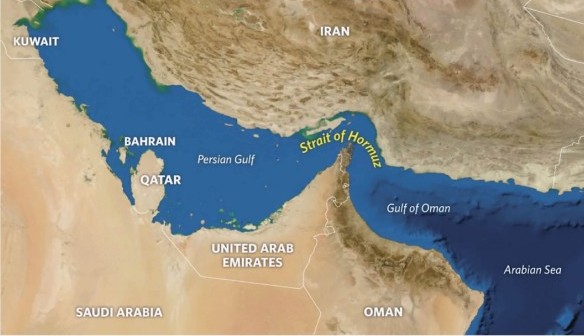
Freedom of navigation through the Strait of Hormuz remains vital for maritime nations worldwide. The waterway’s narrowest point measures approximately 21 nautical miles (about 39 km), placing much of it within the 12-nautical-mile territorial seas claimed by Iran and Oman. This geography triggers long-standing debates under the 1982 United Nations Convention on the Law of the Sea (UNCLOS) and customary international law.
Innocent Passage vs. Transit Passage
Two primary regimes govern passage through such waters:
Innocent Passage – Under this traditional rule, foreign ships enjoy the right to traverse a coastal state’s territorial sea provided the passage is “innocent” — continuous, expeditious, and not prejudicial to the peace, good order, or security of the coastal state. Coastal states retain significant regulatory authority and may temporarily suspend innocent passage for security reasons in specific areas. Submarines must generally surface, and overflight by aircraft is not permitted.
Transit Passage – This enhanced regime, introduced in UNCLOS Part III for straits used for international navigation between one part of the high seas (or exclusive economic zone) and another, provides greater freedoms. Ships and aircraft may proceed without delay, submerged submarines may remain submerged, and overflight is allowed.
Importantly, the right of transit passage is generally non-suspendable; coastal states may not impede it except in narrowly defined circumstances involving threats or use of force against the bordering states themselves, in violation of UN Charter principles.
The Strait of Hormuz qualifies geographically as a strait used for international navigation, connecting the Persian Gulf to the Gulf of Oman and high seas beyond.
When UNCLOS was negotiated, the extension of territorial seas to 12 nautical miles was accepted in exchange for coastal states conceding the transit passage regime in such critical chokepoints. This “bargain” aimed to preserve global freedom of navigation while accommodating broader coastal claims.
Complications from Non-Ratification
A major wrinkle is that neither the United States nor Iran is a party to UNCLOS. The US maintains that the transit passage regime has crystallized into customary international law, binding on all states regardless of treaty membership. It has enforced this view through its Freedom of Navigation program since 1979, including unannounced transits by warships.
Iran, by contrast, insists it is bound only by the more limited right of innocent passage, which it claims can be suspended for national security. Tehran also demands prior coordination for foreign warships.
Oman, which has ratified UNCLOS, has issued declarations asserting full sovereignty over its territorial sea and seeking to require prior permission for warships — positions that UNCLOS generally prohibits as reservations.
Even during the current fragile truce, the US has sent guided-missile destroyers through the strait to underscore its position and prepare for potential mine-clearing operations. Iran views such actions as provocative.
Strait of Hormuz is a Belligerent Strait
The ongoing armed conflict adds another layer. As noted by Professor Marc Weller of Chatham House, the US-Israeli strikes on Iran created an international armed conflict, transforming the Strait of Hormuz into a “belligerent strait.” Under the laws of maritime warfare, Iran may lawfully target US or Israeli warships, including escorted convoys.
Direct attacks on neutral merchant vessels are generally prohibited, though belligerents may seize enemy or neutral ships carrying contraband.
Iran initially attempted a total closure, an action the UN Security Council rejected as a serious threat to international peace and security. Later, Tehran framed its measures as “necessary and proportionate” to prevent aggressors from using the strait for hostile operations.
Iranian Deputy Foreign Minister Kazem Gharibabadi has argued that wartime conditions override peacetime maritime rules. Yet even in conflict, core principles of distinction (between military and civilian targets) and proportionality apply. Neutral shipping — particularly oil tankers critical to the global economy — enjoys significant protection.
Paths To Resolution
The legal disputes highlight deeper strategic realities. For the US and its partners, unimpeded transit passage ensures energy security and upholds a rules-based maritime order favouring global trade. For Iran, control or at least leverage over the strait represents a vital deterrent and bargaining chip, especially given its long coastline and asymmetric naval capabilities.
Third-party actors, from China and India (major importers of Gulf oil) to Gulf Arab states, have a keen interest in de-escalation. Saudi Arabia, for instance, has reportedly urged Washington to ease its blockade to avoid retaliatory disruptions elsewhere, such as in the Bab al-Mandeb strait.
A sustainable resolution likely requires addressing not only immediate passage rights but underlying security concerns: Iran’s nuclear program, regional proxy conflicts, sanctions relief, and mutual guarantees against future blockades or attacks. The Pakistani-brokered ceasefire talks, though currently stalled, offer a potential venue, provided both sides show flexibility.
Ultimately, the return of normalcy in the Strait of Hormuz will demand more than military posturing or selective legal interpretations. It will require belligerents to reconcile their actions with the broader framework of international law — balancing coastal state security with the imperative of freedom of navigation that underpins the global economy. Failure to do so risks not only prolonged regional instability but a dangerous precedent for other strategic waterways worldwide.
END
