
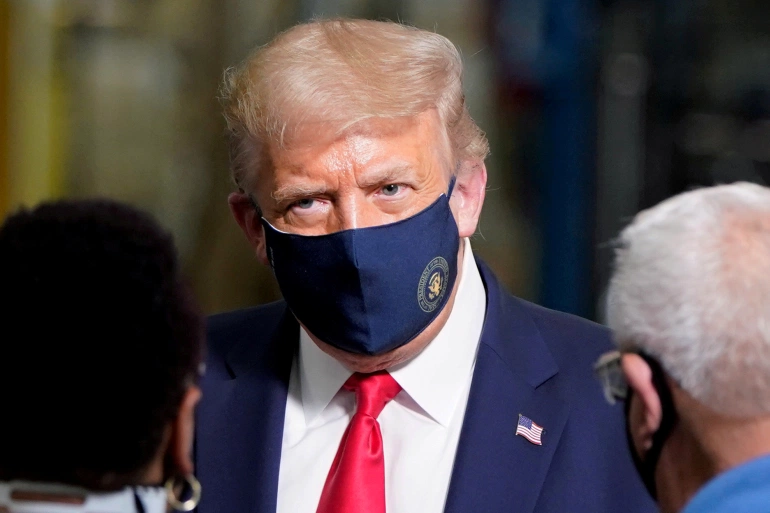

By P.M.Amza/Colombo Telegraph
Colombo, March 16 -Few global leaders have publicly associated themselves with the idea of the Nobel Peace Prize as frequently as Donald Trump. During and after his presidency, Trump repeatedly argued that his diplomatic initiatives in the Middle East and elsewhere deserved recognition from the Norwegian Nobel Committee. Supporters pointed in particular to the Abraham Accords, which normalized relations between Israel and countries such as the United Arab Emirates, Bahrain, Morocco, and Sudan.
Indeed, the Abraham Accords were widely regarded as an important diplomatic breakthrough, marking the first Arab–Israeli normalization agreements in decades. Yet international politics rarely offers simple narratives. In the years that followed, the Middle East once again entered a period of escalating confrontation—particularly involving Iran, Israel, and the United States.
Against this background, it is worth revisiting an uncomfortable but legitimate question: how should history assess Trump’s claim to a Nobel Peace Prize in light of the policies and strategic choices that contributed to the current tensions?
The question is not merely about one individual leader. It reflects a broader debate about the relationship between diplomacy, military strategy, and the meaning of peace in contemporary international politics.
The Iran Nuclear Deal and a Strategic Turning Point
The most consequential turning point in Trump’s Middle East policy was his decision in May 2018, during his 1st term in office, to withdraw the United States from the Joint Comprehensive Plan of Action (JCPOA), negotiated under the presidency of Barack Obama with the wider support of the international community.
The JCPOA imposed strict limitations on Iran’s nuclear programme, including caps on uranium enrichment, restrictions on nuclear facilities, and intrusive international inspections. In exchange, Iran received relief from international sanctions.
Supporters of the agreement argued that it represented the most comprehensive mechanism available to prevent Iran from developing nuclear weapons. Critics—including Trump and many Israeli leaders—contended that the agreement was insufficient and failed to address Iran’s regional influence or missile programme.
Trump’s withdrawal from the agreement initiated what his administration called a policy of “maximum pressure.” This involved the re-imposition of sweeping economic sanctions and diplomatic isolation aimed at forcing Iran back to the negotiating table.
However, the strategy produced several unintended consequences. Iran gradually reduced its compliance with nuclear restrictions and resumed enrichment activities beyond earlier limits. Diplomatic channels between Washington and Tehran narrowed considerably, increasing the risk of military confrontation.
In retrospect, the collapse of the JCPOA removed one of the few structured diplomatic frameworks capable of managing tensions between Iran and the West.
Alignment with Israel and the Changing Strategic Balance
Another defining characteristic of Trump’s Middle East policy was his close alignment with the government of Benjamin Netanyahu. Trump’s administration recognized Jerusalem as Israel’s capital, expanded military assistance, and strongly supported Israel’s security concerns regarding Iran.
In Israel, many political leaders welcomed this alignment as a strategic breakthrough. However, analysts noted that such a close identification with one regional actor also altered the diplomatic balance traditionally maintained by previous American administrations.
From Tehran’s perspective, the evolving U.S.–Israel partnership reinforced long-standing suspicions that Washington’s strategic objective extended beyond nuclear non-proliferation to include weakening Iran’s regional influence.
This deterioration of trust gradually intensified regional rivalries. Military incidents, covert operations, and cyber attacks became increasingly common in the shadow war between Iran and Israel.
The Escalation of Military Confrontation
The tensions eventually culminated in direct military confrontation between the United States, Israel, and Iran. American airstrikes against Iranian nuclear facilities in 2025 triggered a chain of retaliatory actions across the region, raising fears of a broader regional war.
Such developments inevitably revived the debate over whether the policy of maximum pressure had reduced or increased the risk of conflict.
Critics argue that abandoning the nuclear agreement removed diplomatic guardrails that previously limited escalation. Supporters counter that Iran’s behaviour left few alternatives to coercive pressure.
Regardless of the interpretation, the Middle East today remains one of the most volatile strategic environments in the world.
Public Opinion: War Fatigue in the United States
Perhaps one of the most striking developments in the current crisis is the limited public support for military confrontation within the United States itself.
Recent opinion polls indicate a clear pattern of skepticism among American voters regarding the war with Iran.
* A Quinnipiac University poll conducted in March 2026 found that 53 percent of Americans opposed the military action against Iran, while only about 40 percent supported it.
* The same survey revealed that 74 percent opposed deploying U.S. ground troops in Iran.
* Another poll indicated that 59 percent of Americans disapproved of the strikes, while 41 percent supported them.
The polling also revealed widespread doubts about the strategic objectives of the conflict. Nearly two-thirds of respondents reported that the administration had not clearly explained the goals of the military campaign.
These findings reflect a broader phenomenon often described as “war fatigue.” After two decades of costly interventions in Afghanistan and Iraq, American public opinion has become increasingly cautious about entering new military conflicts in the Middle East.
Even among Trump’s own political supporters, opinion surveys have shown significant reservations about deeper involvement in a regional war.
Divisions Within Israel and the Wider Region
Public opinion is also evolving within Israel and across the broader region.
While many Israeli leaders view strong American support as essential to national security, analysts warn that a prolonged confrontation with Iran could create significant economic and security risks for Israel itself.
Within the United States, attitudes toward the Middle East conflict have also shifted. Polling indicates that public support for unconditional military backing of Israel has declined in recent years, with growing calls for diplomatic solutions and ceasefire arrangements.
Such trends illustrate a widening gap between political leadership and public sentiment on questions of war and peace.
The Nobel Peace Prize Debate
The Nobel Peace Prize has historically recognized leaders and institutions that have significantly reduced tensions or resolved major conflicts through diplomacy.
Supporters of Trump’s nomination point to the Abraham Accords as evidence of diplomatic achievement. These agreements indeed reshaped relations between Israel and several Arab states and altered regional diplomatic dynamics.
However, critics argue that the Accords addressed only part of the Middle East’s strategic equation. The central rivalry between Iran and Israel remained unresolved, and in some respects intensified.
Public opinion surveys also reflect skepticism about Trump’s eligibility for the award. A Washington Post–Ipsos poll in 2025 found that 76 percent of Americans believed Trump did not deserve the Nobel Peace Prize, while only 22 percent supported the idea.
Such skepticism underscores the complex relationship between diplomatic symbolism and the realities of geopolitical competition.
A Broader Lesson for International Diplomacy
Beyond the personalities involved, the ongoing crisis highlights an enduring dilemma of international relations: whether peace is better achieved through diplomacy or through coercive pressure.
Advocates of hard power argue that deterrence and military capability are essential for maintaining stability. Advocates of diplomacy contend that sustainable peace requires negotiated arrangements and institutional frameworks.
In the case of Iran, the collapse of the nuclear agreement removed a major diplomatic channel that had previously moderated tensions. Whether future negotiations can rebuild such frameworks remains uncertain.
For smaller states and middle powers, these developments offer important lessons. Countries such as Sri Lanka often operate within complex geopolitical environments where competing powers pursue conflicting strategic interests.
Maintaining balanced relations, promoting dialogue, and adhering to humanitarian principles remain vital tools of foreign policy.
Sri Lanka’s measured response to recent maritime incidents in the Indian Ocean—providing humanitarian assistance to distressed sailors while maintaining neutrality—illustrates how smaller states can navigate great-power tensions without becoming entangled in them.
Conclusion: Peace Claims in Historical Perspective
The history of international politics often reveals a paradox: leaders who speak the language of peace sometimes preside over periods of conflict.
Donald Trump’s foreign policy legacy reflects this paradox. His administration facilitated diplomatic breakthroughs such as the Abraham Accords, yet it also adopted policies that contributed to renewed tensions in the Middle East.
Whether history ultimately views Trump as a peacemaker or as a catalyst of instability will depend on the long-term consequences of these decisions.
For now, the escalating tensions surrounding Iran serve as a reminder that the pursuit of peace requires not only bold diplomatic initiatives but also sustained commitment to dialogue, restraint, and multilateral engagement.
In the complex calculus of international politics, peace is rarely achieved through a single agreement or decisive moment. It is the product of persistent diplomacy, strategic patience, and the willingness of nations to choose negotiation over confrontation.
*The author is former Sri Lanka Ambassador to EU, Belgium. Turkey and Saudi Arabia and former Additional Secretary (Economic Affairs) Ministry of Foreign Affairs
