

By Suhasini Haidar/The Hindu
New Delhi, February 7: A day after U.S. President Donald Trump signed an order that could impose sanctions on India for its investment in Iran’s Chabahar port, the Union government remained silent regarding the order and its implications.
The U.S. order, titled the ‘National Security Presidential Memorandum’, specifically named the port as it called for “maximum economic pressure” on the Iranian government, directing U.S. Secretary of State Marco Rubio and U.S. Treasury Secretary Scott Bessent to cut off Iran’s recourse to all funds, including through oil exports, ports, and ancillary businesses.
Mr. Trump also told reporters that he has left directions that, in case of his assassination, Iran should be “totally obliterated” if it is found responsible.
Changing Sanction Waivers
“The Secretary of State shall modify or rescind sanctions waivers, particularly those that provide Iran any degree of economic or financial relief, including those related to Iran’s Chabahar port project,” says the order.
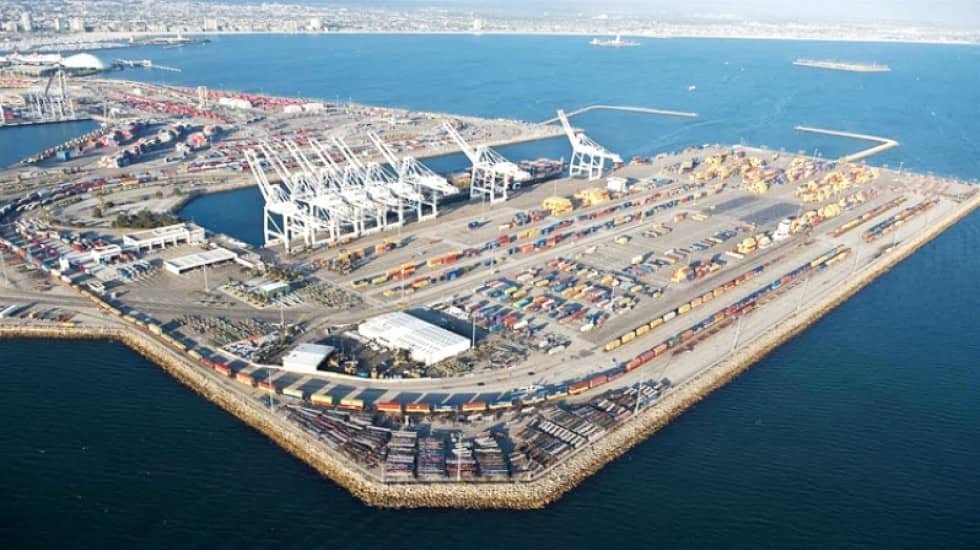
India has developed the Shahid Beheshti Terminal at the Chabahar port under a 2016 trilateral agreement with Iran and Afghanistan.
“The Treasury Secretary will also issue guidance for all relevant business sectors – including shipping, insurance, and port operators – about the risks to any person that knowingly violates U.S. sanctions with respect to Iran or an Iranian terror proxy,” added a fact-sheet on the order, also issued by the White House.
New Lobbying
The Ministry of External Affairs declined to respond to requests for a comment on the U.S.’s latest threat, that came even as the U.S. deported a military plane-load of illegal Indian immigrants back to India.
The Chabahar issue is expected to be discussed when Prime Minister Narendra Modi travels to Washington to meet with Mr. Trump, likely next week, between February 12 and 14.
Officials said that the Trump order required a full study by New Delhi, as well as discussions on how best to lobby with the new U.S. administration for another waiver.
During his previous tenure, Mr. Trump had walked out of the Iran nuclear deal (officially known as the Joint Comprehensive Plan of Action or JCPOA) and imposed a number of sanctions on Iran, but granted India a waiver from sanctions over the development of Chabahar in “support of Afghanistan’s economic growth and development, as well as (the U.S.’s) close partnership with India”.
India also acceded to Mr. Trump’s demand that it “zero out” all oil exports from Iran, causing a considerable loss to Indian refineries, as Iranian oil was cheaper, and considerably “sweeter” or easier to process. That move, however, helped New Delhi obtain relief on the sanctions over Chabahar, which have now been called into question by the latest Trump order.
Chabahar Expansion
The waiver was meant to facilitate the movement of food aid and goods for trade from India through the Iranian port and over land to Afghanistan’s eastern border during the tenure of Kabul’s elected government, then headed by President Ashraf Ghani.
After the Taliban took over Kabul in 2021, the Biden administration continued the waiver to let India build infrastructure at Chabahar, as a way of ensuring that grains and other humanitarian aid material could reach Afghans and even Iranians.
However, in May 2024, after Shipping Minister Sarbananda Sonowal signed a 10-year term contract for the development of the Chabahar terminal and indicated that India would connect it to the International North-South Trade Corridor, and use it for trade with Russia and Central Asia, the U.S. issued a stiff warning, reminding India that the waiver had a limited purpose.
Last month, Foreign Secretary Vikram Misri also discussed the use of Chabahar port with the Taliban Acting Foreign Minister Amir Khan Muttaqi when they met in Dubai, part of a new push by New Delhi to strengthen ties with the regime in Afghanistan.
Chabahar’s Importance to India
New Delhi, May 19, 2024/The Hindu: The project, which was launched in early 2000s and saw sporadic progress over the years, mainly due to geopolitical reasons, got a booster last week as India and Iran signed a long-term agreement to further develop and operate the port
Before Partition, the town of Chabahar (earlier known as Tiz) was right at India’s doorstep, situated in Iran’s Sistan Baluchistan province where the Panchatantra was once read in Persian (entitled ‘Kalileh-wa-Dimna’), and Hindustani Urdu is understood and spoken commonly. But ties between independent India and Iran, before the 1979 revolution, were never very close, given the Shah’s U.S.-tilt, and India’s Non-Alignment push. In 1970, it was the Shah who first conceived of developing Chabahar (he even planned a U.S. submarine base there), given its salubrious weather and the fact that the warm-water port was Iran’s only such foothold in the Indian Ocean, strategically located just between the Gulf of Oman and the Strait of Hormuz.
In 1993, Prime Minister Narasimha Rao travelled to Tehran for a path-breaking visit to build a new relationship with the Iranian regime. While the visit shored up Tehran’s invaluable support to India on the international stage (Iran famously stopped a Pakistan-backed Organisation of Islamic Cooperation (OIC) proposal against India at the UN HRC in 1994 after an air-dash visit by then Foreign Minister Dinesh Singh to request President Ali Akbar Rafsanjani’s help), it also began a conversation between the two countries over Chabahar.
In the 1990s, Iran offered India a chance to develop Chabahar, and some groundwork was laid. But it wasn’t until Prime Minister Atal Bihari Vajpayee’s visit to Tehran in 2001 and then President Mohammad Khatami’s visit to Delhi as the chief guest on Republic Day in 2003 that discussions sealed the Chabahar deal between the two countries. According to the Delhi Declaration signed by both leaders, the two countries decided to build the sea link from India to Chabahar, and “through Chabahar to the National Iranian Rail Road”, enabling India to connect to Central Asia and Europe.
Iran invited India to develop a railway link from Chabahar to Bam, a city from where links to both Afghanistan and Turkmenistan could be made. Through the North-South Corridor (now called the INSTC), India would be linked through Iran to Russia as well.
Afghanistan was always part of the conversation over Chabahar. The 2003 India-Iran joint statement recorded that “India and Iran have cooperated closely on Afghanistan, especially in the shared objective of ridding that country of the evil Taliban forces. We agreed that our joint effort should now be to promote strong construction and rehabilitation work in that country including through development of alternate trade routes to Afghanistan through Iran as well as by undertaking a joint rail and road reconstruction project.”
Strategic location
For India that has traded with Iran through the Bandar Abbas port for centuries, Chabahar’s chief attraction was not about its trade, but its location vis-à-vis Pakistan. Islamabad’s constant resistance to allowing Indian trade to transit through to Afghanistan meant that the Chabahar route, through the Iranian border town of Zaranj, was the most viable alternative. In 2005, India also began the perilous construction of Route-606 or the Zaranj-Delaram Highway, which connected the border crossing from Iran to the rest of Afghanistan, in order to facilitate the trade. Its importance gleaned from the sacrifices made for it — as many as 135 personnel working on the highway were killed in attacks by the Taliban, including six Indian border road and ITBP personnel.
As a result, the Chabahar dream began to take shape as a hub of connectivity, with immense strategic potential as well as the desire to help Afghanistan, riven by bloodshed, to build a new future for itself. Over the years, Chabahar’s progress was sporadic, constrained by the U.S.’s sanctions and demands on India to sever ties with Iran, and often spurred on by the challenge of China’s competitive moves in the region. In 2012, U.S. Secretary of State Hillary Clinton said she was having “very intense and very blunt” conversations with India and other countries urging them to join the U.S. in “isolating Iran” in a bid to pressure Tehran into acceding to terms for the Joint Comprehensive Plan of Action (JCPOA), the multi-party nuclear deal.
India didn’t concede to U.S. demands, and although buyers cut oil imports by around 20%, the government went ahead on Chabahar. In 2012, as China began its maritime forays in the Indian ocean, India sent its first shipment of 100,000 tonnes of wheat for Afghanistan to Chabahar port, using the rudimentary facilities there. In May 2013, three months after China announced it would develop Gwadar port off Karachi, External Affairs Minister Salman Khurshid flew to Tehran and announced that a trilateral partnership with Afghanistan was being readied, which would include the upgradation of Chabahar port.
In 2016, Prime Minister Narendra Modi joined Afghan President Ashraf Ghani and Iranian President Hassan Rouhani to sign the historic agreement, paving the way for India to invest $500 million to build the Shahid Beheshti terminal (one of the two terminals in the port) and a railway line to Zahedan. However, geopolitics played spoiler with Chabahar again. In 2018, U.S. President Donald Trump walked out of the JCPOA with Iran, and restored all sanctions in 2018.
Trouble in Ties
While the Modi government was able to negotiate a ‘carve-out’ from sanctions for Chabahar as a means to support Afghanistan, it decided to cave in on other deals, and announced in 2019 that India had “zeroed out” all oil imports from Iran. The threat of sanctions slowed India’s responses on the railway project to Zahedan, and in August 2020, Iran dropped India from the project, deciding to go it alone. Another big shift followed the Taliban takeover of Kabul in 2021, and while India has kept its commitment on sending humanitarian aid to Afghanistan via Chabahar, trade has been sluggish. Despite all that, the Shahid Beheshti terminal has handled 90,000 TEUs of container traffic, 2.5 million tonnes of wheat and other aid for Afghanistan, and supplied 40,000 litres of pesticide for Iran.
The latest agreement, signed on Monday, saw Indian Ports Global Ltd and Ports and Maritime Organisation of Iran sign a 10-year Long Term Contract in Tehran in the presence of Shipping Minister Sarbananda Sonowal and his Iranian counterpart, with India promising an outlay of $120 million, and another $250 million credit line to further develop the project. This will spur the next phase of Chabahar’s development — with a plan to build 32 jetties and process about 82 million tonnes of cargo per year by the end of the fourth phase.
It remains to be seen whether the U.S. actually follows through on State Department comments raising the “risk of sanctions” against Indian companies participating in the contract, but the past few decades have shown that India’s interest in the port will remain. While the dream of Chabahar, as envisioned decades ago, has yet to be realised and the project has moved at a glacial place, it is now an irreversible reality, one whose location and geopolitical positioning, like its name (spring around the year), lend it an eternal charm.
END
