
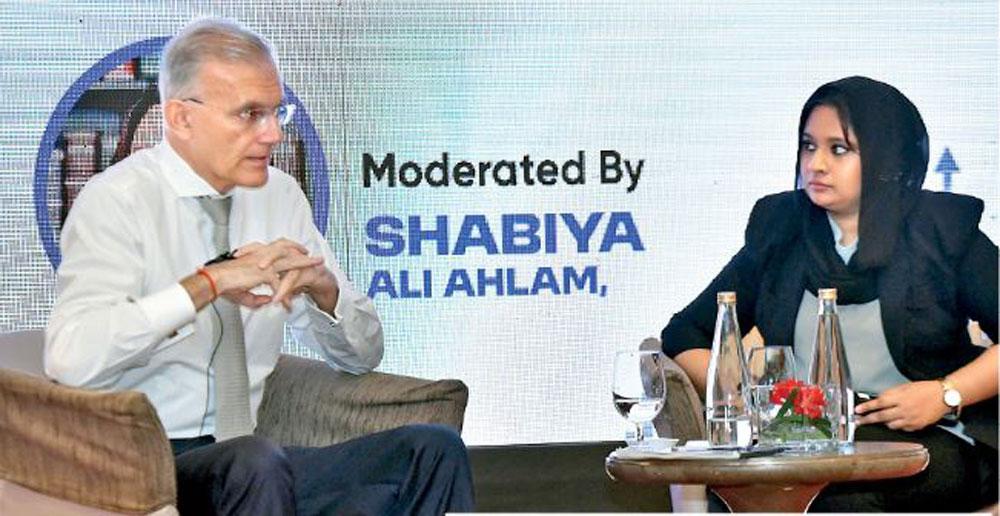

Colombo, June 30 (Daily Mirror) – Sri Lanka is falling short of delivering the structural transformation it claims to seek, despite the growing rhetoric around revival and sustainable growth, warned internationally renowned economist Prof. Razeen Sally, in an interview to Daily Mirror’s Business Editor Shabiya Ali Ahlam.
Prof. Sally, a former Associate Professor at the Lee Kuan Yew School of Public Policy in Singapore, past Chair of the Institute of Policy Studies (IPS), and policy advisor when questioned if Sri Lanka is doing anything different to move to a higher growth trajectory, responded: “The answer is clearly, not enough.”
Reflecting on the political changeover in the final quarter of last year, Sally pointed to some early signs of progress.
“In the President and the Prime Minister, we have individuals who appear to have the right intentions. They are not burdened with the same baggage of corruption and sleaze we witnessed in earlier administrations. I think they are pragmatic,” he acknowledged in a one-on-one session during the Capital Market Conference 2025 in Colombo recently.
He went on to note that a few competent professionals have been appointed to key roles, and that the current administration seems more serious about addressing corruption.
“Things are moving forward slowly. And, importantly, we are no longer dealing with the kind of daily corruption scandals that dominated the news cycle for 15 to 20 years prior. That is good news.”
However, Prof. Sally was quick to draw the line. “It is nowhere near enough,” he reiterated, stressing that beyond these modest gains, little has changed in how the country approaches deep-rooted economic and governance issues.
“On other fronts, we do not see significant change. The public does not perceive significant change. And I do not think the government has a clear understanding of what structural reforms are required or how to respond strategically to emerging global threats.”
Among those threats is the looming possibility of punitive U.S. tariffs on Sri Lankan exports, an average of more than 44 percent. Sally described the risk as a wake-up call for policymakers.
“A strategic government would recognise this as an inflection point. Here is a giant truck roaring down the American highway, and Sri Lanka is the deer caught in the headlights,” he said.
Prof. Sally asserted this should be seen as an opportunity to push comprehensive reforms, on trade, on foreign investment, and to bring in serious foreign investors.
However, instead of using the crisis to drive a long-term reform agenda, the response from Colombo has been tactical at best.
“The response is to assemble a delegation, send it to Washington, and attempt bilateral negotiations. That is not strategy. That is tactics,” Prof. Sally stressed.
END
