

By P.K.Balacandran/Daily Mirror
Colombo, October 24 – The divide between the rich and the poor has always been there in the United States, but it has become pronounced in recent months, say Ben Casselman and Colby Smith in a recent piece in The New York Times.
“Wealthier Americans, buoyed by a stock market that keeps setting records, have continued to spend freely. Lower-income households — stung by persistent inflation and navigating a labour market that is losing momentum — are pulling back,” they say.
Moody’s Analytics recently estimated that the top 10% of US households now account for nearly half of all spending in the country – the highest share since the late 1980s. Consumer sentiment has climbed among high earners but steadily fallen for other groups, Casselman and Smith point out.
They quote Lindsay Owens, executive director of the Groundwork Collaborative, a progressive policy group, as saying that the statistic reveals “great insecurity and instability” in the economy.
The split between the well-to-do and others is evident across industries, the authors add. “Well-to-do fliers are snapping up pricey seats in first and business class, as airlines struggle to fill the cheaper seats at the back of the plane. Credit card companies are competing to offer ever-more-expensive cards to high earners who are happy to pay the annual fees in return for exclusive perks — while lower-income households are struggling to make minimum payments on their debts”.
Pandemic, a Leveller
The COVID-19 pandemic caused massive deaths, but it was also an economic leveller, the writer notes.
“Trillions of dollars in government aid flowed to households and businesses. Many US companies provided extra pay to employees who could not work from home. When the economy began to reopen, intense competition for workers led to rapid wage growth, particularly in low-paying sectors where demand for labour far outstripped supply”.
Government aid during COVID put a lot of money into ordinary people’s pockets. Sales boomed and the GDP grew. But as the pandemic tapered off, the demand for labour lessened. Slower wage growth, combined with persistent inflation, strained many families’ finances.
Casselman and Smith point out that the reliance on credit cards and other forms of borrowing to pay bills has increased.
“People were falling behind on car loans and credit card payments, though this had not resulted in widespread defaults. Lower-income households had cut back on discretionary purchases”.
The situation is the same today.
Trump Effect
President Donald Trump’s policies have hit some groups hard. Cuts to the federal work force have taken a toll in Northern Virginia and other parts of the country that depend heavily on government employment. This has been aggravated by the government shutdown. Immigration raids are weighing on industries that rely on foreign-born workers and on the businesses that count them as customers.
Broad measures like Gross Domestic Product (GDP) point to an economy that has slowed but remains fundamentally healthy, surprising many forecasters. But that resilience increasingly rests on a relative handful of well-off households, the authors assert.
Fed’s Data
The US Central Bank, called the Federal Reserve, has said that the economy might hit an “air pocket” in the 4th quarter of 2025, but has added that it should regain traction in 2026.
According to the website commercia.com, the unemployment rate has increased to the highest level since late 2021. Real GDP has been volatile in 2025, with a modest contraction in the first quarter. Consumer spending picked up in the second and third quarters as Americans cashed in on EV subsidies before they lapsed on September 30.
But real GDP is forecast to hit another air pocket in the fourth quarter. Auto sales will take a step back without the subsidies.
The federal government shutdown that began October 1, will be a headwind too. In earlier shutdowns, each week of shutdown cut 0.1 to 0.2 percentage points from annualised real GDP growth in that quarter.
Tariff-fuelled inflation is another nagging headache for the private sector, squeezing margins, pressuring businesses to slow-roll hiring and investment, and eating into consumers’ purchasing power, the website says.
Recovery in 2026
However, the US economy is expected to get a boost in 2026, the Fed says. Fiscal policy will turn expansionary as the July 4 fiscal bill raises spending on defence and immigration enforcement and cuts corporate and individual taxes.
“Even more importantly, AI is fuelling a boom in investment in software, computing equipment, and data centres. The long gestation periods for these projects mean they should continue to propel the economy into 2026 at least,” commercia.com comments.
Levelling Messiah Mamdani
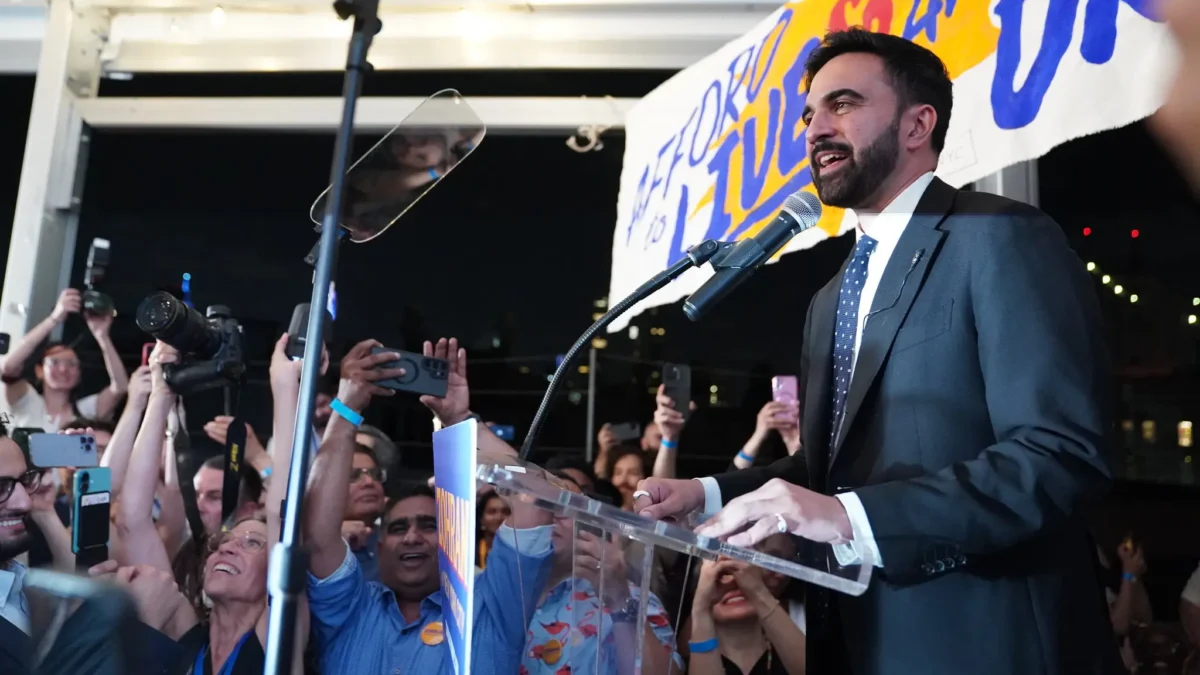
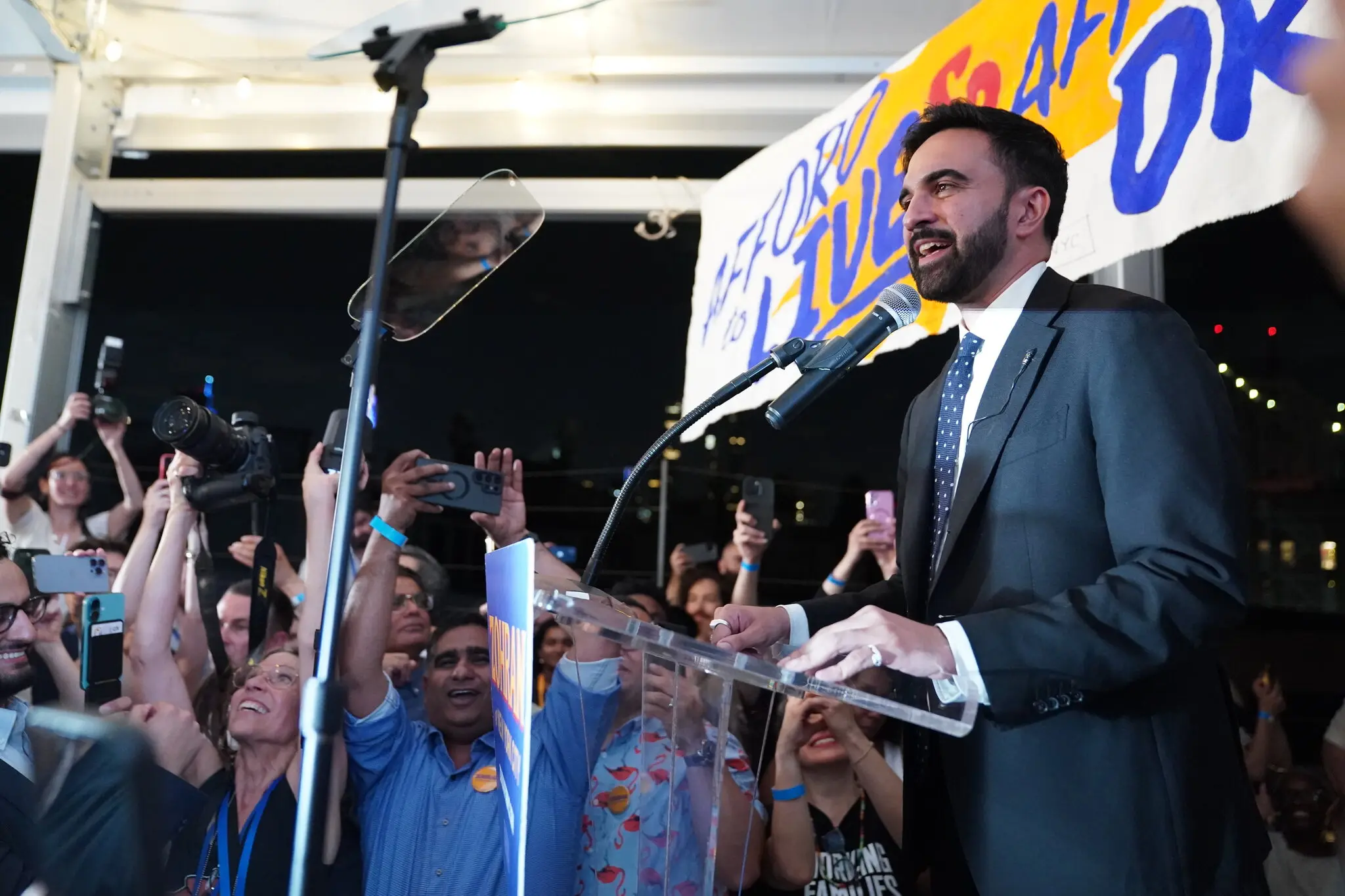
New York’s Mayoral candidate Zohran Mamdani (33) has a set of proposals to narrow the yawning gap between the rich and the poor in New York City. If he wins the November 4 election and succeeds in implementing his anti-inequality programs, could his formula, applied at the micro level, be applied in the US as a whole?
Mamdani may win the New York election, says a Fox News poll. The poll, released October 16, showed that Mamdani, a Democratic Party State assembly member, has the support of 52% of likely voters and 49% among registered voters in the days leading up to the November 4 election.
Former Governor, Andrew Cuomo, an independent candidate, trails Mamdani by more than 20 points, garnering 28% among both likely voters and registered voters. Republican nominee Curtis Sliwa had around 13-14% support.
Mamdani has been proposing solutions to the problem of inequality, which is stark in his home ground, New York City.
“New York is the wealthiest city in the wealthiest country in the history of the world, and yet, one in four New Yorkers are living in poverty, and the rest are seemingly trapped in a state of anxiety. We’ve seen that this is a city that needs to be affordable for the people who build it every day,” he pointed out in July during a Meet the Press event.
TIME quoted Rachel Fee, executive director of the New York Housing Conference (NYHC), as saying that Mamdani’s popularity is a testament to how New Yorkers, especially working class New Yorkers, are struggling with rising prices.
“New Yorkers are fed up with sky-high rents and a lack of housing choice. And home ownership these days seems like a dream to achieve in another state,” Fee said. “It deserves the focus of the next Mayor. And I think New Yorkers seem very willing to try something different”.
A rallying cry of Mamdani’s candidacy has been his calls to “freeze the rent”. This has become all the more central as the N.Y.C. Rent Guidelines Board has voted for a 4.5% increase for two-year leases and a 3% hike for one-year leases, TIME says.
Mamdani proposes about US$10 billion in new spending to address affordability concerns in New York City. He advocates free bus service, free childcare, and city-owned grocery stores. He wants to tax “the wealthiest and the most profitable corporations the fair amount that they should pay”.
He has said that the free bus service would cost US$700 million a year. And universal childcare, another US$5 or 6 billion a year. He has promised to find US$1 billion in savings in the city budget through procurement reform and other measures.
Conservative Sneer
But conservatives sneer at Mamdani’s proposals. Ryan Bourne, an economist at the Cato Institute, is quoted as saying that Mamdani’s policies to tackle New York City’s affordability crisis are an “unhealthy cocktail of price controls and vast new government spending on services”.
Price controls, Bourne said, generate inefficiency. “History shows that tighter rent control leads to lower quality rent-stabilised housing, with people in homes that aren’t suited to their needs and less investment in new construction. Rent freezes would be damaging to landlords, many of whom don’t have vast holdings of real estate,” he pointed out.
It is feared that entrepreneurs and successful people would flee New York City for places with more favourable business environments, like Florida and Texas. “Without a profit motive and industry discipline, keeping food affordable within them would require heavy government subsidies,” Bourne said.
END
