


By Hashani Boange/ Sunday Observer
Malini Fonseka, widely hailed as the Queen of Sinhala Cinema, passed away yesterday morning at a private hospital following a brief illness. She was 78. Silver screen sensation Fonseka starred in over 150 Sinhala movies and also the Tamil movie Pilot Premnath with Sivaji Ganesan. She was also an accomplished actress on the stage as well as the small screen.
She has won nearly 100 local and international awards including the coveted Sarasaviya Awards during her stellar career. She was also a Member of Parliament for a few years.
Malini Fonseka’s final rites will be conducted with full State honours at the Independence Square tomorrow (May 26), Government officials said. This will be telecast live on all channels.
A committee has been set up under the leadership of Buddhasasana, Religious and Cultural Affairs Minister Dr. Hiniduma Sunil Senevi to coordinate the funeral arrangements.
Her body will lie in state at the Tharangani Hall of the National Film Corporation, Torrington, from 10 a.m. today (May 25), for the public to pay their last respects to the screen legend.
Renowned for her stellar performances and a career spanning more than five decades, Fonseka was a beloved figure in Sri Lankan cinema and cultural life. She is survived by her sisters and nieces, who are also artistes.
Malini Fonseka, a name etched in the hearts and minds of all Sri Lankans passed away yesterday at the age of 78 while receiving treatment for an illness at a private hospital. Born on April 30, 1947, Malini was often called the Queen of Sri Lankan cinema.
With her debut in Punchi Baba (1968), Malini Fonseka quickly established herself as a force in the industry. Her performances were marked by emotional authenticity, poise, grace and intelligence. She brought depth to female characters, challenging stereotypes and portraying the inner lives of women with rare nuance.
Films such as Thushara, Apeksha, Eya Dan Loku Lamayek and Siri Medura showcased her range —from romantic leads to strong, independent women navigating societal pressures. At a time when female roles were often one-dimensional, Malini brought depth, dignity, and complexity to her multifarious characters. She portrayed women as thinking, feeling beings — navigating love, loss, duty, and desire with intelligence and quiet power.
Malini was the third youngest born to a family of eleven siblings. Her father, Gilbert Fonseka, a Government Press worker and her mother Seelawathie Fonseka, moved the young family from Kelaniya to Jambugasmulla in Nugegoda following her birth. She attended St. John’s College, Nugegoda till Grade 5 and then continued her secondary education at Gurukula Maha Vidyalaya.
Her first foray into the world of arts and culture began with a stint on the Sinhala stage. In 1963 she starred in the play Noratha Ratha and in 1968 she won Best Stage Drama Actress for her performance in the play Akal Wessa. Malini, then went on to act in 14 stage plays and earned a reputation as a well-known stage actress. Having conquered the world of stage drama, she set her sights on Sinhala cinema.
The transition was initiated with the help of one of her brothers, Ananda Fonseka, a well-established director and film producer, as well as Tissa Liyansuriya and veteran actor Joe Abeywickrama who also had a hand in introducing the young stage actress into the world of cinema.
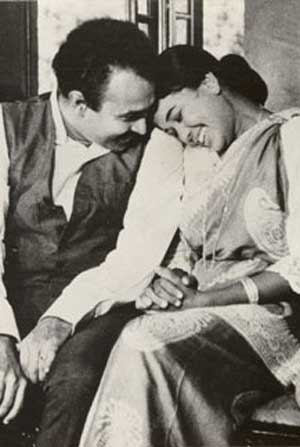
First Break
Malini made her film debut as a 21-year-old in Tissa Liyansuriya’s Punchi Baba in 1968, which was followed by Abudasse Kale, Dahasak Sithuwili and Adarawanthayo in the same year. The films were a resounding success.
Her earlier breakthroughs cemented her in many starring roles in films such as Hathara Denama Soorayo (1971) where she played the role of Nilmini, Nidhanaya (1972) where she was cast as Irene Abeynayake in this critically acclaimed film directed by Lester James Peries and Thushara (1973) where she took on the titular role, further establishing her prominence in the industry.
In 1978, Malini paired up with Sivaji Ganeshan, the popular Tamil actor for a role in the film Pilot Premnath which was the first Indo-Sri Lankan joint production that was shot entirely in Sri Lanka. Thus, she was among the first Sri Lankan actresses to gain international recognition.
Malini was part and parcel of the Golden Age of Sinhala cinema, an age dominated by a wave of seasoned filmmakers such as Lester James Peries, Dharmasena Pathiraja and H.D. Premaratne — who were pushing the boundaries of cinematic expression. Her presence elevated the depths of Sinhala cinema during this memorable time in unprecedented ways, playing the female lead in many of their best works.
Few will forget the magnificent chemistry she shared with the likes of the leading actors of the Golden Age such as Gamini Fonseka, Vijaya Kumaratunga, Tony Ranasinghe, Tissa Wijesurendra, Amarasiri Kalansuriya and Joe Abeywickrama. Her starring roles with Gamini Fonseka in particular will be etched in the hearts of many a cinephile. When this duo shared the screen, their chemistry was magnetic.
Their collaborations – Senehasa, Wasana, Sath Samudura, Sudu Paraviyo, Sagarayak Meda, Ahasin Polowata, and Wasanthaye Dawasak highlighted the complexities of love, duty and human connection.
What made Malini and Gamini such an unforgettable pair was their complementary screen personas. Malini’s poise, girlish beauty and vulnerability paired perfectly with Gamini’s intensity, machismo and charisma.
Whether portraying lovers, spouses, or adversaries, they elevated each other’s performances, creating characters that felt real, layered, and human, sparking some of the best works in Sinhala cinema. Together, they reflected the hopes and struggles of a post-Independence Sri Lanka, bringing to light film narratives that reflected personal and political realities.
The Malini–Vijaya duo was another celebrated pairing that brought depth and romance into the Golden Age of Sinhala cinema. Their memorable performances in films such as Bambaru Awith and Thushara have become legendary.
The handsome, soft-spoken, and charismatic Vijaya became the perfect complement to Malini’s elegance and emotional intensity. While Gamini Fonseka often represented intensity and power, Vijaya offered a gentler masculinity — making him ideal for romantic roles, making a much loved pair in cinema whose magic captures the hearts of film lovers even today.
Accolades
Malini became a bridge between popular cinema, artistic cinema and later on crossed into the small screen. Whatever Malini touched, she was loved equally by the masses and the critics for her brilliant portrayals that captured emotional depth and intensity.
Malini was also the first Sri Lankan actress to gain international recognition for her acting prowess. She won a special Jury award at the Moscow International Film Festival in 1975 and at the New Delhi Film Festival in 1977. With multiple Sarasaviya and Presidential Film Awards to her name, her dominance on screen was unparalleled.
Malini Fonseka’s contributions to cinema were recognised early in her career, where she won over 14 Best Actress awards from various awarding bodies such as the Sarasaviya Awards, organised by the Associated Newspapers of Ceylon Limited(ANCL) and the Presidential Film Awards, which honoured her multiple times, for her performances in mainstream and art-house films. Derana Film Awards and Sumathi/Raigam Awards celebrated her contributions to cinema and television in later years.
She received the award for best actress for Kemmura at the Sumathi Tele Award Ceremony in 2000 as well as being awarded the Wishwa Prasadhini Award in 1996 as an appreciation for her services to the Sinhala cinema industry by the then President, Chandrika Bandaranaike Kumaratunga. She was also named by CNN as one of Asia’s best 25 actors of all time and was nominated for the best actress award at the Asia Pacific Film Awards ceremony conducted for the third time by the Asia Pacific Cinema Academy, for her role as Sandhya Rani in the Sinhala film Akasa Kusum. She also received the Silver Peacock Best Actress Award at the 39th International Film Festival of India.
A grand felicitation ceremony titled Maliniye was held on April 30, 2003 at the BMICH to honour Malini Fonseka for her remarkable contribution to Sri Lankan cinema. Then President, Chandrika Bandaranaike Kumaratunga attended the event which celebrated her illustrious four-decade-long career and appearance in over 150 films, marking her as a true legend of the silver screen.
In 2019, she was honoured with the Janabhimani Honorary Award at the BMICH, further cementing her legacy as a beloved national icon and cultural ambassador of Sri Lanka.
Legacy
Malini was not just a screen icon — she was also a symbol of integrity, resilience, and artistic excellence. Her awards were many, but her true achievement was the profound emotional connection she built with film lovers across generations – the laughter and tears she evoked, the versatility and dignity of her performances and the countless memories she gave us. She opened the doors for future generations of actors who idolised her very name and continue to draw inspiration from her timeless elegance and talent.
Malini helped shape the very identity of Sri Lankan cinema and her legacy will continue to prosper with her name forever resonating in the spirit of a nation that continues to adore her.
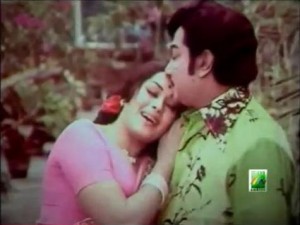
Has paired with Sivaji Ganesan
The Tamil and Sinhalese film industries had drifted apart due to the clash of perceptions about the Tamil question in the island nation. But Malani Fonseka and Geetha Kumarasinghe, both leading ladies in the bygone era of Indo-Lankan collaboration in film making, had fond memories of working with the Tamil icon Sivaji Ganesan. Both yearned for the return of the bonhomie of those days.
“Sivaji was a great actor and a great human being,” said Malani, the thespian’s leading lady in the 1978 Tamil blockbuster Pilot Premnath directed by A C Trilokachander.
“It was Sivaji who urged me to become a producer. He kept telling me to make a number 1 Sri Lankan creation,” Malani told New Indian Express in 2013.
“A warm and friendly man, I was very happy to work with Sivaji. In fact, it was an honour to work with him,” Malani said.
Asked if she would like to work in a Chennai film again, Malani said: “Definitely I would. Art should bring people together and not separate them. I will be the happiest to see Sri Lanka and India coming together in the field of art and cinema.”
END
