
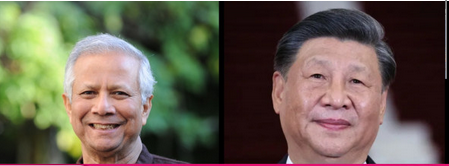

Dhaka, March 27 (The Daily Star) – Chief Adviser Prof Muhammad Yunus’s tour to China marks a pivotal moment in Bangladesh-China bilateral relations, coinciding with the 50th anniversary of diplomatic ties between the two countries. China is currently Bangladesh’s largest trading and defence partner, reflecting the robust and multifaceted nature of their bilateral ties.
According to Chinese Ambassador to Bangladesh Yao Wen, the chief adviser’s visit is expected to be “successful” and “productive,” with “some announcements” anticipated. While the specifics of these announcements remain unclear, Bangladesh Foreign Affairs Adviser M Touhid Hossain has indicated that the visit is unlikely to result in any formal agreements. However, several memoranda of understanding (MoUs)—non-binding but formal agreements—may be signed. This visit is expected to serve as a foundation for the recalibration of Bangladesh-China relations. Therefore, some areas require focused attention and action to yield tangible outcomes.
Although China is Bangladesh’s largest trading partner, Bangladeshi exports to China remain low. In the last fiscal year, the trade deficit marginally increased by over one percent, reaching $16.45 billion. While China has granted 100 percent duty-free access for Bangladeshi products, this has not translated into a significant increase in exports due to a limited range of exportable goods, stringent value addition requirements, and a lack of competitiveness in key sectors.
Yunus’s visit should prioritise strategies to diversify Bangladesh’s exports to China and improve market access for Bangladeshi goods. In this regard, the Bangladesh Embassy to China can play a proactive role by organising exhibitions of Bangladeshi products in major Chinese cities to attract local consumers and businesses.
Regarding investments, China has made substantial contributions to Bangladesh’s infrastructure and energy sectors through the Belt and Road Initiative (BRI). However, there remains potential to attract more investments, particularly in high-end manufacturing industries. The chief adviser’s visit could facilitate discussions on encouraging Chinese companies to relocate their factories to Bangladesh—particularly the Chinese sunset industries. As China faces increasing trade barriers on the global stage, the sunset companies can bypass restrictions in Bangladesh while creating jobs and fostering industrial growth here.
The interim government of Bangladesh has also been negotiating with China to reduce the interest rates on existing loans from two to three percent to one percent and to extend the repayment period from 20 to 30 years. If successful, these adjustments would provide significant relief to Bangladesh’s forex reserves and alleviate pressure on the economy.
The chief adviser’s visit could also provide an opportunity to strengthen cooperation in the defence sector by exploring possibilities for defence technology transfer and the establishment of joint manufacturing capabilities. This would boost Bangladesh’s domestic defence industry and enhance its military capabilities.
https://www.thedailystar.net/opinion/views/news/yunuss-china-visit-can-open-many-doors-3858161
END
