
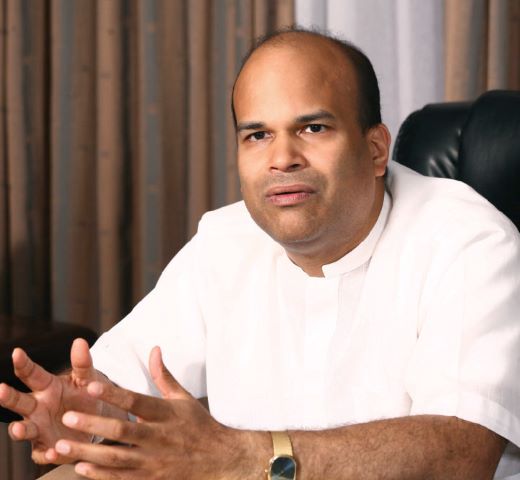

by Milinda Moragoda/WION News
Colombo, April 2 – Across South Asia today, a striking pattern has emerged. In Bangladesh, Nepal, and Sri Lanka, young people took to the streets—driven by frustration over economic stagnation, governance failures, and lack of opportunity. In each country, these movements have reshaped politics, bringing new governments into power.
The dominant question is: why did these youth uprisings happen?
But that may be the wrong question.
The more uncomfortable—and more instructive—question is this: why is India not experiencing similar instability at scale? With a population exceeding 1.4 billion, immense diversity, and persistent inequality, India appears far more vulnerable. Yet, despite imperfections, it has sustained economic momentum, relative stability, and growing global influence.
At the heart of India’s trajectory is leadership focused on growth and modernization—execution that matches rhetoric, policies that build investor confidence, and a bureaucracy largely aligned with the vision. Scale alone is insufficient; what matters is how it is leveraged.
A large domestic market, a skilled workforce, and a competitive federal structure create a dynamic internal ecosystem. Indian states actively compete for investment and talent, fostering efficiency and innovation in ways smaller neighbors struggle to replicate. Importantly, India has coupled its size with outward-looking engagement, welcoming technology, capital, and partnerships rather than retreating inward.
Democracy, despite its noise, acts as a safety valve. Citizens at multiple levels can express discontent, assert identity, and demand change—a pressure release that prevents destabilization. Equally important is India’s civilizational rootedness. National unity and self-confidence are anchored not in uniformity, but in the recognition of its long history, diverse traditions, and cultural heritage. Leaders have managed to stay grounded in culture while embracing modern governance, technology, and economic innovation—blending tradition with transformation. This balance reinforces social cohesion, nurtures a sense of belonging, and allows modernization without alienating communities.
Technology amplifies impact. Digital public infrastructure, frontier sectors like AI, biotechnology, and EdTech, and investment in transparency-driven systems are transforming the country. Social programs aim to bridge gaps, though inequality remains a central challenge—a test for whether growth can be inclusive enough to sustain stability. National security and indigenous capabilities, paired with selective global sourcing, strengthen strategic confidence. Yet a paradox persists: even as India articulates a “Neighborhood First” policy, many neighbors hesitate to engage, while much of the world accelerates its engagement with India.
The contrast is striking. Across parts of South Asia, youth energy manifests in protest. In India, it channels into education, entrepreneurship, and the evolving economy. Youth energy, when aligned with opportunity, builds economies; when constrained, it destabilizes them.
India’s advantage is not a single factor—it is the alignment of political intent, administrative execution, and societal aspiration. South Asia’s lesson is clear: talent and potential abound, but systems must rise to meet youthful ambition. The question for South Asia is not whether its youth will rise—but whether its systems are ready to channel that energy toward growth, stability, and shared prosperity.
(Milinda Moragoda is a former Sri Lankan Cabinet Minister and diplomat from Sri Lanka. He has served as Sri Lanka’s High Commissioner to India in the past. He is the founder of the Pathfinder Foundation, a strategic affairs think tank. an be contacted via email@milinda.org -Wionews 2026.04.02 link https://www.wionews.com/author/milinda-moragoda)
END
Why India’s youth hustle while South Asia’s protest
