

By P.K.Balachandran/Daily News
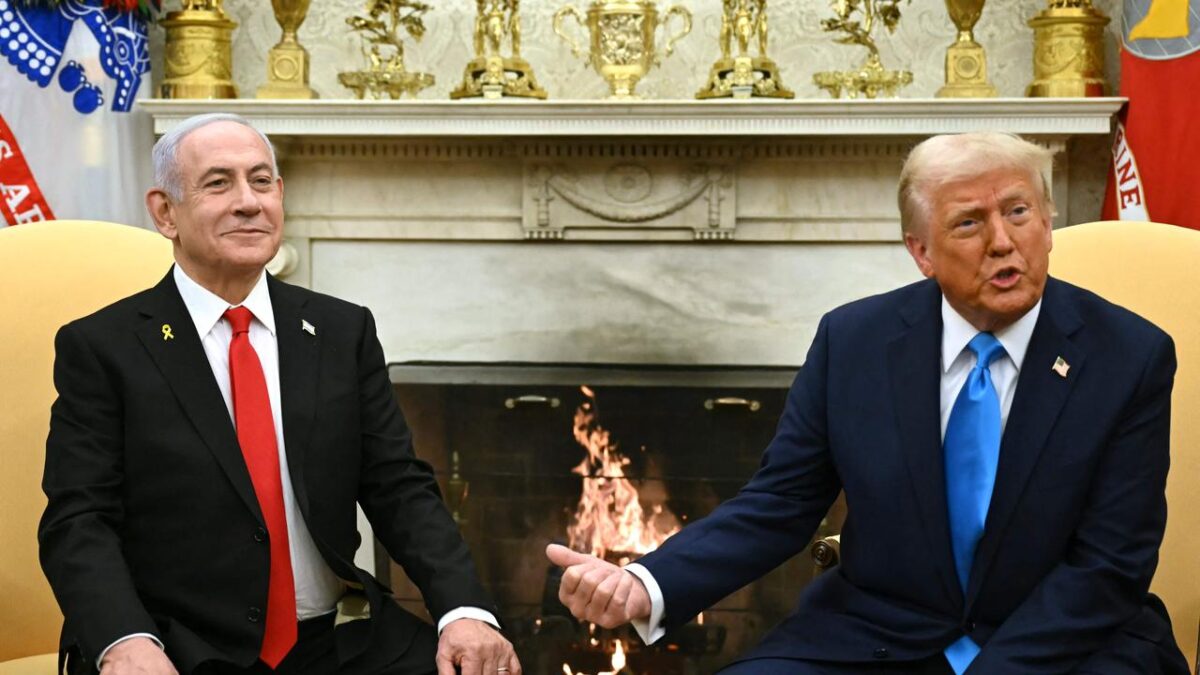
Colombo, June 24 – Last week, US President Donald Trump led the G7 countries and the Pakistani army chief Field Marshal Asim Munir up the garden path saying that his goal was to strike a “deal” with Iran that would end its nuclear armament program and restore peace in West Asia. Specifically on entering Israel’s on-going war against Iran he said he would take a decision in two weeks.
The world, which was expecting a US entry any moment, heaved a sigh of relief. But within two days, the mercurial US President announced that he had sent heavy bombers to blast Iran’s nuclear installations. It was a masterly performance in deception.
At the G7 summit in Canada, Trump was characteristically pugnacious to begin with, and had refused to sign the first draft of the joint statement because it basically touted de-escalation line. But he signed a revised draft which highlighted Israel’s existential anxieties.
The revised draft said: “We, the leaders of the G7, reiterate our commitment to peace and stability in the Middle East,” and then affirmed Israel’s “right to defend itself.” It described Iran as the “principal source of regional instability and terror,” and noted “Iran can never have a nuclear weapon.”
Shortly before he abruptly left the G7 summit for Washington, Trump told reporters that Iran “wants to make a deal, and as soon as I leave here, we’re going to be doing something.” A deal looked to be on the cards, not US entry into the war.
At the luncheon meeting with Pakistani army chief, Field Marshal Asim Munir, Trump discussed Iran at length because, as he said later, Munir knew about Iran “more than anybody else.” According to Pakistani sources, Munir told Trump about the Iranians’ indomitable will to fight. He added that Pakistan supported Iran in its conflict with Israel. Munir suggested that Trump do what he did during the May India-Pakistan war – bring about a ceasefire. Munir went to the extent of saying that Pakistan would nominate Trump for the Nobel Peace Prize. Trump must have been flattered for he told the media that he was “honoured” to meet Gen.Munir.
Subsequently, a White House press secretary read out a statement by Trump which said that he would take a decision on what to do with Iran in two weeks. But clearly the two-week window was only to hoodwink the world for in two days he unleashed US bombers on several Iranian nuclear facilities.
The question arises as to why Trump, who seemed committed to stopping wars through economic deals, and had tried his best to bring Ukraine’s Zelenskiy and Russia’s Putin to the negotiating table, acted otherwise in the Israel-Iran case.
Jewish Lobby?
The common explanation for the definitive lurch towards Israel is that, like most American leaders, Trump had fallen prey to the wealthy and politically influential, Jewish lobby in the US. A prominent constituent of the Jewish lobby is the American Israel Public Affairs Committee (AIPAC) founded in 19051. The AIPAC and other Jewish groups engage in lobbying Congress and shaping US foreign policy. The lobby collectively spends millions if not billions of dollars on US decision makers.
AIPAC funds the campaign of pro-Israel candidates and holds lavish conferences, at which Congressmen and politicians (including Trump, former president Joe Biden and former vice president Mike Pence) have professed identification with Israel.
Strategic Relationship
While the work of the Jewish lobby is one of the important influences on US policy on Israel, the critical factor is America’s strategic interests in West Asia and the role it has assigned to Israel in projecting American power.
Israel is the bulwark of the US in West Asia. In this context, former Secretary of State Alexander Haig had described Israel as “the largest American aircraft carrier in the world that cannot be sunk.” Indicating the indispensability of Israel to the US, former President Joe Biden told visiting Israeli President Isaac Herzog on 2022, that the US had an “ironclad commitment” to Israel.
Behind the much touted foundation of “democratic values” in US-Israeli relations lies a pressing need for the US to secure its strategic goals in West Asia. Putting it graphically, the then Senator Joe Biden said in 1986 that “if Israel didn’t exist, the United States would have to invent it to protect America’s interest in the region.” Biden repeated this several times subsequently indicating the depth of the relations.
Longstanding Ties
The forerunner of the AIPAC was the American Zionist Emergency Council (AZEC). AZEC had emerged way back in the 1950s. One of AZEC’s early successes was US support for the UN General Assembly’s resolution 181 of September 1947 calling for the partition of Palestine into Arab and Jewish states. The partition led to the 1948 Arab–Israeli war. But Israel emerged stronger from it with an enlarged and consolidated State of Israel.
Rapid US recognition of the new State of Israel was another early success for the lobby. There was a constant flow of US arms and economic aid to Israel. Subsequently, the US used its position in the UN Security Council to enable Israel to avoid complying with numerous UN General Assembly resolutions.
Strategic Location of Israel
Underlying the bond between the US and Israel is the strategic location of Israel. West Asia is of critical importance to the US and world economy. Many of the world’s top oil and gas producers are located there. Furthermore, some of the most important trading routes go through this region.
West Asia is home to three of the world’s most critical geopolitical chokepoints: the Strait of Hormuz, the Suez Canal, and the Bab el-Mandab Strait. If these chokepoints were closed, it would have severe consequences for the US as well as the global economy.
The Strait of Hormuz is the world’s most important oil transit chokepoint. As of 2022, 21 million barrels of oil had flowed through the Strait every day, making up roughly 21% of global petroleum use. Egypt’s Suez Canal is also key chokepoint. About 30% of all of the world’s shipping containers pass through the Suez Canal, representing around 12% of the total global trade of all goods.
Where the Red Sea enters the Arabian Sea, there is another choke point, the Bab al-Mandab Strait, off the coast of Yemen. More than 6 million barrels of oil pass through Bab-al Mandab Strait, every day.
Historically, the US had relied on Saudi Arabia and Iran to help it out in West Asia. Until the 1979 revolution, Iran was governed by a dictatorial monarch Reza Shah Pehelvi, who also served US interests in the region. But after the 1979 Islamic revolution, Israel became increasingly important for the US to maintain control over this strategic region.
China Factor
As US influence in the region got eroded in an increasingly multipolar world which also saw the emergence of China, Israel become even more important for the US in its bid to maintain and extend its hegemony in West Asia.
The rise of the Peoples’ Republic of China (PRC) as an economic and military power exacerbated the geopolitical situation in West Asia for the US. China became the largest importer of oil and gas from the Persian Gulf and therefore attained a strategic interest in the region. Through its global infrastructure development project, the Belt and Road Initiative (BRI), China is moving into West and Central Asia in a big way.
This is the basic reason why the US has been desperately trying to discredit the BRI by dubbing its projects as “debt traps” and warning developing countries not to fall into the “trap”. As an alternative to the BRI, the US is trying to establish a trade route going from India to Israel via the Persian Gulf.
Indicating the indispensability of Israel to the US in this context, President Biden told visiting Israeli President Isaac Herzog on 2022, that the US has an “ironclad commitment” to Israel.
END
