

By P M Amza
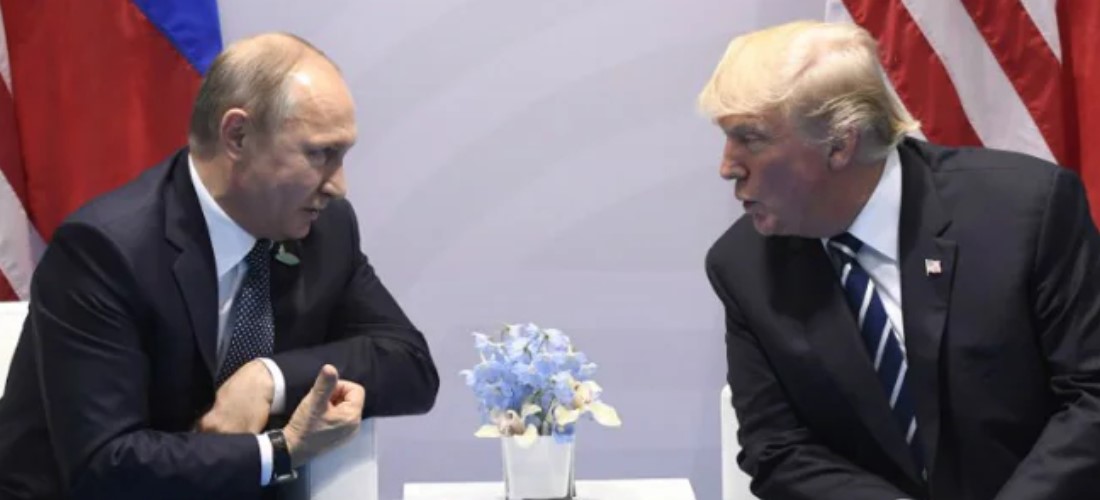
Colombo, August 10 – The attention of the world is fixed on the forthcoming talks between President Donald Trump and President Vladimir Putin, set to take place in Alaska on August 15. Interestingly, Alaska was once Russian territory before its purchase by the United States in 1867.
The meeting is being framed as one of the most consequential bilateral engagements in recent history, with the primary agenda item being to negotiate an end to the ongoing Russian–Ukrainian war.
President Trump has made no secret of his desire to secure a ceasefire and explore a peace agreement. Yet his controversial suggestion that the deal might involve territorial “swaps”—framed as being in the interests of both parties—has already drawn sharp criticism from Ukraine and European leaders.
Media reporting suggests that the talks may include a tacit recognition of territories forcibly taken by Russia.
European and Ukrainian officials argue that legitimizing territorial acquisition by force undermines international norms that have prevented large-scale border changes since the end of the Second World War.
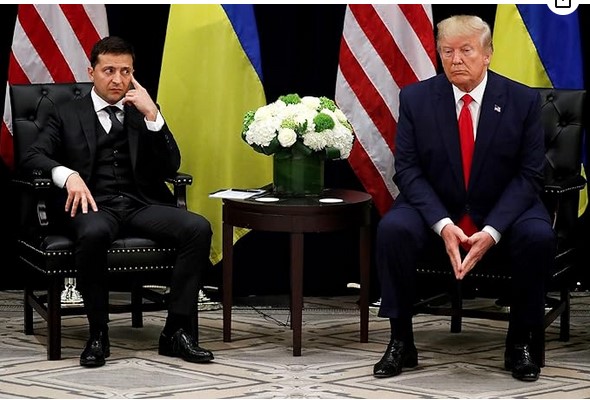
While the summit was initially designed as a bilateral encounter, President Trump has publicly signaled his openness to a trilateral format that includes Ukraine’s President Volodymyr Zelenskyy.
However, Moscow has so far rejected any arrangement that would involve negotiations with Kyiv, preferring to deal exclusively with Washington in a great-power framework.
Analysts anticipate that the discussions may extend beyond Ukraine to encompass broader strategic issues—nuclear arms control, the easing of sanctions, global stability, and possible economic cooperation, particularly in the field of energy.
This is consistent with both leaders’ negotiation styles: Trump’s penchant for high-visibility “grand deals” and Putin’s methodical pursuit of long-term geopolitical goals.
Strategic Context
Both Trump and Putin are, in their own ways, transactional in approach. Trump thrives on the theatre of diplomacy, favoring agreements that can be branded as “historic” and leveraged for political capital both at home and abroad, including the Nobel Peace Prize.
Conversely, Putin plays a long game—methodically using negotiations to consolidate Russia’s strategic position and legitimize its geopolitical gains.
At stake is more than the fate of Crimea, Donbas, or even Ukraine’s territorial integrity. What hangs in the balance is the credibility of the post–World War II international order itself. Any redrawing of borders by force—even if endorsed through negotiations—would erode the long-standing principle that territorial conquest should not be rewarded.
Possible Outcomes of Territorial Swap
Any settlement involving territorial swaps would have positive and negative consequences. Here are some scenarios:
Scenario 1 – Trump could press for a ceasefire based on the current frontlines, effectively recognizing Russian control over Crimea and parts of Donbas.
Through this, Putin would gain international legitimacy for occupied territories and Trump could claim to have “ended the war” and reduced US spending. But this arrangement rewards aggression and sets a precedent for territorial seizures elsewhere.
Scenario 2 – Russia keeps Crimea and parts of Donbas, while Ukraine gains enhanced NATO or EU security guarantees, coupled with de-militarized buffer zones.
This appears “balanced” on paper, offering Ukraine security benefits. But the danger is that Ukraine will lose land and NATO expansion could trigger further Russian hostility.
Scenario 3 – Recognition of Crimea as Russian territory in exchange for a Russian withdrawal from selected occupied areas in eastern or southern Ukraine.
By this, Putin will secure his most prized territorial gain and Trump will have delivered a partial restitution to Ukraine. But the downside is that Ukraine will perceive it as legitimizing Russian invasion and weakening of its sovereignty.
However, this approach could see borders redrawn not just in Ukraine, but also across other “frozen conflicts” in the post-Soviet space—such as over Transnistria, Abkhazia, and South Ossetia. Putin will be consolidating his sphere of influence and Trump could brand it as “Yalta 2.0.”
However, the downside is that it risks destabilizing multiple regions and fueling further territorial disputes.
Scenario 4 – Minor or largely symbolic border adjustments could be presented as a major diplomatic breakthrough. This will secure headlines for both leaders, but given the lack of substance, underlying disputes will remain unresolved.
Scenario 5 – The fifth way out is to enable Russia to retain Crimea and part of Donbas in exchange for non-territorial concessions, such as partial sanctions relief or reduced NATO deployment in Eastern Europe. Moscow would gain economic and strategic breathing space and Trump would market the deal as a de-escalation.
But the danger is that it will undermine the European security architecture which is likely to be viewed as appeasement.
Strategic Red Lines
It will be prudent to recognize that Putin will not return Crimea and will resist any arrangement that limits Russian access to the Black Sea or allows significant NATO presence near Russia’s borders.
Any settlement lacking Kyiv’s approval would face legitimacy challenges and would likely fail in implementation.
The European Union (particularly NATO’s eastern members), is deeply concerned about any arrangement that could become a precedent for other border changes through coercion.
Should the Trump–Putin talks proceed without Ukraine’s direct participation, the implications would be severe. Excluding Kyiv from negotiations over its own territory would undermine Ukrainian sovereignty and national dignity, delegitimize any agreement domestically, making enforcement almost impossible.
It would also be a signal to smaller states that great powers can decide their fate without consent—a dangerous return to 20th-century spheres-of-influence politics.
Moreover, without Ukraine’s buy-in, any agreed terms could face widespread non-compliance on the ground. The Ukrainian public and military would have little incentive to respect arrangements made in their absence, potentially leading to renewed hostilities.
Wider Implications
A territorial bargain between Trump and Putin would have repercussions far beyond Eastern Europe. For Asia, it could embolden China’s ambitions in the South China Sea or over Taiwan. And in the Middle East, it could shift the calculus in territorial disputes such as those involving the Golan Heights.
This is why many foreign policy experts argue that a deal in narrow terms could be strategically dangerous. The weakening of the international taboo on territorial conquest may unleash a wave of opportunistic challenges to existing borders worldwide.
A land swap—no matter how diplomatically packaged—is about more than territory. It is about the rules and principles that underpin the global order. Trading land for peace may deliver a short-term political win for Trump and a strategic consolidation for Putin, but the long-term cost could be a more unstable and dangerous world.
If the Trump–Putin talks move towards a territorial bargain, the international community must weigh not just what is gained, but what is surrendered. Peace on paper is meaningless if it erodes the very foundations that make peace sustainable.
END
(The author is a former Non Resident Ambassador of Sri Lanka to Ukraine and a former Head of the Sri Lankan mission in Moscow)
