

By Qissa Khwani/Facebook
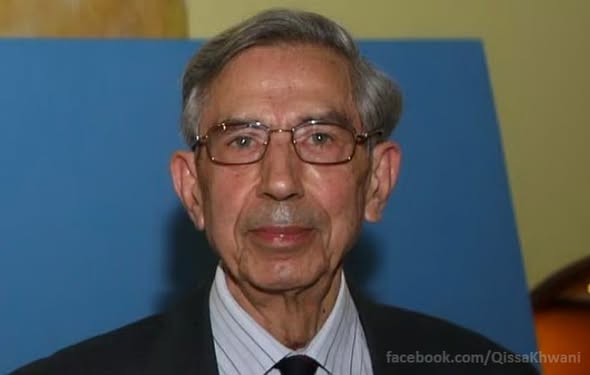
New Delhi, April 3 — Ved Prakash Marwah (1932–2020) was born in Peshawar. His father, Faqir Chand Marwah, owned a bookshop on Saddar Road in Peshawar Cantonment, which continues to operate in Delhi today and is run by his great-grandchildren.
Ved migrated to India after partition and became a distinguished Indian police officer with a long career in public service. He served for 36 years in key roles, including Commissioner of Police, Delhi etc. In recognition of his service, he was awarded the Padma Shri in 1989. After retirement he served as Governor of Manipur, Mizoram & Jharkhand, and also worked as an adviser to the Governors of Jammu & Kashmir and Bihar. He was also a scholar and wrote three books. He passed away in 2020 at the age of 87. (AJ)—
The following is excerpted from ‘Divided by Partition; United by Resilience’ by Mallika Ahluwalia
“We Flew the Pakistani Flag, Celebrated the End of British Rule, Still Had to Flee”
Ved Marwah Born: 15 Sep 1932 in Peshawar
“The June 1947 announcement of Partition came as a total surprise to us; till then, we had never believed that Partition would actually happen. But even after the June declaration, we believed that Partition would be quite peaceful, and that we could continue to live in Peshawar.
On 14 August, we flew the Pakistani flag and declared ourselves as loyal Pakistani citizens and celebrated the end of the British rule. We didn’t think that Partition, or living in Pakistan, would bring any change in our lives.
The communal trouble in Peshawar started much later. We didn’t leave till mid-November (1947),” recalls Ved Marwah.
Ved was born in Peshawar in a family that was comfortably well-off. His father, Faqir Chand Marwah, ran the Oriental Book Shop in Peshawar. Ved had two brothers and four sisters. (QK Note: The Oriental Book Shop was operated by Bodh Raj Marwah, and in Peshawar Cantonment the Faqir Chand Marwah store carried his own name).
His mother was a Hindu from Kabul. Ved remembers his childhood town as one with a syncretic culture.
“Before Partition, there was absolutely no tension at all between communities; some of our neighbours were Muslims, our gardener was a Muslim, there was no problem at all. In school, Urdu was the first language,” he recalls. “I still know how to read and write it perfectly. English was taught only after primary school. At home, we spoke Punjabi.”
“But suddenly, things turned violent; we are just lucky that we survived.”
In early September, a mob went on a rampage attacking Hindu and Sikh houses across the city. Ved recalls standing on a rooftop watching houses around them engulfed in smoke and flames.
The family managed to successfully fend off an attack on their house but watched paralysed as their friends’ and neighbours’ houses were burnt down. Many came to find refuge in their home.
But Ved’s father, Faqir Chand, was still determined not to leave. He and his brothers had built their business in Peshawar and couldn’t imagine leaving everything behind.
It was only when the Deputy Commissioner (QK Note: Haji Arbab Ahmed Ali Jan was DC from Sep 1947 to June 1948), a friend and classmate of Faqir Chand Marwah, told him that he could no longer protect him, that Faqir Chand realized that the family would have to leave.
The family had already been living in a state of siege for months, rarely venturing out; their shop had also been declared Evacuee Property, even though they had not left Peshawar.
“The Deputy Commissioner arranged a chartered flight for a few of us from Peshawar to Delhi, so we escaped the terrible train journey and violence. I remember that the seats were removed so that more people could fit inside. Our Muslim friends helped us get to the airport safely.”
“My uncle didn’t leave till February 1948. He hoped that things would calm down. Though his family had shifted, he stayed on hoping that we will all come back. But eventually the situation forced him to leave too.”
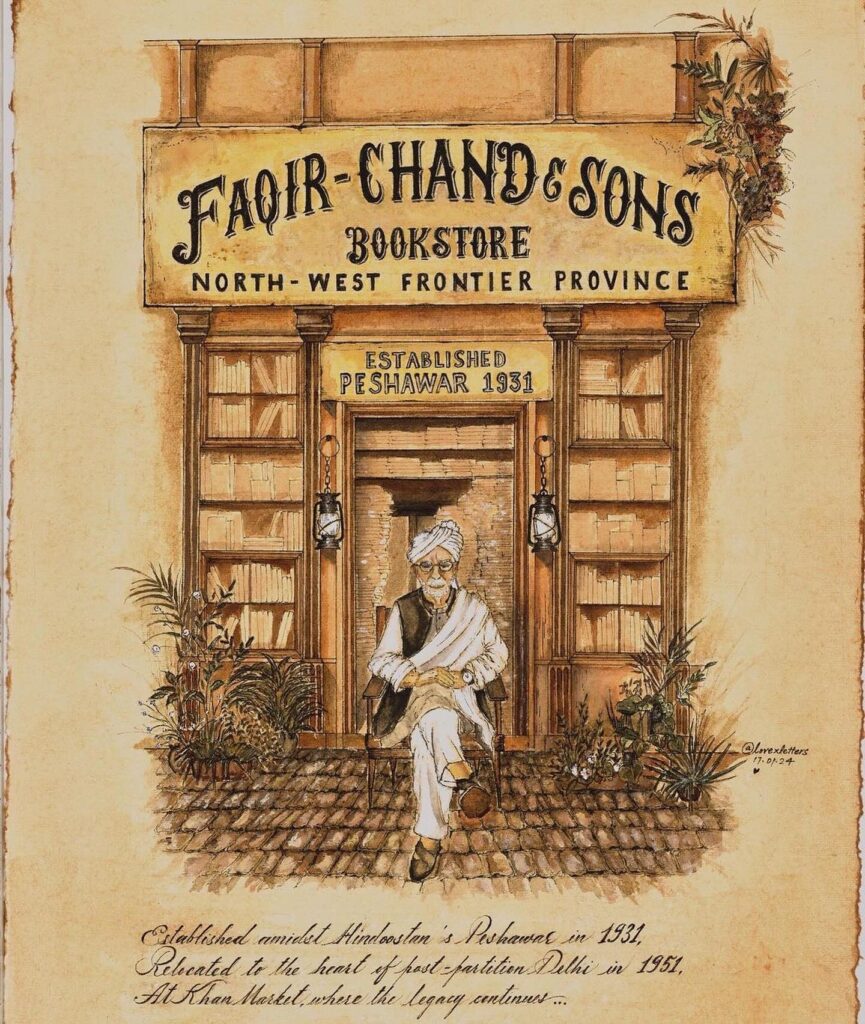
Faqir Chand Marwah was allocated a shop and a flat and decided to restart the book business that he had left behind during Partition. Faqir Chand Marwah & Sons.
“We got help from the government—that’s how we survived. First, they gave us a loan of ₹3,000 to start our little business, and then much later, against the claims, we got a shop in Khan Market, Delhi.” (Named in honour of Dr Khan Sahib)
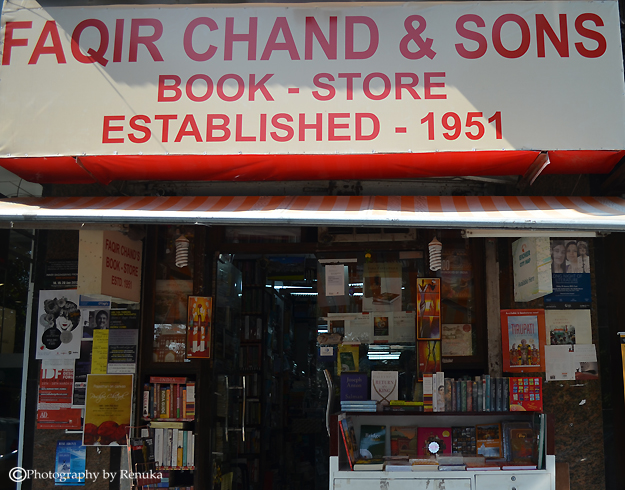
Faqir Chand & Sons bookshop is run today by some of the grandchildren and great grandchildren of Faqir Chand Marwah..
Ved did get a chance to visit Peshawar after his retirement when he became involved in Track II Diplomacy efforts between India and Pakistan:
“I was in Islamabad, and I told our hosts that I want to go to Peshawar, so they gave me a car, I drove down.”
“I decided to find an old friend who used to live opposite the General Post Office (GPO). They had a carpet shop there. I found the shop and said, “I want to meet Samat Khan.”
The people there just stared at me for a while, then asked, “Where have you come from?” I replied, “From New Delhi.”
They told me that Samat Khan died quite a few years back. They insisted that they wanted to gift me a carpet as I was their guest. I didn’t take it, but I was so touched that they genuinely wanted to present one to me.
“I wanted to see my old house. Unfortunately, when I reached there, I saw it was under demolition. I got a little emotional.
The labour there came up to me and tried to console me. All they could say was, ‘Tera makaan bahut pakka tha’ (Your house was very strong).”
(Excerpted from ‘Divided by Partition; United by Resilience’ by Mallika Ahluwalia, curator and co-founder of the Partition Museum, Amritsar, India)
END
