

By Uttam Sen
At a time when confrontation and aggression have become the idiom of political discourse one tends to hark back to patterns in human experience. Available literature tells us that the creation of modern South Asian nation-states was also suffused with subterfuge and violence.
As a Bengali settled in Bengaluru I am always subconsciously comparing the South with Bengal. In that I found the crux was the political division of Bengal in 1947 which changed the political contours of South Asia. It made a difference in Sri Lanka, then Ceylon, which got Independence in 1948. Post-War unrest in Sri Lanka had shades of the Bombay mutiny (of naval ratings). Sri Lankans in Malaya and Singapore had fought in the Lanka regiment of the Indian National Army, which, according to Clement Atlee, was instrumental in winning India freedom. Both Jawaharlal Nehru and Subhas Bose had interacted with Sri Lankans as had their party, an umbrella organization of ideologues many of whom parted ways later. The interactivity with Sri Lanka was a recognition of ancient ties.
My impressions are political in the limited sense of being conscious of political matters. There will be many more who join the category when we are reminded that we are in it together. Could we possibly develop viable social contracts? The absence of agreement between citizens and their government is a state of lawlessness. To bring about this civilizational sine qua non, politics as a calling has established its provenance.
A hopeful and trustful definition of politics is that it addresses the human condition. It is the process of making agreements between people so that they can live together. Technology is taking over and the demands of the marketplace are getting stronger. Management gets work done systematically to achieve organizational goals. Yet material progress or the proliferating wealth of a few are palpably falling short of meeting overall human requirements, including sheer existential ones like physical security, food and shelter at the macro level of country and region. Their super proficiency is not attuned to the protection of human beings differentiated misleadingly, nor anticipating short-term disasters like famine or long-term ones like deprivation and malnutrition. With a little introspection, given the enormous clout these innovators (in technology, management and wealth creation) wield, they can help allay human misery.
Could the world not have made a compelling case for Palestinian statehood simultaneously with the right of the Israeli people to co-exist? The International Court of Justice has called upon Israel to stop genocide, interestingly having being moved by South Africa which had condemned the October 7 attack by Hamas and called for the release of hostages. For the record, Iran had been kept out of the loop about the attack on Israel, though the Egyptians claim to have tipped off Tel-Aviv, which happened to be preoccupied with the Palestine Authority on the West Bank.
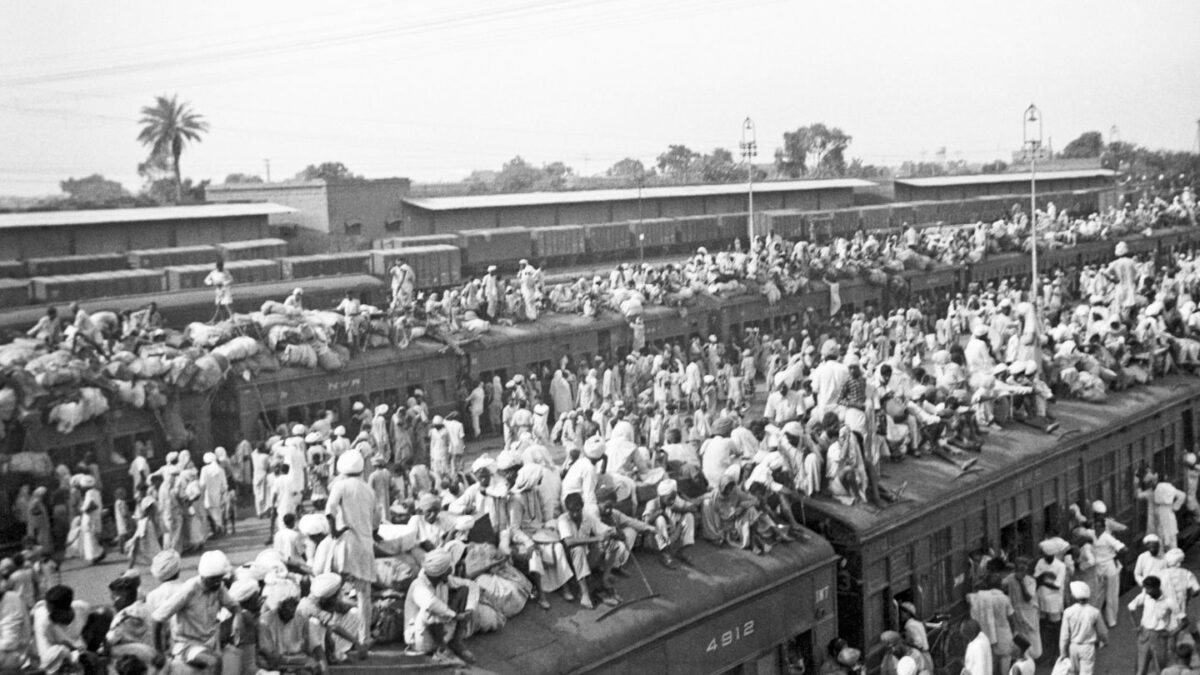
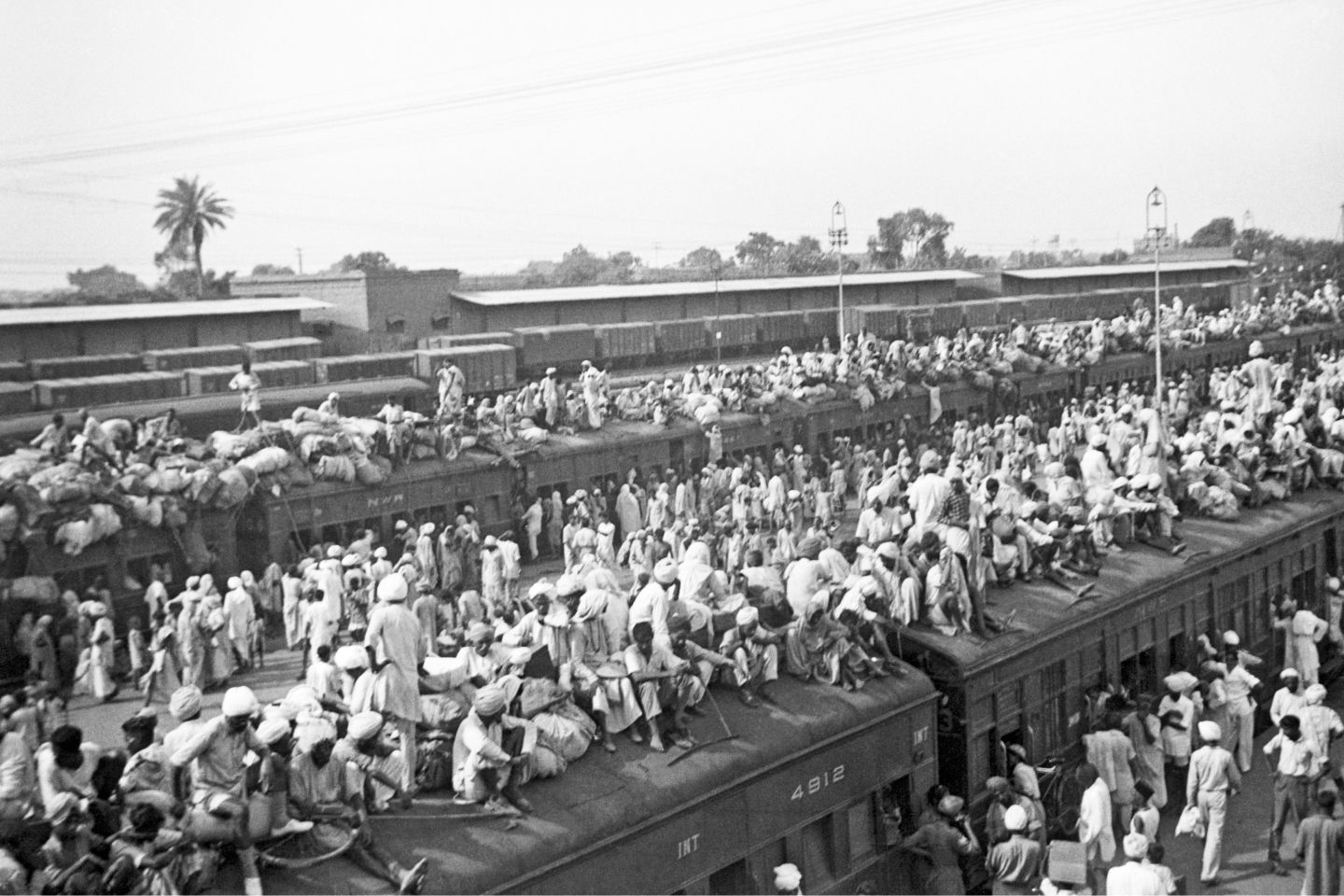
It was posited over the public sphere that had Palestinian political consciousness evolved into the growth of sometimes intellectually resourceful political parties and a movement/movements as in the case of Indians under the Raj, the seeds of ignorance and barbarity having been nipped in the bud. There is no foolproof safeguard in politics. Brinkmanship and brutality were both legion during Partition. There were no direct onslaughts by the omnipotent state on the masses even if the high dudgeon between communities was a result of a divide and rule policy. But a combination of negotiation and the armed challenge British Premier Clement Atlee had mentioned brought freedom to a divided subcontinent.
The common man does not find a panacea on the anvil yet though we get to know the conclusions when they are sealed. The big option mooted in 1947 and blazed as headlines was Partition, with separate statehood for the Palestinians and the Israelis.
We often understate the contemporary facility of information reaching almost anyone in a jiffy. Ideas and information are freely shared through digital technology. Information can still be withheld and used as an exclusive resource. And there is much that is littered rubbish, even disinformation. But it is oftener that the “smoking gun” is nailed today than before. Something or other can be secured from the woodwork. For instance, Winston Churchill, to please Franklin Roosevelt, from whom he needed help in 1941, agreed to the principle of self-determination for subjugated people in the Atlantic Charter, which the two had signed aboard warships off the coast of Newfoundland.
Somewhere along the line, they had even agreed to eschew backroom adjustments! Those were among the visionary conceptions that defined human dignity and inspired the world from Algeria to Vietnam, and were applicable to Arabs, Jews and Indians. For all one knows they informed the relative post-War peace and stability which are now in peril because human worth and dignity were underscored as the cornerstones of western democracies not just as principles but also for human coordination and functionality. Churchill ignored the first two and was electorally deposed in deference to the next two. Today’s mind-boggling technological leaps forward needed the space for incubation that political democracy created for them, not only in the post-War period but much earlier in the 19th century when political upheaval unshackled the human mind and overhauled everything from science and technology to medicine and the human psyche.
Yet much of the humanitarian gains were frittered away after the turn of the century. Erich Maria Remarque’s classic All Quiet on the Western Front portrayed humankind relieved of its moral compass in the First World War. Eric Hobsbawm thought that a purblind interlude had sowed the seeds of today’s crisis. The new bourgeoisie violated for others the principles on which it was born. The exclusion created the possibility that one day “the Centre would not hold”.
The League of Nations mandate for Palestine after the first Great War resulted in the occupation of territories ruled by the Ottoman Empire while the occupation of the Gaza strip by Israel after the 1967 Arab- Israeli war superseded Egyptian control prior to it. Again analogously, Arabs have recalled Indo-British encounters through the Mandate period between 1918 and 1948 when sections of the Indian political leadership were more proactive in wresting self-rule than their Arab counterparts, who were repeatedly misled. There is not much reason to imagine that Arabs were unhappier under the relatively kindred Ottomans than the alien British, not to mention the hugely contentious issue of bringing in predominantly European Jews to displace them from their homeland. The feeling in Africa and West Asia now is that Arabs are being destroyed as a national/ethnic/religious entity (genocide).
On its part, Hamas, as the Islamic Resistance Movement governing the Gaza Strip, decided to hunt rather than be hunted. The proverbial open air prison created by the Israeli land, sea and air blockade after Fatah and the Palestinian Authority’s departure in 2007, and Hamas’s arrival, is now an uninhibited killing field. Hamas’s own barbaric depredation into Israel has given credence to the belief that it had been infiltrated by the lumpen, though their existence is a fait accompli among the uprooted.
Nonetheless hope springs eternal. The violation of all the basic norms of human survival and sustenance and its wider ramifications will eventually make the world rein in the wolves though every day lost multiplies the human casualties. The USA’s well-regarded and influential political science realist, John Mearsheimer, estimates that the resources needed for even a day’s operations in the Gaza Strip cannot be sustained without the network and munificence of a preeminent lobby (which presumably can be brought around).
One wonders whether Israel’s unprecedented security lapse in allowing Hamas’s terrorists to enter and strike at will is comparable to another situation in which important intelligence was respected. As the story goes, as soon as the Commander-in-Chief of the British Indian armed forces found that the soldiers of the “iron frame” had switched loyalties to the Indian National Army, he recommended withdrawal from India rather than get into a bloodbath.
The British electorate rejected Winston Churchill, iconic along with Roosevelt and Stalin as a victorious World War II leader, but infamous as an unrepentant perpetrator of a famine in Bengal because food was shipped off to feed Allied troops in South-east Asia at his behest. The majority of the British had rejected a pyrrhic War hero determined to retain India, and for that matter entire South Asia. If the Beveridge Report is anything to go by, it laid the foundation of the post-War British welfare state.
People opted for peace and security of the individual, the National Health Service came into being (in 1948) and Pakistan and India and then Myanmar and Sri Lanka gained independence (in that order). There is no knowing what might have transpired had a headstrong regime been in charge in London with the mentality to punish people standing up for their rights, particularly in a volatile environment. Enlightenment, which emanated from the people’s cause, delivered in the end.
South Asia had seen it all before the watershed of Independence and will hopefully prove the unraveling trend-setter. If, like Naipaul, we take history as the river, it has been changing direction, leaving us with the choice of either abandoning civilization or restoring it.
END
By Uttam Sen
At a time when confrontation and aggression have become the idiom of political discourse one tends to hark back to patterns in human experience. Available literature tells us that the creation of modern South Asian nation-states was also suffused with subterfuge and violence.
As a Bengali settled in Bengaluru I am always subconsciously comparing the South with Bengal. In that I found the crux was the political division of Bengal in 1947 which changed the political contours of South Asia. It made a difference in Sri Lanka, then Ceylon, which got Independence in 1948. Post-War unrest in Sri Lanka had shades of the Bombay mutiny (of naval ratings). Sri Lankans in Malaya and Singapore had fought in the Lanka regiment of the Indian National Army, which, according to Clement Atlee, was instrumental in winning India freedom. Both Jawaharlal Nehru and Subhas Bose had interacted with Sri Lankans as had their party, an umbrella organization of ideologues many of whom parted ways later. The interactivity with Sri Lanka was a recognition of ancient ties.
My impressions are political in the limited sense of being conscious of political matters. There will be many more who join the category when we are reminded that we are in it together. Could we possibly develop viable social contracts? The absence of agreement between citizens and their government is a state of lawlessness[US1] . To bring about this civilizational sine qua non about, politics as a calling has established its provenance.
A hopeful and trustful definition of politics is that it addresses the human condition. It is the process of making agreements between people so that they can live together. Technology is taking over and the demands of the marketplace are getting stronger. Management gets work done systematically to achieve organizational goals. Yet material progress or the proliferating wealth of a few are palpably falling short of meeting overall human requirements, including sheer existential ones like physical security, food and shelter at the macro level of country and region. Their super proficiency is not attuned to the protection of human beings differentiated misleadingly, nor anticipating short-term disasters like famine or long-term ones like deprivation and malnutrition. With a little introspection, given the enormous clout these innovators (in technology, management and wealth creation) wield, they can help allay human misery.
Could the world not have made a compelling case for Palestinian statehood simultaneously with the right of the Israeli people to co-exist? The International Court of Justice has called upon Israel to stop genocide, interestingly having being moved by South Africa which had condemned the October 7 attack by Hamas and called for the release of hostages. For the record, Iran had been kept out of the loop about the attack on Israel, though the Egyptians claim to have tipped off Tel-Aviv, which happened to be preoccupied with the Palestine Authority on the West Bank.
It was posited over the public sphere that had Palestinian political consciousness evolved into the growth of sometimes intellectually resourceful political parties and a movement/movements as in the case of Indians under the Raj, the seeds of ignorance and barbarity could have been nipped in the bud. There is no foolproof safeguard in politics. Brinkmanship and brutality were both legion during Partition. There were no direct onslaughts by the omnipotent state on the masses even if the high dudgeon between communities was a result of a divide and rule policy. But a combination of negotiation and the armed challenge British Premier Clement Atlee had mentioned brought freedom to a divided subcontinent.
The common man does not find a panacea on the anvil yet though we get to know the conclusions when they are sealed. The big option mooted in 1947 and blazed as headlines was Partition, with separate statehood for the Palestinians and the Israelis.
We often understate the contemporary facility of information reaching almost anyone in a jiffy. Ideas and information are freely shared through digital technology. Information can still be withheld and used as an exclusive resource. And there is much that is littered rubbish, even disinformation. But it is oftener that the “smoking gun” is nailed today than before. Something or other can be secured from the woodwork. For instance, Winston Churchill, to please Franklin Roosevelt, from whom he needed help in 1941, agreed to the principle of self-determination for subjugated people in the Atlantic Charter, which the two had signed aboard warships off the coast of Newfoundland.
Somewhere along the line, they had even agreed to eschew backroom adjustments! Those were among the visionary conceptions that defined human dignity and inspired the world from Algeria to Vietnam, and were applicable to Arabs, Jews and Indians. For all one knows they informed the relative post-War peace and stability which are now in peril because human worth and dignity were underscored as the cornerstones of western democracies not just as principles but also for human coordination and functionality. Churchill ignored the first two and was electorally deposed in deference to the next two. Today’s mind-boggling technological leaps forward needed the space for incubation that political democracy created for them, not only in the post-War period but much earlier in the 19th century when political upheaval unshackled the human mind and overhauled everything from science and technology to medicine and the human psyche.
Yet much of the humanitarian gains were frittered away after the turn of the century. Erich Maria Remarque’s classic All Quiet on the Western Front portrayed humankind relieved of its moral compass in the First World War. Eric Hobsbawm thought that a purblind interlude had sowed the seeds of today’s crisis. The new bourgeoisie violated for others the principles on which it was born. The exclusion created the possibility that one day “the Centre would not hold”.
The League of Nations mandate for Palestine after the first Great War resulted in the occupation of territories ruled by the Ottoman Empire while the occupation of the Gaza strip by Israel after the 1967 Arab- Israeli war superseded Egyptian control prior to it. Again analogously, Arabs have recalled Indo-British encounters through the Mandate period between 1918 and 1948 when sections of the Indian political leadership were more proactive in wresting self-rule than their Arab counterparts, who were repeatedly misled. There is not much reason to imagine that Arabs were unhappier under the relatively kindred Ottomans than the alien British, not to mention the hugely contentious issue of bringing in predominantly European Jews to displace them from their homeland. The feeling in Africa and West Asia now is that Arabs are being destroyed as a national/ethnic/religious entity (genocide).
On its part, Hamas, as the Islamic Resistance Movement governing the Gaza Strip, decided to hunt rather than be hunted. The proverbial open air prison created by the Israeli land, sea and air blockade after Fatah and the Palestinian Authority’s departure in 2007, and Hamas’s arrival, is now an uninhibited killing field. Hamas’s own barbaric depredation into Israel has given credence to the belief that it had been infiltrated by the lumpen, though their existence is a fait accompli among the uprooted.
Nonetheless hope springs eternal. The violation of all the basic norms of human survival and sustenance and its wider ramifications will eventually make the world rein in the wolves though every day lost multiplies the human casualties. The USA’s well-regarded and influential political science realist, John Mearsheimer, estimates that the resources needed for even a day’s operations in the Gaza Strip cannot be sustained without the network and munificence of a preeminent lobby (which presumably can be brought around).
One wonders whether Israel’s unprecedented security lapse in allowing Hamas’s terrorists to enter and strike at will is comparable to another situation in which important intelligence was respected. As the story goes, as soon as the Commander-in-Chief of the British Indian armed forces found that the soldiers of the “iron frame” had switched loyalties to the Indian National Army, he recommended withdrawal from India rather than get into a bloodbath.
The British electorate rejected Winston Churchill, iconic along with Roosevelt and Stalin as a victorious World War II leader, but infamous as an unrepentant perpetrator of a famine in Bengal because food was shipped off to feed Allied troops in South-east Asia at his behest. The majority of the British had rejected a pyrrhic War hero determined to retain India, and for that matter entire South Asia. If the Beveridge Report is anything to go by, it laid the foundation of the post-War British welfare state.
People opted for peace and security of the individual, the National Health Service came into being (in 1948) and Pakistan and India and then Myanmar and Sri Lanka gained independence (in that order). There is no knowing what might have transpired had a headstrong regime been in charge in London with the mentality to punish people standing up for their rights, particularly in a volatile environment. Enlightenment, which emanated from the people’s cause, delivered in the end.
South Asia had seen it all before the watershed of Independence and will hopefully prove the unravelling trend-setter. If, like Naipaul, we take history as the river, it has been changing direction, leaving us with the choice of either abandoning civilization or restoring it.
END
