

By P.K. Balachandran/Daily News
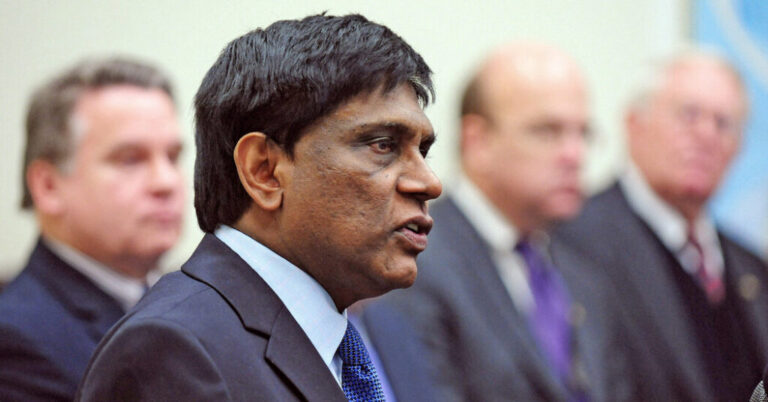
Colombo, February 3 -Thambithurai Muthukumarasamy, a Sri Lankan student activist turned human rights lawyer, who, later in life, shone as a top functionary of Amnesty International in the US, died on January 19 at Washington DC, mourned by rights workers across the world. He was 76.
As a member of the Tamil Student Movement, MuthuKumarasamy part of the radicalised youth milieu which responded to systematic discrimination and state violence by seeking new political pathways beyond parliamentary engagement.
“This was a period in which early armed fighters of the Tamil Eelam liberation struggle operated as fragmented and independent groups, often without formal structure or coordination. Young men indulged in self-sacrificial defiance. The sacrifice of Ponnuthurai Sivakumaran (the first Tamil militant to commit suicide by swallowing cyanide), electrified Tamil youth,” recalls Tamil Guardian in its obituary.
The Students’ Council started by Ponnuthurai Saththiyaseelan, gave the inchoate Tamil student movement in 1972, an organizational heft. It was in this crucible that Kumar emerged as a key organiser and political thinker.
Muthukumarasamy Kumar was among those involved in the formation of the Students’ Council. Though the students’ protest was peaceful, Kumar, as the President of the council on an increasingly restive campus, was repeatedly questioned by the police and was finally arrested and imprisoned without charge in the 300-year-old Fort Hammenhiel in the Jaffna peninsula.
Arrested at 17 years of age, Muthukumarasamy spent more than five years in various stints in Sri Lankan prisons, repeatedly arrested, beaten and ferried from jail to jail because he was outspoken, New York Times said in a report. He was imprisoned at Bogambara in Kandy also.
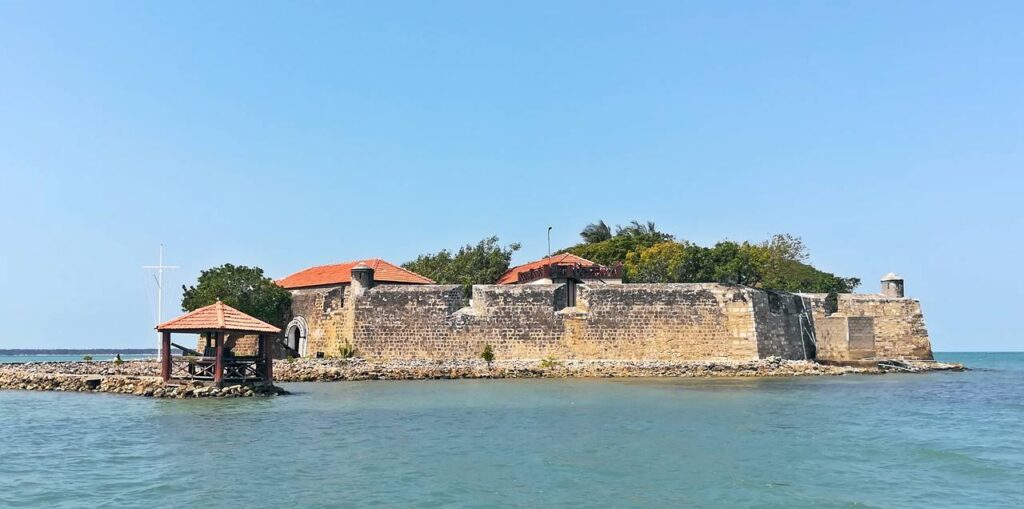
However, for the young prisoner, it was less brutal than it might have been. “All of the students were treated like heroes in the prison when we walked in,” Muthukumarasamy said in a 2013 interview with WAMU radio, adding, “I was very well taken care of by the guards, because they were also ethnic Tamils.”
He was the central character in Lanka Rani, a novel written by Arular (Arul Prakasam), one of the founders of the militant organization EROS. The novel offered a stark portrayal of state repression, political betrayal, and the injustices carried out under the guise of democracy by the Sri Lankan State, capturing the moral and political environment in which early Tamil militants operated, according to the Tamil Guardian.
Faith in the Legal System
But Muthukumarasamy had an indefatigable faith in the power of the law and the justice system, even as he was a victim of unbridled State power and violence. Though an engineering student, he qualified as a lawyer while being in jail, with a Minister of Justice reportedly even giving him his law books, says New York Times. Muthukumarasamy passed the law exams with flying colours.
Protests across the world over his imprisonment led to the intervention of Amnesty International which declared him a “Prisoner of Conscience”. A Prisoner of Conscience is someone who has not used or advocated violence in the circumstances leading to their imprisonment. Amnesty International also initiated a worldwide campaign, putting pressure on the Sri Lankan government to secure his release.
After release, Muthukumarasamy took up cases of several Tamils in Sri Lankan courts. However, since there seemed to be no reprieve from persecution of the Tamil agitators, he fled and landed in the US taking a circuitous route. He had travelled through Malaysia and Africa, staying with relatives, and procured a US visa from a sympathetic American Ambassador in Botswana.
In the United States, Muthukumarasamy entered the University of Pennsylvania for a law degree in the early 1990s. He also began working with Amnesty International. Thanks to Amnesty International, he broadened his interests from the narrow confines of the Tamil community in Sri Lanka to include oppressed or persecuted communities all over the world.
He threw in his lot with the US body, known by the acronym INHR. The IMGR is a team of experienced diplomats and policy professionals who help enhance the interaction of organisations and groups across the world with the United Nations and its specialized agencies. The INHR’s professionals know the UN and its agencies inside and out. They use that knowledge to link client organizations with UN agencies.
Known as “Kumar”
In the US, Muthukumarasamy was known as “T.Kumar” or “Kumar” and as such became a known activist in the cause of human rights across the globe.
In a piece in the INHR website, Alle Beitrage wrote that Kumar served as an Amnesty International staff member and was also one of its advocates for more than 20 years, covering human rights across the world and rising to the level of the AI’s Washington Advocacy Director.
Minorities Across Asia
Among highlights of Kumar’s human rights work was his advocacy work for minority groups, especially in Asia. He was a common figure at US Congressional hearings and was also able to work directly with governments to help them improve their human rights work.
Kumar was among the first human rights activists to meet the Taliban’s leaders when the Taliban came to power in Afghanistan for the first time to establish a rigid Islamist regime after driving the Soviet Army out.
After the Sept. 11 attacks, Kumar told a Congressional committee that the “Taliban’s Shariah courts and religious police” in Afghanistan “impose cruel, inhuman and degrading punishment.” He told another committee in 2017 that in Vietnam, “prisoners of conscience were tortured and otherwise ill-treated, and subjected to unfair trials.”
He also travelled the world with President Jimmy Carter, monitoring elections, showing no fear in speaking out when he witnessed improprieties.
“Whatever the task he undertook, Kumar handled it with patience, a smile, an advocate’s persistence, and a lawyer’s precision,” Beitrage wrote in the INHR website.
Kumar also served as a Professor at the Academy of Humanitarian and Human Rights Law at Washington College of Law, educating new generations of lawyers in the principles of humanitarian law and accountability.
His work extended to international election monitoring, where he served as an Election Judge in Philadelphia. He also functioned as an Advisor to the United Nations Quaker Office and provided advisory input on United Nations related affairs to the Transnational Government of Tamil Eelam (TGTE), Tamil Guardian adds.
“For years Kumar spoke out, in congressional testimony, at the United Nations and elsewhere, against China, Vietnam, Afghanistan and other countries whose governments, justice systems and prisons had violated their citizens’ rights wrote Adam Nossiter in New York Times.
Foreign Service Institute
In addition to his advocacy work with Amnesty, he lectured at the Foreign Service Institute, the US government’s training centre for diplomats and other members of the foreign service. He monitored elections around the world with former President Jimmy Carter.
Adotei Akwei, a senior adviser at Amnesty International, said in an email that Kumar was “the human rights survivor who had the grace and strength to continue fighting without fear or bitterness and went on to shape almost anyone who encountered him.”
Kumar rose to be the Director for International Advocacy at Amnesty International USA.
Families of the Disappeared Mourn
The Eastern Province Association of Relatives of the Forcibly Disappeared held a memorial for the late Thambithurai Muthukumarasamy. The event brought together relatives of the disappeared, political representatives, civil society members, and members of the public to honour Kumar’s enduring legacy.
A memorial statement prepared collectively by representatives from eight districts was read out by the Batticaloa District President. The statement reflected on Kumar’s contributions to the early political mobilisation of the Tamils, his later work within international human rights institutions, and his lifelong commitment to justice for victims of enforced disappearance and State violence, a report from Batticaloa in Tamil Guardian said.
END
Sri Lanka, Tamil struggle, Student movement, Thambithurai Muthukumarasamy, T.Kumar, USA, Amnesty International, Global rights issues,
