

By Veeragathy Thanabalasingham
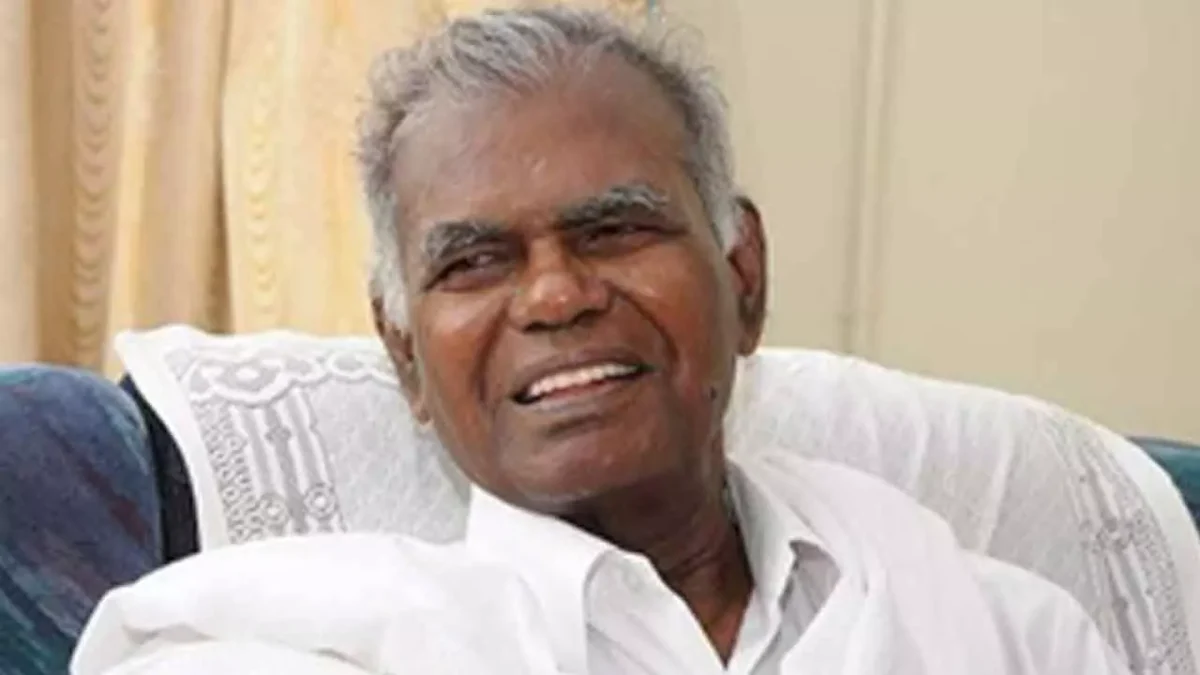
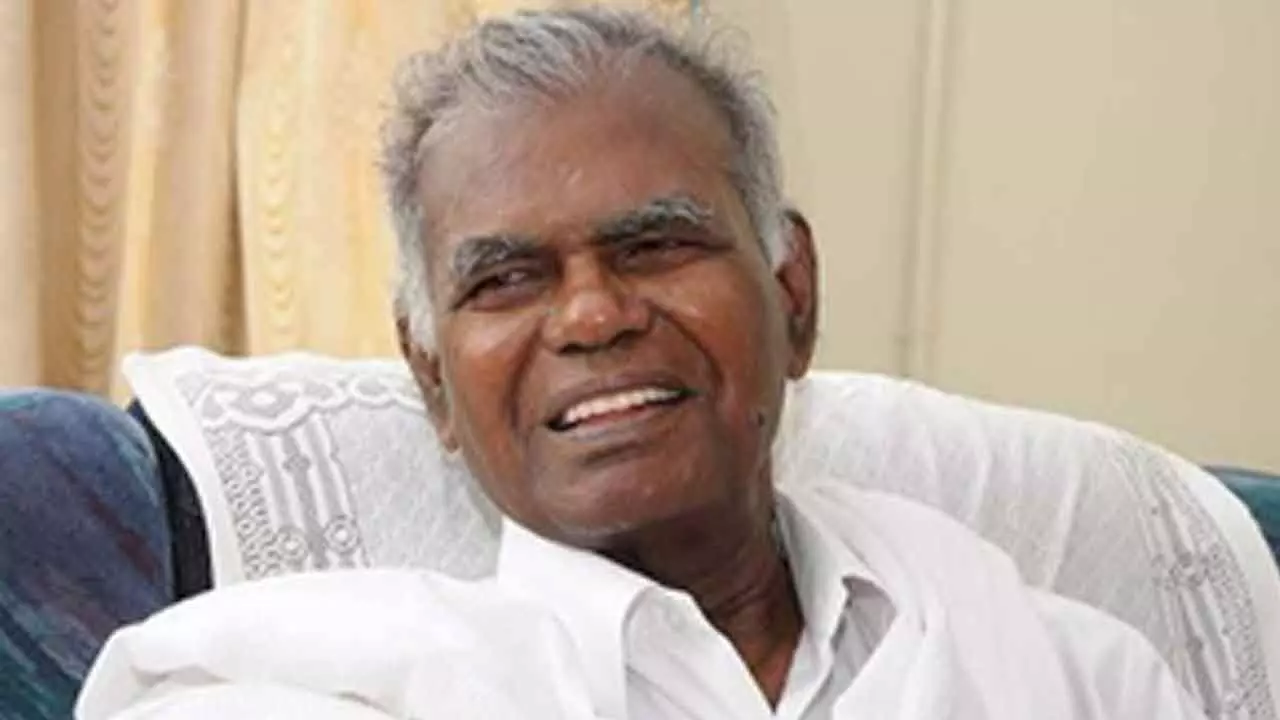
Colombo, March 4 – An editorial in the Tamil Nadu daily Dinamani the day after the passing of R. Nallakannu—the veteran leader of the Indian Communist movement was titled, “Who is left like him now…”
Following his demise at age 101 at Chennai, it is doubtful whether one could point to anyone currently living in the world who is an example of honesty and dignity in public life.
The passing away of Nallakannu marks the end of an era in Tamil Nadu politics, one shaped by a generation of leaders who were icons. Their public lives were defined by personal sacrifice, ideological commitment, and an enduring devotion to social justice.
Nallakannu was the second veteran Communist leader in Tamil Nadu, after his Marxist contemporary and comrade N. Sankaraiah, to have lived for a hundred years spanning several decades of political service. Sankaraiah passed away in 2023 at the age of 101.
Nallakannu’s life of simplicity, integrity and dignity, stood in stark contrast to the modern political landscape, which is characterized by a moral vacuum. In an age dominated by ostentation, money, and a hunger for power, he advocated and justified a political approach rooted in simplicity, transparency, and honesty.
The history of the Indian Communist movement and Nallakannu’s life ran parallel to each other.
Nallakannu was born on December 26, 1924, in Srivaikuntam, Thoothukudi district, Tamil Nadu. The Communist Party of India (CPI) was founded exactly one year later, on December 26, 1925.
Affectionately called “Comrade R.N.K.” by Communist party workers, the fact that Nallakannu’s birth centenary coincided with the centenary of the Communist Party of India demonstrated that his life and the Communist movement were inseparable.
Like almost all veteran leaders of the Indian Communist movement, Nallakannu’s political journey began in the freedom struggle and the Congress movement. Even during his school days, he developed a desire to participate in the independence movement. He also had a natural inclination to fight against caste discrimination.
However, Nallakannu could not travel with the Congress movement for long. After establishing contact with the Communist Party unit operating in Thoothukudi, and under the guidance of one of his school teachers, he joined the Communist Party of India in 1943 at the age of 19.
The speeches of Comrade Jeeva and his friendship with T.M. Chidambara Ragunathan had a profound impact on him. At one point, with Jeeva’s assistance, Nallakannu also gained experience working as a journalist for the Communist Party’s daily, Janasakthi. He was an excellent writer and a sophisticated orator; his speeches and writings were designed to guide people toward maturity rather than merely inciting emotion.
In the early years, R. Nallakannu stated that he did not have access to the original works of communist founding fathers like Marx and Lenin. He learned about the communist movement through the writings of Jawaharlal Nehru. Ironically, when the Congress government led by the same Nehru banned the Communist Party in 1948, Nallakannu was forced to go underground. He had previously operated covertly when the British colonial rulers banned the party as well.
While living underground, Nallakannu was arrested and subjected to brutal police torture. Demanding that he reveal the hideouts of fellow comrades, a police officer burnt Nallakannu’s thick moustache with a cigarette. Following that incident, he abandoned the habit of keeping a moustache permanently.
In the first general elections held in 1952, Communist candidates won a significant number of seats, becoming the primary opposition party in Parliament. Consequently, protests intensified both inside and outside Parliament, demanding the cancellation of conspiracy cases filed against Communists across India.
With no other choice, the Congress government withdrew most of the conspiracy cases. As a result, many Communists, including Nallakannu and Baladhandayutham—who had been sentenced to life imprisonment in the Nellai Conspiracy Case—were released. However, since there was an additional case against him regarding the possession of explosives, Nallakannu had to spend another five years in prison.
After seven years of incarceration, Nallakannu was released from Madurai Jail in December 1956 and began engaging in party work even more vigorously than before. Two years later, he married Ranjitham, a school teacher and the daughter of a senior Communist comrade. It was an inter-caste marriage.
Following the Indo-China war and the ideological rift between the Soviet Union and China, the Communist Party of India (CPI) split in 1964. Nallakannu did not join those who broke away to form the Communist Party of India (Marxist).
From 1992 onwards, he served as the Tamil Nadu State Secretary of the Communist Party for three terms, totaling 13 years.
Believing that the issues which caused the party split sixty years ago were no longer relevant, Nallakannu worked tirelessly to unify the two Communist parties. However, this goal was not realized during his lifetime.
A man who proved that one can live a disciplined life through austerity, Nallakannu prioritized social welfare and party growth above all else. There were times when he distanced himself from his family to ensure that his political activities did not bring hardship to his wife and daughters.
A man of unwavering commitment to his ideology, Nallakannu was exceptionally simple and gentle in nature. He never craved for power or wealth.
In 2022, when the Government of Tamil Nadu honoured R. Nallakannu with the ‘Thagaisal Thamizhar’ (Eminent Tamilian) award, it included a cash prize of 1.5 million rupees. Instead of taking that money home, he immediately donated the entire amount to the Chief Minister’s Public Relief Fund.
Similarly, when Communist Party workers gifted him 10 million rupees and a car as a token of appreciation, he promptly donated both to the party itself.
Living in a modest government-allotted house in Chennai for a monthly rent of 5,700 rupees, Nallakannu’s family managed their expenses with the 2,500 rupees salary provided by the Communist Party and his wife’s pension of 4,500 rupees. He held a firm conviction that social change is impossible without a philosophy rooted in frugality. He stood as a brilliant example of uncompromising honesty.
An Unwavering Spirit
In May 2019, the state government asked Nallakannu to vacate his rented house in T. Nagar, Chennai, as the building complex was to be demolished for new construction. Having lost his wife three years prior, he quietly moved out and went to live with one of his daughters in another part of the city. When the news broke, it sparked widespread public outrage.
When journalists questioned him about the incident, he admitted that being forced to leave his home was painful. However, he maintained that there was no issue just because the government hadn’t allotted him an alternative residence.
Extraordinarily, he used that moment to urge the government to provide alternative housing for the family of the late Congress Minister P. Kakkan, who was forced to vacate under similar circumstances. The way he handled this situation remains a premier example of how one should conduct oneself in public life without a shred of selfishness.
A Legacy Beyond Politics
Despite his lifelong dedication and sacrifices for the welfare of the poor and marginalized, the people of Tamil Nadu never elected Nallakannu to represent them in either the Parliament or the State Legislative Assembly.
Even in death, his service continued. His family donated his body for medical research. Having lived his life as a lesson to the people, Nallakannu is serving the medical student community after his death.
When Mahatma Gandhi passed away, Albert Einstein remarked, “Generations to come will scarce believe that such a one as this ever in flesh and blood walked upon this earth.” The same holds profoundly true for R. Nallakannu.
END
