

By P.K. Balachandran
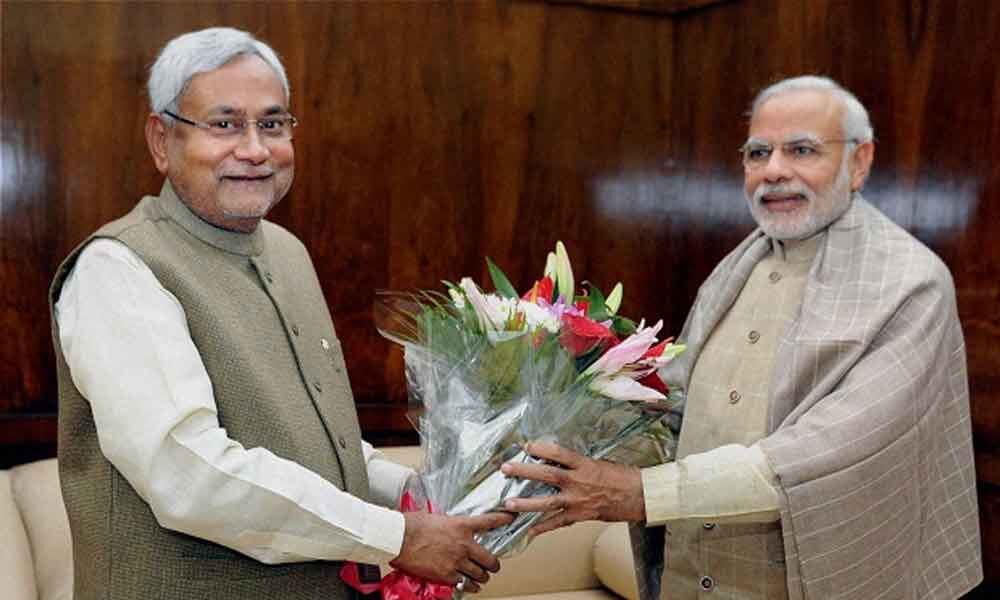
Colombo, November 14 (Counterpoint) -The National Democratic Alliance (NDA) helmed by Indian Prime Minister Narendra Modi and the Bihar Chief Minister Nitish Kumar, has swept the Bihar State Assembly elections held on November 6 and 11. The opposition combine led by Tejaswi Yadav of the Rashtriya Janata Dal (RJD) and Rahul Gandhi of the Congress, has bitten the dust.
The NDA has won 202 seats out of 243 up for grabs. The opposition alliance named Mahagathbandan (MGB) got only 35. The NDA’s total vote share stood at 46.7%, while the Opposition MGB had a vote share of 37.5%.
The Congress has posted its worst performance since 2010, snagging just six seats, despite a vote share of 8.9%.
The All India Majlis-e-Ittehadul Muslimeen (AIMIM), led by Asaduddin Owaisi, with a 2% vote share, won five seats. This should be a shot in the arm for the Muslim party.
The Lok Janshakti Party Ram Vilas (LJP-RV), led by Union Minister Chirag Paswan, posted an excellent strike rate, winning 19 of the 29 seats it had contested. More importantly, 17 of these seats had been won by the Grand Alliance in the 2020 election, cementing Mr. Paswan’s importance in the ruling alliance. The Rashtriya Lok Morcha (RLM) led by Upendra Kushwaha won four seats, while the Hindustani Awam Morcha (Secular) led by Union Minister Jitan Ram Manjhi won five.
Prashant Kishor’s Jan Suraaj Party failed to win even a single seat in its electoral debut. The JSP fielded 234 candidates for the 243-member assembly, but according to sources, the decision by Kishor to not contest the polls himself took the momentum out of the campaign.
Challenges Faced
The NDA’s stunning performance should be seen in the light of the following challenges faced by it and its helmsman, Narendra Modi:
- The devastating impact on India of the 50% hike in tariffs slapped by US President Donald Trump.
- The indifference of the international community to India’s plight after a major terror attack in Kashmir in April allegedly carried out by a Pakistan-backed group.
- The loss of face following the downing of some expensive Indian fighter jets during the brief war with Pakistan in May.
- The terror attack by Kashmiri separatists in the heart of Delhi which killed 13 on November 10, a day before polling in Bihar.
- Rahul Gandhi’s country-wide marches against alleged manipulation of the voters’ list in Bihar in the guise of doing a Special Intensive Revision (SIR) of the electoral rolls.
- the spirited campaign by opposition leaders Tejaswi Yadav (Rashtriya Janata Dal (RJD), Rahul Gandhi (Congress), and Prashant Kishor (Jan Suraaj Party JSP).
Special Intensive Revision
While the Election Commission of India (ECI) said that the purpose of the Special Intensive Revision (SIR) was to clean up the voters’ list, Rahul Gandhi alleged that it was a fig leaf to cover massive disenfranchisement of Muslims and other down-trodden people like Dalits who were expected to vote against the NDA.
Petitioners challenging the SIR in the Supreme Court estimated that around 1.75 million Muslims were excluded from the electoral rolls, making up over a quarter of all deletions in Bihar where they constitute a sixth of the population. The ECI disputed the methodology used to arrive at this estimate but refused to reveal the caste and religious breakup of those who were excluded.
Initially, 6.5 million of the 74 million voters were deleted. However, deletions were eventually reduced to 4.7 million. According to the final electoral rolls, Bihar had 74.2 million voters, drawn from an estimated population of more than 130 million.
The legal status of the SIR is pending in the Supreme Court though the elections have already been held in Bihar and the results have been announced.
Before polling, political pundits wondered if such huge disenfranchisement would have an impact of the voters’ minds. But the results show that any reservations about the rolls may at best have been marginal as the polling (at 67%) was unusually high this time.
Caste Factor
Caste has been and is a critical factor in Bihar elections. Political skill lies in recognizing what the various castes want, meeting their demands and forming workable caste alliances.
The 2023 caste survey conducted by the Bihar government found that 63.1% belonged to the Other Backward Classes (OBC). This category included 142 communities, which were grouped into two subcategories: 30 Backward Classes (BC) that are relatively well off, including Yadavs, Kurmis and Kushwahas; and 112 Extremely Backward Classes (ENC), including 88 Hindu and 24 Pasmanda Muslim communities.
Yadavs are the single largest caste (14.3%). They are thrice as large as Kushwahas and almost five times as large as Kurmis.
Over the past century, these agrarian castes have wrested power from the upper-caste Brahmins, Rajputs and Bhumihars, who make up about 3% each.
A similar assertion is now seen among EBCs. In recent years EBC communities, collectively making up a tenth of the population, have consolidated. Dalits make up almost a fifth of the population, while Muslims account for a sixth.
Bihar Chief Minister and Janata Dal (United) leader, Nitish Kumar, is the undisputed leader of the Kurmis, and Upendra Kushwaha is the leader of the larger Kushwaha community. Chirag Paswan and Jitan Ram Manjhi lead the Dalits.
Modi’s Bharatiya Janata Party (BJP) chose to focus on the upper castes, its assured constituency, and let the JDU and other allies to woo the other castes and Muslims. This division of labour worked very well.
Economic Sops
In its manifesto, the NDA promised to expand financial assistance to empower 10 million women to pursue entrepreneurial ventures that would enable them to earn at least Rs 100,000 a year.
It also promised assistance up to Rs 1 million to many marginalised communities. The NDA’s manifesto also promised that the government will create 10 million jobs a year and set up skill development centres throughout the state.
These promises were built on the goodwill Nitish Kumar had already built among the OBCs and EBCs over the years. With the BJP ensuring upper castes’ support, Nitish Kumar, backed by the BCs, EBS and Women, did brilliantly in the elections.
These promises were built on the goodwill Nitish Kumar had already built among the OBCs and EBCs over the years. With the BJP ensuring upper castes’ support, Nitish Kumar, backed by the BCs, EBS and Women, did brilliantly in the elections.
Opposition’s Flaws
There were major chinks in the Opposition’s armour. These were –
(1) RJD’s past record of bad governance under Tejaswi’s father Lalu Prasad Yadav and his mother Rabri devi. It was based on brute force and dubbed “Jungle Raj” and
(2) Rahul Gandhi’s faulty choice of issues.
Rahul Gandhi concentrated on the disenfranchisement issue. He described the SIR exercise as brazen “vote theft”. He promised no economic relief such as employment generation. His approach lacked social content and immediacy. The voter list manipulation issue found little or no traction at the ground level, which is evident from the fact that the Muslim party MIM secured 5 seats.
(3) The Jan Suraaj party of Prashant Kishor was considered the wild card in the election , but it played only a very marginal role. Kishor did not use the caste factor and spoke only about industrialisation and employment generation for the good of wall. Though an acknowledged election strategist, Kishor ignored caste differences and caste demands and the need to appeal to caste interests also.
And as a man out of power with no prospect of capturing power in the near term, Kishor had little tangible to offer to the voters immediately.
In sum, the NDA played the caste card better, formed good caste alliances, and appealed to women with concrete social and economic programmes. The opposition was on a weak wicket with the RJD bearing the burden of the misconduct of previous governments and the Congress highlighting issues like disenfranchisement which were of no immediate interest to the poverty-stricken voters of Bihar.
END
