


By P.K. Balachandran/Daily News
Colombo, September 2 – On September 3, China will be holding a grand military parade to commemorate its victory over Japan in 1945 in the presence of about 26 Heads of State and government, barring those from the Western bloc.
Victory over Japan is significant for China also because, four years later, the Chinese nationalists who opposed the Communists fled to Taiwan allowing the Communists to take over and establish the Peoples’ Republic of China.
Western and Japanese commentators see the parade as muscle flexing to intimidate the world, but for the Chinese it recalls their sacrifices in the 1931-1945 war which cost lakhs of lives and senseless destruction of property. It’s a re-assertion of Chinese nationalism in a period when the world is still hostile to China.
A commentary in the Chinese People’s Daily last week claimed that China’s contribution to fighting Japan in World War II was “selectively ignored and underestimated by some,” adding that the Communist Party’s wartime efforts were “deliberately belittled and vilified.”
Long Drawn Out and Meandering Sino-Japan War
While for the rest of Asia and the world, World War II began in 1939 in Europe and in 1941 in Asia, for China the war began in 1931 itself when Japan began its conquest of China.
Historians divide the Sino-Japanese war into three phases: (1) a period of rapid Japanese advance until the end of 1938, (2) a period of stalemate until 1944, (3) a final phase, when Allied counterattacks, principally in the Pacific and on Japan itself, brought about Japan’s defeat in China and the rest of Asia in August 1945.
The Japanese had first established themselves in Manchuria in North Eastern China, partly through the Chinese warlord Zhang Zuolin. But Zhang Xueliang, Zhang Zuolin’s son and ruler of Manchuria, wanted to cast off the Japanese yoke and align himself with the Kuomintang (KMT or the Chinese Nationalist Party) led by Chiang Kai-shek.
In the night of September 18–19, 1931, the Japanese swung into action, seizing Mukden (present-day Shenyang) in North East China. Facing little resistance from the KMT military, the Japanese established a puppet state there called “Manchukuo” in 1932 and installed the deposed Qing emperor, Puyi, as its titular head.
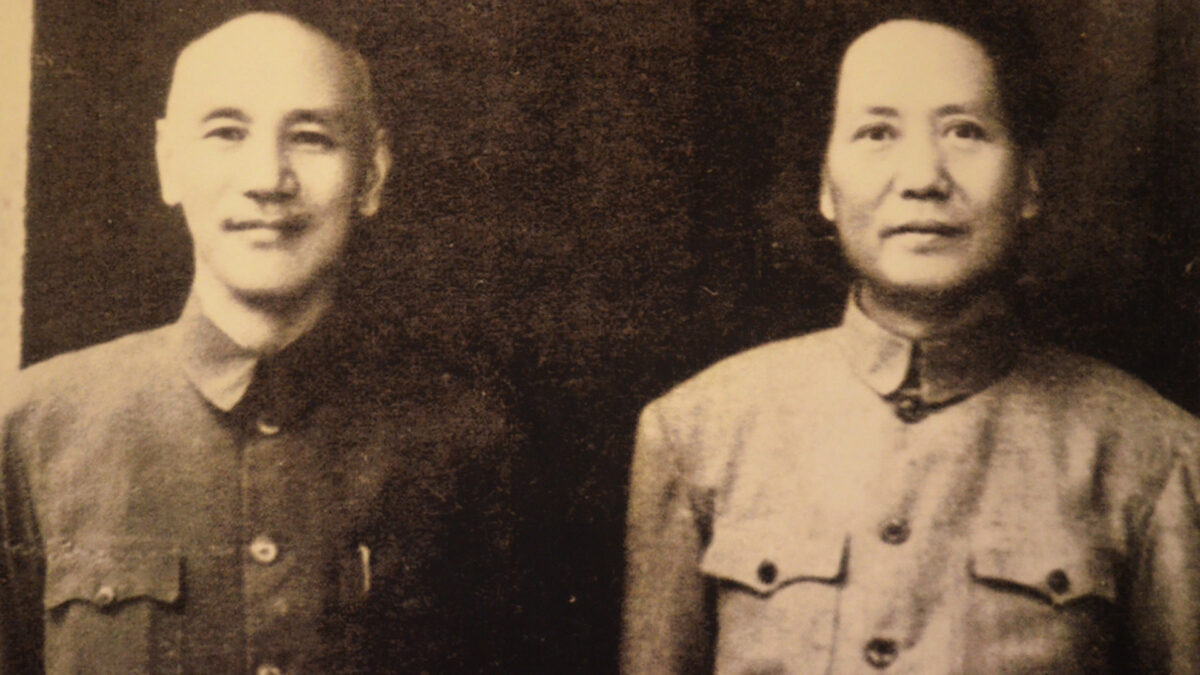
But Japan soon demonstrated that it was not content with confining its control to Manchuria. In 1934, Japan claimed suzerainty over the whole of China. In 1935 the Japanese forced the Chinese to withdraw from Hebei in North China and Chahar (now part of Inner Mongolia in North East China). Again, KMT leader Chiang Kai-shek did not offer much opposition, preferring instead to pursue his campaign against Chinese communist forces led by Mao Zedong.
United Front
However, in December 1936, Chiang was seized by forces under the command of his own Generals and compelled to align with the Communists to form a United Front against Japan. The United Front proved to be a formidable group though it lacked the sophisticated weapons the Japanese had.
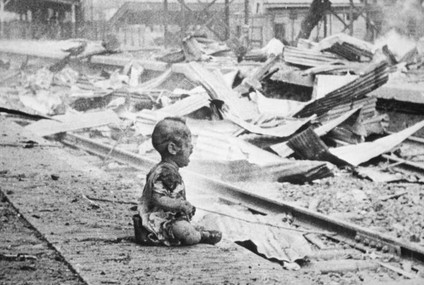
Initially, the Japanese had their way. They captured a majority of cities as far West as Hankou (now part of Wuhan) and most of the rail lines. Beijing and Tianjin were occupied in July 1937. After fierce fighting, the Chinese armies were driven out of Shanghai by the middle of November 1937. Nanking (Nanjing), the Nationalist capital, fell in mid-December 1937. In the massacre that followed, 300,000 Chinese civilians and surrendered troops were slaughtered. Tens of thousands of women were raped on the orders of Japanese commander, Matsui Iwane.
In October 1938 the Chinese lost Canton (now Guangzhou). The Japanese pressed northward and westward from Beijing along the railway lines into Shansi and Inner Mongolia. They dominated coastal Shantung and took possession of the vast railway networks. The Japanese dominated the skies after pulverizing the Chinese air force. Casualties were humongous.
Yet, to the surprise of the Japanese, the Chinese were undaunted. Chiang Kai-shek moved his capital to Chungking (now Chongqing), in Szechwan (now Sichuan), in South West China. The Chinese leadership migrated to the Far West, to Sichuan and Yunnan. The Communists dominated the vast countryside though the Japs controlled the cities and railway lines. The Japanese were harried by guerillas with the Communists being particularly successful in waging guerrilla warfare. The Communists’ Eighth Route Army was harassing the Japanese in the mountains and plains of North China, and the New Fourth Army was doing that in the lower Yangtze valley.
In 1939, Japan tried to subdue Chinese resistance by imposing a blockade. China’s main seaports were occupied, from the South to the North. For a time, Japan induced the British to close the road that led from Burma (Myanmar) to Kunming in Yunnan, but eventually the Burma Road reopened and become one of the vital supply lines for the Allies in the war.
In December 1941, Japan attacked Pearl Harbour in Hawaii, thus dragging the US and Britain into the war in Asia. But this did not bring relief to China. Its economic problems seemed insurmountable as all industries were in Japanese occupies East China. The Western provinces struggled to support the huge armies that were ensconced there. Allied help to fight the Japanese in China was minimal.
Rise of Communists
However, the mounting economic problems in China were a blessing in disguise for the Communists. They began to exploit the people’s discontent against the KMT government and the Japanese. The KMT government headed by Chiang Kai-shek resorted to repression. It was also and inefficient and corrupt.
Though committed to fighting the Japanese, Chiang‘s main enemy was Mao Zedong, whose power grew in North and East China. These were designated as “liberated areas.” Importantly, even in the midst of war, the Communists introduced economic, political and social reforms in the liberated areas, which improved the lot of the peasantry. They introduced a system local government. The Communist party cadres freely mixed the hoi polloi. During the period, Nationalists and the communists frequently clashed.
In the last phase of World War II from early 1944 to August 1945, more material and financial help was coming to China from the US. The Americans were flying supplies from Assam in India across mountains. Chinese pilots and mechanics were being trained. Japanese strongholds were bombed by US and Chinese planes.
But while the KMT troops were too debilitated to fight, the Communists were gaining ground under Mao Zedong. Mao’s men took on the Japanese, who were withdrawing their troops from China to fight in the Pacific theatre. This enabled the Chinese Communist armies to move in and “liberate”” more and more areas.
The US tried diplomatic means to bring about unity between the KMT and the Communists as the US wanted a united China to ensure a stable Asia. But attempts made by Gen. George C. Marshall failed. Americans working closely with Chiang, like Gen. Joseph Stillwell, thought that he was incompetent and corrupt, cornering US military aid to fight the Communists rather than the Japanese.
Francis Eugene Jones, in his MA thesis on “United States Relations with Chiang Kai-shek, 1937-1949” (1962), says that in July 1947 General Albert C. Wedemeyer was sent to mediate between Mao and Chiang, but he too failed. Wedemeyer recommended deployment of US troops in China, which Washington refused. Moreover, Chiang had ceased to follow American suggestions even as the USSR was emerging as a new threat.
The US looked on helplessly as the Communists over-ran China driving Chiang and the Nationalists to Formosa (now Taiwan). In 1949 the Communist formed the Peoples’ Republic of China. Nevertheless, the US continued to support the KMT and to recognise its regime in Taiwan as the legitimate government of China. It was also given a permanent seat in the UN Security Council with veto power.
It took the US nearly 30 years (1949 to December 1978) to recognise Communist China and break diplomatic ties with Taiwan. And that was done to help face the common threat from the USSR.
END
