
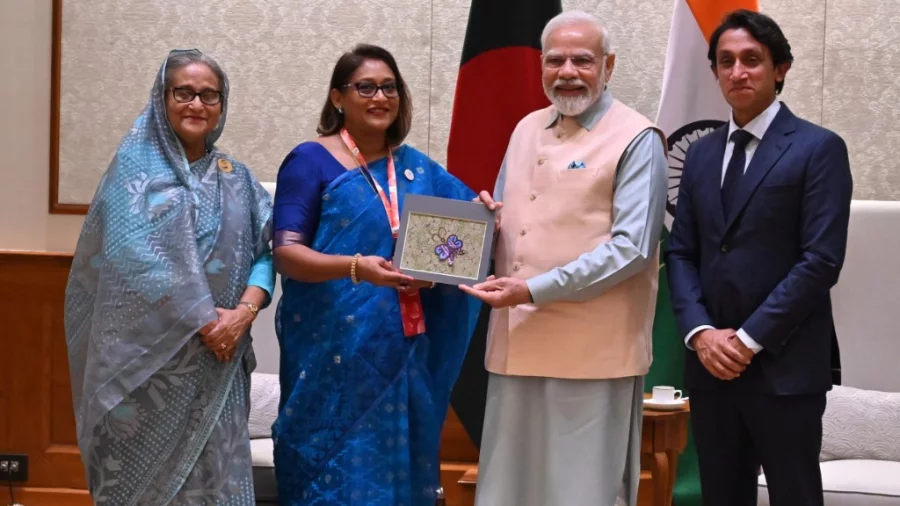

By Samaan Lateef/The Lancet
January 25, 2025: Bangladesh’s Commission (ACC) has opened an investigation into allegations that Saima Wazed, WHO Regional Director for South-East Asia, secured her position through corrupt practices.
Wazed, daughter of Bangladesh’s former Prime Minister Sheikh Hasina, was appointed Regional Director in February, 2024. Her mother has been accused of “unethically using her power to appoint her daughter” despite her lack of qualifications, ACC Deputy Director Aktarul Islam told The Lancet.
In a letter to the Bangladesh Foreign and Health Ministries, the ACC raised allegations against Wazed ranging from financial misconduct to abuse of political influence, urging them to press WHO for Wazed‘s removal.

The ACC alleges that Hasina unethically used her position to boost her daughter’s profile, including taking Wazed on high-profile state visits such as the 2023 G20 Summit in India. Wazed’s appointment triggered widespread criticism due to her lack of qualifications and allegations of nepotism.
ACC officials say the investigation seeks to establish whether Wazed adequately met the requirements for her WHO appointment, or whether favouritism influenced the process.
Under Rule 49 of the Rules of Procedure of the WHO Regional Committee for South-East Asia, Regional Director candidates should have a strong technical and public health background, extensive experience in global health, and historical evidence of public health leadership.
Wazed has an MSc in clinical psychology, but no other formal medical or public health academic qualifications. She received an honorary doctorate from Bangabandhu Sheikh Mujib Medical University in Bangladesh in 2023.
in 2023. Her experience in global health is limited to work on autism and mental health, including advisory roles with WHO and Chatham House. Her competitor for the position, Nepal’s Shambhu Prasad Acharya, has more than 30 years of experience at WHO and a doctorate in public health.
“The ACC is right to open an investigation into corruption allegations around her appointment”, Mukesh Kapila, Professor of Global Health and Humanitarian affairs at the University of Manchester and former Director at WHO in Geneva, told The Lancet.

Regional Directors should have advanced training in public health and a record of leadership in global health, said Saleem ur Rehman, a public health expert and former Director General of Health Services in Kashmir. “These qualifications are vital for driving meaningful change and addressing the region’s pressing health-care issues effectively”, Rehman said.
Candidates for Regional Director are proposed by individual WHO Member States, after which candidates present their qualifications at a private session of the Regional Committee and the nomination is decided by secret ballot. The name of the chosen nominee is then forwarded to the WHO Executive Board for confirmation.
WHO encourages meetings between candidates and Member States at conferences or other events. Other WHO Regional Directors have faced scandals. In March, 2023, WHO terminated the appointment of Takeshi Kasai, then Regional Director for the Western Pacific region, on the basis of evidence of abusive conduct.
In January, 2024, WHO’s Executive Board recommended that the code of conduct for the selection of Regional Directors should be expanded to include provisions on “sexual misconduct and other abusive conduct and a disclosure of interests by candidates”, more stringent reference checks, and review of qualifications and employment history.
Rita Thapa, a Nepalese public health expert with extensive experience working with WHO, said there was a need for reforms in the appointment process. “WHO must revise its criteria to ensure candidates have a basic qualification in medicine, a public health degree or doctorate, extensive professional experience, and proven leadership skills”, Thapa said. She also advocated for roadening the pool of candidate proposers.
“WHO should allow public health institutions and non-governmental organisations to propose candidates”, she said, calling for the establishment of a professional evaluation committee to assess candidates and recommend a shortlist to the WHO Regional Committee for final consideration.
Kapila said that “messy and nasty experience” around Wazed has reflected badly on WHO, not just in the region, but globally. “It definitely undermines faith in WHO processes and transparency and feeds those like Donald Trump who want to withdraw from WHO”, he said.
WHO spokesperson Tarik Jašarević said “if there are allegations of wrongdoing by or within a Member State in connection with a WHO election campaign, it is appropriate for these to be investigated by the competent national authorities”.
WHO would not comment on such investigations or any consequential legal processes while they are ongoing, he added.
Wazed did not respond to requests for comment.
END
