
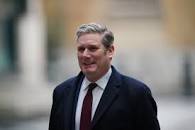

By P.K.Balachandran/Daily News
Colombo, March 28: The sanctioning of three retired Sri Lankan military officers and a former LTTE commander by the UK early this week for alleged human rights violations during the civil war that had ended 15 year ago, was, at first glance, somewhat out of place.
The issue, which was alive for about ten years after the Lankan civil war ended in 2009, had cooled subsequently. It would gain salience only once a year when it was taken up at the UN Human Rights Council in Geneva.
Over the years, the Human Rights High Commissioner’s annual statement and the debate on it, had become repetitive with the Sri Lankan government and the Tamil lobby reiterating their respective positions and the Council repeating its concerns and demands for accountability from the regime in Colombo.
Given the dreary proceedings and the lack of any follow-up action, few had illusions about any forward movement, whether in terms of ethnic reconciliation or a political settlement of the Tamil question.
Then in 2024, the political situation in the Tamil areas of Sri Lanka changed visibly. The Tamils of the Northern and Eastern provinces, had veered from the Tamil nationalist parties and plumbed for the National Peoples’ Power (NPP), the hard core of which was the Sinhala nationalist Janatha Vimukhi Peramuna (JVP). In the last Presidential and parliamentary elections, the Tamils had reposed faith in the NPP abandoning the Tamil parties.
Therefore, UK’s sanctions on former Lankan Generals at this juncture, came as a surprise. The rhetoric about the alleged human rights violations by the sanctioned persons seemed to hide a domestic compulsion that lay behind the sanctions.
Background Scenario
Given the highly competitive nature of British politics, political parties in the UK, with few exceptions, have been compelled to woo ethnic minorities, especially the large, well-knit and highly motivated ones like the Sri Lankan Tamils. Cultivation of these communities is not confined to the weeks before elections, but is a continuous process.
Sri Lankan Tamils in the UK are being wooed by British politicians because of their population size, organizational strength, and the political leverage they offer in certain constituencies. Their political importance stems also from their historical grievances and ability to influence both domestic and international policy discussions on human rights issues in their country of origin, Sri Lanka. Being a community of educated professionals, they are articulate and make good lobbyists.
Estimates of the Sri Lankan Tamil population in the UK vary, with figures ranging widely from 110,000 up to 200,000 or even 300,000. The Tamils are concentrated in London, especially in areas like Harrow, East Ham, Redbridge, and Tooting. There are concentrations in Leicester and Surrey too.
In contrast, the Sinhalese population in the UK is smaller and is also apolitical. There is no Sinhalese lobby to counter the Tamil lobby.
Concentrations of Tamils in certain areas make them a significant voting bloc. Their support can sway election outcomes. Since British parliamentary constituencies are very small, a few votes this way or that can make or break the electoral fortunes of candidates. Tightly knit and motivated communities like the Sri Lankan Tamils exploit opportunities successfully.
The British Tamil community is well-organized through groups like the British Tamils Forum (BTF), which engages MPs and policymakers. The BTF, established in 2006, has evolved into a grassroots organization that mobilizes Tamils and lobbies for their interests, including justice for war crimes committed during Sri Lanka’s civil war (1983–2009). Their activism, such as the 2009 Parliament Square protests, demonstrates their ability to draw attention to their cause.
The Tamil Chamber of Commerce estimated in 2011 that Tamil-owned businesses in the UK generate a turnover of £1 billion. This economic clout enhances the Tamils’ visibility and influence.
In constituencies with large Tamil populations, politicians from various parties—Labour, Conservative, and Liberal Democrats—court their votes. Keith Vaz, Simon Hughes, Gareth Thomas, and Barry Gardiner have historically attended Tamil events or supported their causes, reflecting the community’s electoral weight.
Enhancing Britain’s Image
British politicians supporting Tamil calls for accountability—such as pushing for investigations into alleged war crimes or genocide can position themselves as champions of justice, appealing to both Tamil voters and liberal constituents. The All-Party Parliamentary Group for Tamils (APPG) amplifies these issues in parliament.
Traditionally, Sri Lankan Tamils in the UK have leaned toward the Labour Party, which has been more vocal on Tamil issues, including calls for accountability for alleged war crimes in Sri Lanka. However, there are Sri Lankan Tamil supporters within the Conservative Party and Liberal Democrats, particularly business owners and professionals.
Manifest Support
Before the July 2024 parliamentary elections, the Labour Party in May, reiterated pledges to Tamils and called to refer Sri Lanka to International Criminal Court (ICC). Senior figures within the Labour Party addressed an event to mark “Tamil Genocide Remembrance Day” in parliament.
Wes Streeting, Shadow Secretary of State for Health, said events such as the one to commemorate the 15th anniversary of the Tamil genocide are “a reminder to the government today, and to potentially a different government after the general election, that there is enormous support for your cause here in Parliament and a strong determination on the part of us to make sure that this doesn’t slip off the agenda.”
“I know I can say very confidently on behalf of my colleagues that Keir Starmer, the leader of the Labour party, David Lammy our Shadow Foreign Secretary that ensuring that you get the accountability that you deserve will form part of the key foreign policy priorities should there be a Labour government,” he added.
“It is so important if international law and human rights to mean anything it is really important that individuals are held to account through the International Criminal Court and that those referrals are made.”
Chair of the Labour Party and Shadow Secretary of State for Women and Equalities, Anneliese Dodds, delivered a message on behalf of Starmer, stating that “our thoughts as the Labour Party are with the Tamil victim-survivors and their loved ones”.
She also spoke on the importance of referring the “perpetrators of these dreadful crimes to the International Criminal Court”.
Gareth Thomas, Shadow Minister for International Trade, said “It is almost incomprehensible as to why Magnitsky Sanctions haven’t been used against General Shavendra Silva, for example. If the US and Canada can do it, why can’t we do it here in the UK? We should be doing that.”
John McDonnell, the former Shadow Chancellor of the Exchequer, recalled the events in Mullivaikkal in 2009, stating it was “a massacre of people on the beach, no defence, nowhere to go. It was systematic. It was planned.” Speaking on sanctions that have been placed on Sri Lankan war criminals by the United States and Canada, McDonnell said “We’ve got a golden opportunity in these next few months to make sure that happens here”.
“Trade sanctions is another route through,” McDonnell added. “We should not be trading with war criminals. We should not be trading or financially supporting a regime like this.”
“The Tamil community has valiantly brought the damning evidence of the Sri Lankan government’s war crimes to the attention of the world,” said Dame Siobhain McDonagh.
“We have international laws for a reason,” said Dawn Butler MP. “So we are with you in this battle and this fight. We are with you every step of the way. We are behind you. We are beside you and we are with you.”
James Murray, Shadow Financial Secretary to the Treasury, reiterated calls on the British government to “consider the recommendations of the UN High Commissioner for Human Rights to refer perpetrators of these crimes to the International Criminal Court”.
Addressing the event, Sen Kandiah, Chair of Tamils for Labour, said that he had “got from the Labour Party… three important things within the election of a Labour government within 100 days”.
“They will bring in the Magnitsky sanctions to those people who are already sanctioned (in the United States and Canada). They, including Keir (Starmer), on video committed that they would work with the other countries to refer Sri Lanka to ICC. So, I don’t think they are going to go back on that.”
Keir Starmer, released a statement to mark the “15th year Mullivaikkal Genocide Remembrance Day” in which he said, “ “Mullivaikkal must also be a reminder that as well as commemorating those who are lost, we must bring the perpetrators of atrocities to justice. As Tamil communities across our country pause and reflect upon this solemn day, the Labour Party reaffirms our commitment to work towards lasting peace, reconciliation and a long-lasting political solution for the Tamil people.”
END
