

By Ezaz Mamun/BD Digest
Dhaka, April 12 – In recent months, international media have extensively reported on the resurgence of Islamist terrorism in Bangladesh. Many analysts contend that this phenomenon is not merely an organic development but a meticulously orchestrated conspiracy. Professor Yunus seeks to alter the regional security landscape by aligning with international forces that oppose Bangladesh’s core values, ensuring that his government remains in power. It is also clearly evident that his meticulously designed plan includes student forces who do not believe in Bangladesh’s liberation war and our struggle for independence.
Several reports indicate that shortly after Prime Minister Sheikh Hasina’s departure, more than 200 attacks against Hindus and other religious minorities were reported across 52 districts. The Bangladesh Hindu Buddhist Christian Unity Council documented over 2,000 incidents of violence against Hindus or their properties between August 4 and 20, resulting in at least five fatalities. These attacks included the vandalism of temples, looting of homes, and physical assaults, prompting many in the Hindu community to seek refuge in neighbouring India. The Ahmadiyya Muslim community also faced significant threats, with mosques and homes damaged by hostile groups. Additionally, Christian minorities experienced violence, including an incident where 17 houses belonging to Christians were set ablaze on Christmas Eve.
Awami League supporters and members were targeted for their unwavering commitment to the values of Bangladesh. Reports indicate that the homes of party members and mostly all offices of the Awami League were vandalised, and several hundred individuals were killed. Hundreds of Awami League activists were reported killed on the day of Hasina’s resignation. The killing and oppression of minorities, along with members of the Awami League and pro-liberation supporters, have persisted since then, with the number of atrocities now reaching unprecedented heights.
Another severe incident occurred from August 4 to 8, during which there were attacks on police stations and the killing of police officers. Several hundred police officers were killed in those days, and a total of 5829 firearms and 606,742 rounds of ammunition were looted during that time.
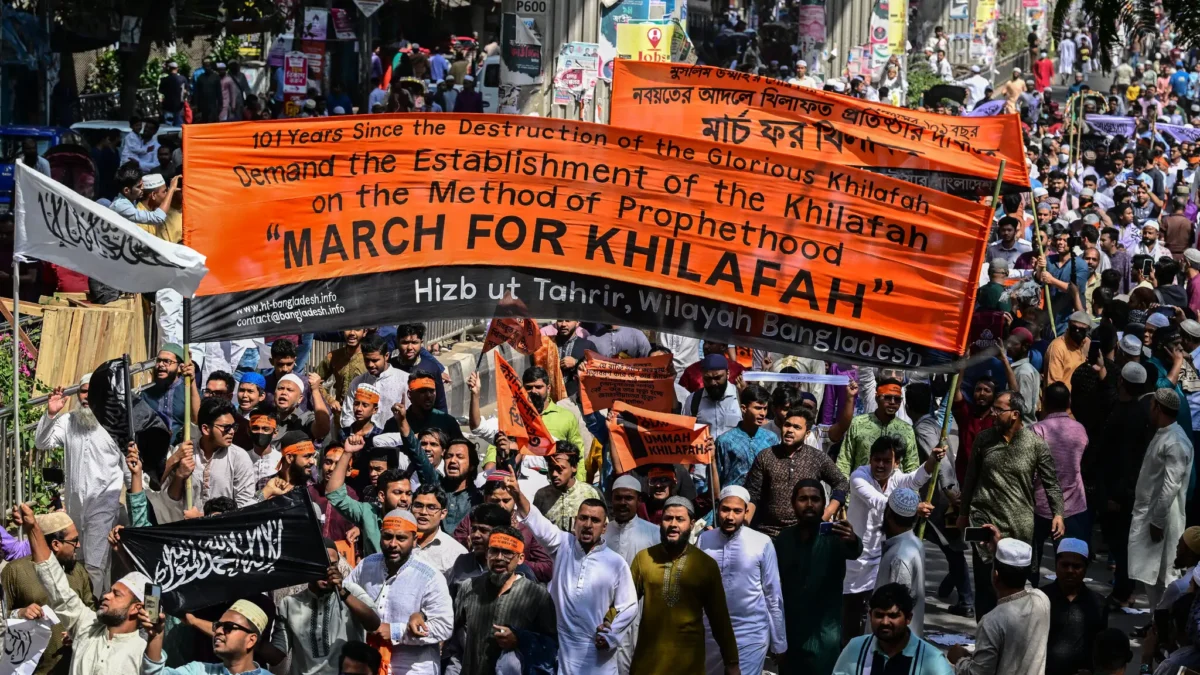
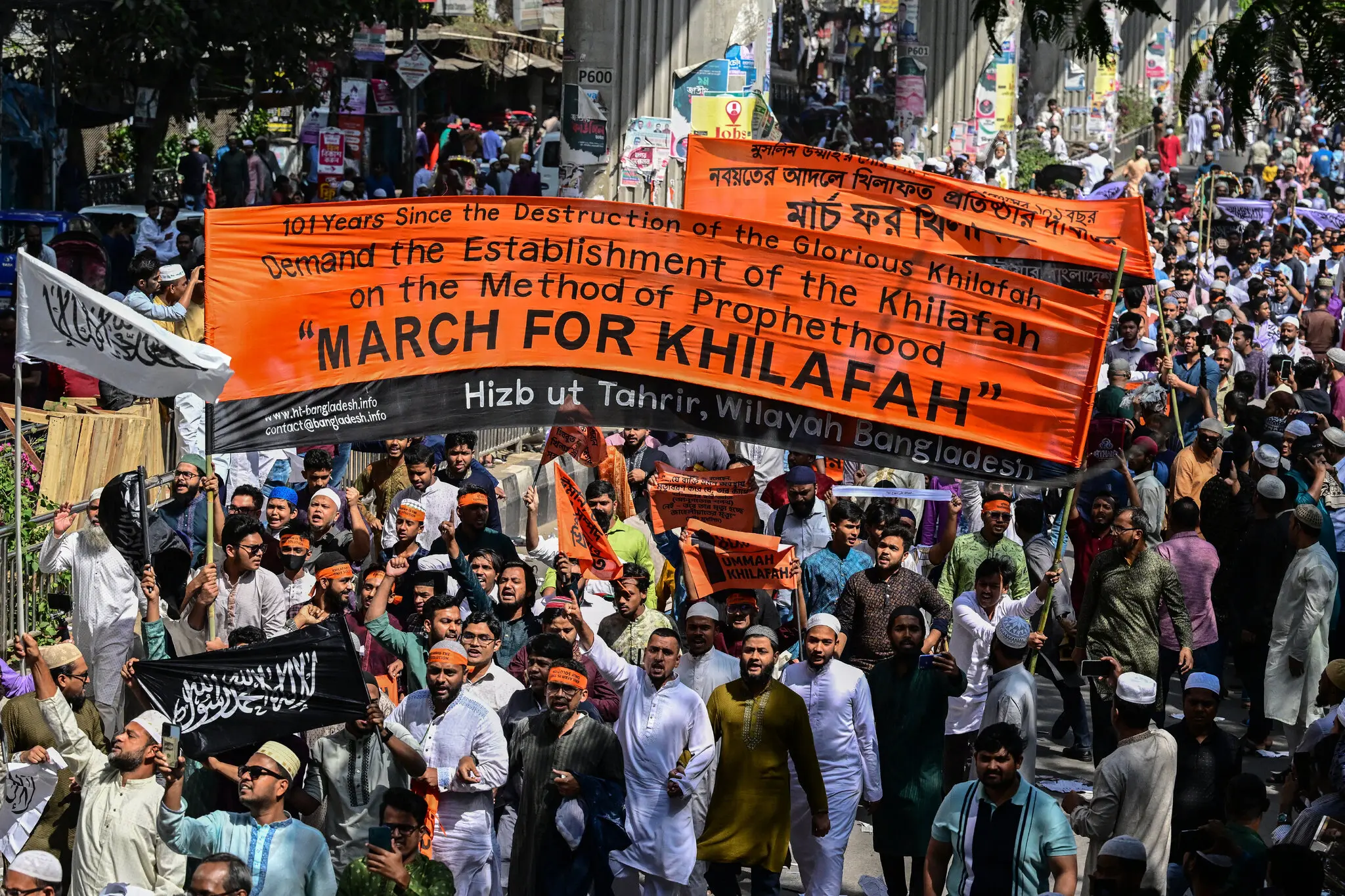
Several international media outlets have reported on the rise of Islamist extremism in Bangladesh following the ousting of Prime Minister Sheikh Hasina. It is widely believed that among Islamist extremists, Hizb ut-Tahrir (HT) has played a vital role in creating an unprecedented law and order situation in the streets of Bangladesh. The so-called ‘mastermind’ of the July-August 2024 unrest, Mr. Mahfuz Alam (also known as Mahfuz Abdullah), has been reported to be a leader of HT. In recent months, this banned Islamist organisation has become increasingly active in Dhaka. Rejecting democracy and liberalism, HT’s idealism is based on pan-Islamism aimed at re-establishing a caliphate governed by Sharia law. HT has been a banned Islamist organisation in Bangladesh since 2009. On March 7, 2025, the group organised a “March for Khilafat” in Dhaka, advocating for the establishment of an Islamic caliphate. Before the march, HT distributed distinctive orange and black posters across Dhaka and utilised social media-sponsored posts, numerous bot accounts and fake IDs to promote the events.
In early February 2025, the historic residence of Bangabandhu Sheikh Mujibur Rahman, Bangladesh’s founding father, located at Road 32, Dhanmondi, in Dhaka, was demolished by a large mob of miscreants. The home was set ablaze in August 2024 by the same group. This residence holds significant historical importance, as it was the site where Bangabandhu declared Bangladesh’s independence in 1971 and where he was assassinated in 1975. Although not universally confirmed, reports indicate that the attackers included members of the local ‘Stranded Pakistani’ community, as well as individuals affiliated with HT and Ansar al-Islam, an al-Qaeda affiliate. However, these incidents of mob violence and vandalism were initiated by Anti-discrimination Student Movement Leaders and overseas YouTubers who have been perpetrators of violence against Bangladesh since the trials of war crimes started.
Before the demolition, Hasnat Abdullah, an Anti-discrimination Student Movement Leader, was vocal on social media, expressing his opposition to a scheduled speech by former Prime Minister Sheikh Hasina on 5 February 2025. He described the Bangabandhu’s residence as a “symbol of authoritarianism” and called for its demolition, stating that the structure represented a legacy of political oppression. Thus, it is only perceived that all the Islamist groups, along with the Anti-discrimination Student Movement (now transformed into the National Citizen Party), are united in their goal to undermine the country.
Michael Rubin, a senior fellow at the American Enterprise Institute, raised alarms about Bangladesh’s political direction in his article “Is Bangladesh the Next Afghanistan?” published on March 18, 2025. He highlights similarities between the two countries, emphasising the growing influence of Islamist factions in Bangladesh and warning that it may be heading toward a level of instability similar to that experienced by Afghanistan in the past. On April 1, 2025, the New York Times published an article titled “As Bangladesh Reinvents Itself, Islamist Hard-liners See an Opening,” which examines the evolving political and social landscape in Bangladesh following the ousting of Prime Minister Sheikh Hasina in August 2024. The article highlights the resurgence of Islamist hard-liners and the urgency to protect minority communities.
However, the interim government of Bangladesh and its allies are showing a naive attitude and catering to Islamist extremists and anti-liberation ideological groups that undermine the spirit and progress of Bangladesh as a secular and sovereign nation.
(Ezaz Mamun is a freelance contributor)
