

By P.K.Balachandran/Daily Mirror
Colombo, October 28 – Radical Islamists are gaining ground in Bangladesh and Pakistan. In Pakistan, they are getting more organised, militant and terroristic, while in Bangladesh, they are expanding their ideological reach, a development which could reshape domestic electoral outcomes and relations with India.
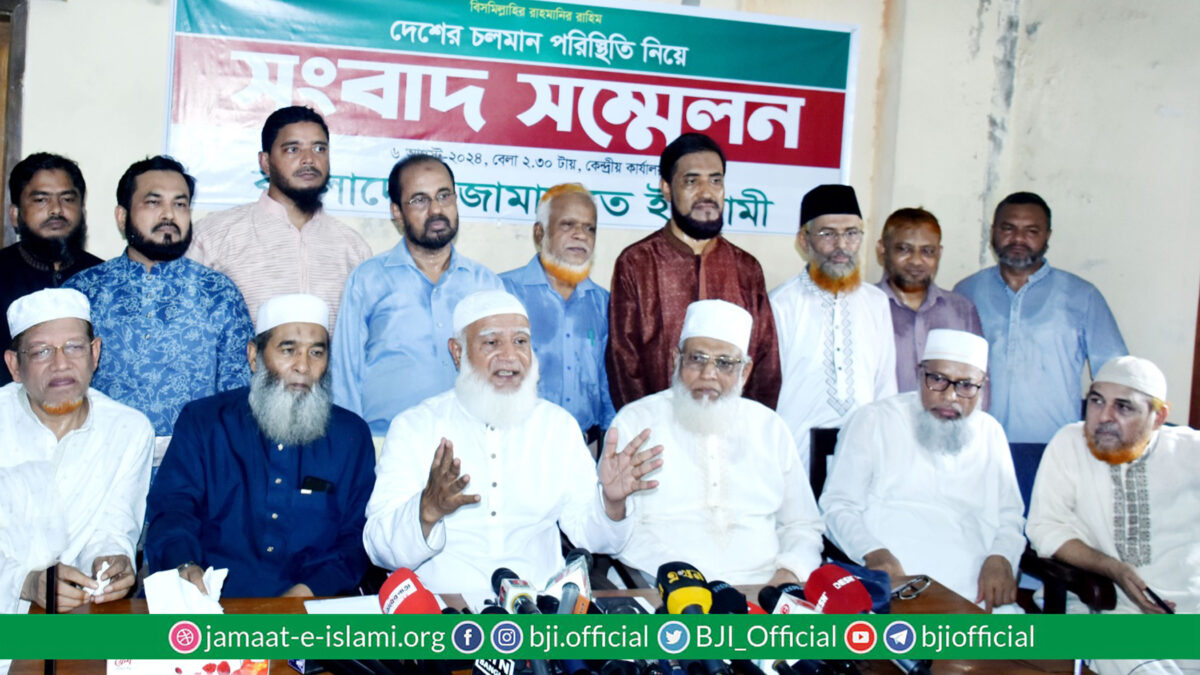
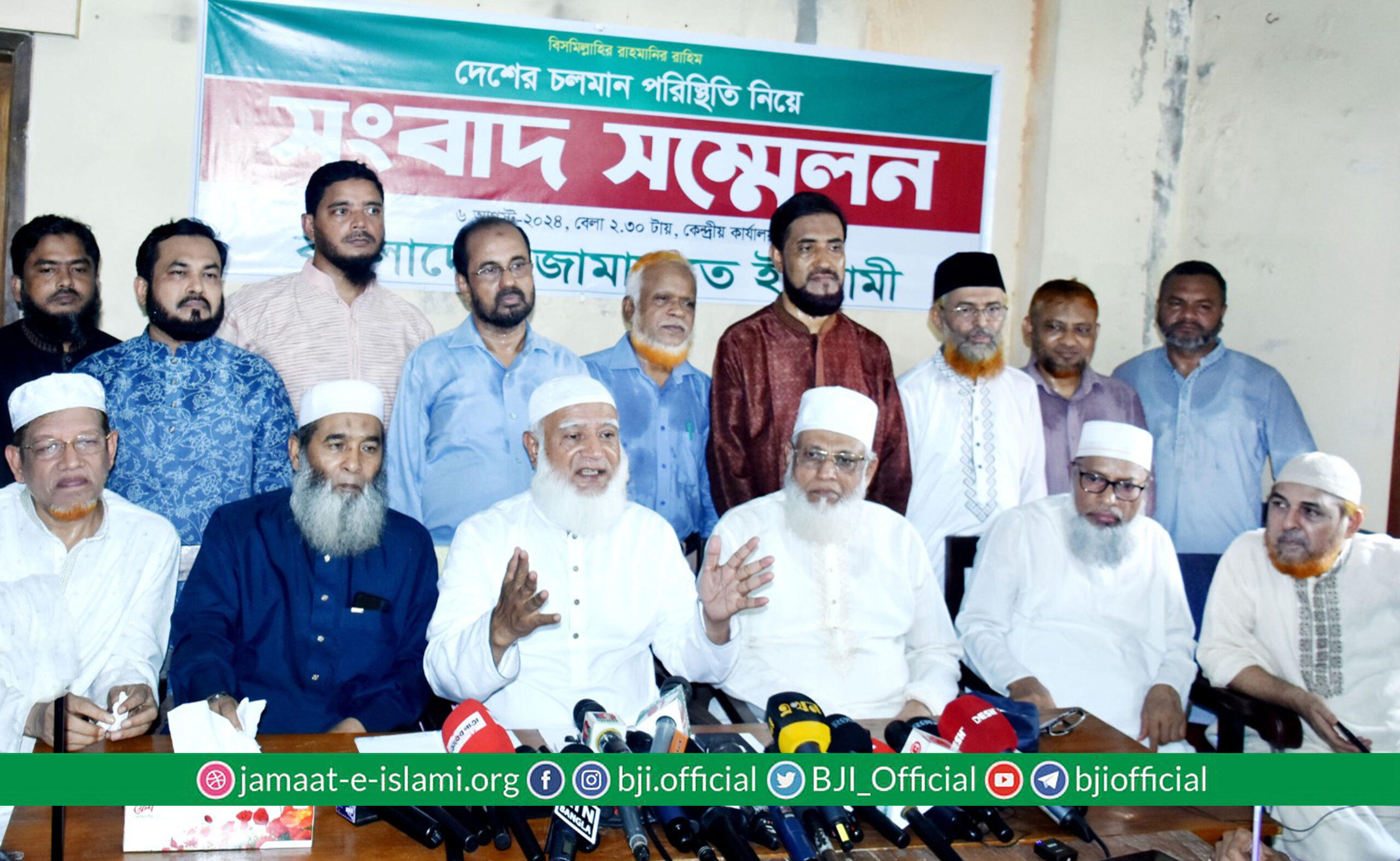
In Bangladesh. lslamic radicalism is represented mainly by the Jamaat-i-Islami (or Jamaat for short). It has gained significant ground in the post-Hasina era. The Interim Government of Bangladesh led by Prof. Muhammad Yunus had lifted the ban on the Jamaat on August 28, 2024, following the ouster of Sheikh Hasina’s Awami League government on August 5.
The Jamaat had been participating in Bangladesh elections until 2013 when the Election Commission cancelled its registration. Subsequently, in 2024, Sheikh Hasina banned the Jamaat on the grounds that it was a terrorist, anti-secular, and pro-Pakistan organization. The ban was enforced under Section 18(1) of the Anti-Terrorism Act, which aimed to halt the activities of groups that opposed the country’s independence from Pakistan in 1971.
When the Muhammad Yunus government lifted the ban on August 28, 2024, the Law Affairs Adviser Asif Nazrul said that Hasina’s ban was “politically motivated” and was therefore “undemocratic”. Mirza Fakhrul Islam Alamgir, secretary-general of the Bangladesh Nationalist Party (BNP) said that the ban was meant to divert attention from the violence committed by Hasina’s security forces against student agitators in July 2024.
Controversial Past and Change Over
In 2013, a massive uprising called for the execution of the leaders of the Jamaat for working against the liberation of Bangladesh from Pakistani rule. The Jamaat had formed militia groups to help the Pakistani military during the nine-month liberation war in 1971.
Since 2013, many of the senior leaders of the Jamaat had been hanged or jailed for “crimes against humanity including killings, abductions and rapes in 1971.”
However, since the Gen Z-led uprising in July 2024, the Jamaat has been trying to acquire a new image. It participated in the July revolution in alliance with Gen Z from the universities and won a place in the post-Hasina interim government.
Simultaneously, the Jamaat has been trying to live down its pro-Pakistan image and watering down its hardline on the tenets of Islam. According to Shafiq Mohammad Mostofa, the Jamaat adopted an inclusive and progressive rhetoric. This new orientation reflected its desire to be a “Leftist Islamic” party, blending Islamic values with social and economic equity, inclusivity, and broader citizenship rights.
“The Jamaat’s traditional hide-bound ideology ill-fitted a typical Bangladeshi’s mindset which was oriented to Sufism, a mild and syncretic Islam. Therefore on gender issues, the Jamaat attempted to strike a balance between Islamic tradition and progressive values. While the party remains cautious in its stance, it has distanced itself from more conservative models like those seen in Afghanistan or Pakistan, arguing instead for a Bangladeshi approach that respects both Islamic and cultural traditions,” Mostafa says.
The Jamaat’s image makeover has helped increase its popular support base, he adds. The new students’ party, National Citizens Party (NCP), that was the vanguard of the July 2024 revolution, is now in an informal alliance with the Jamaat. Furthermore, the Jamaat’s slogan “Islam is the solution for Bangladesh’s ills” is catching on, according to Mostafa.
However, human rights groups have been criticising the Jamaat for attacking scores of Hindu and Sufi shrines, harassing women on the streets and preventing women’s football matches. The head of the Interim government Muhammad Yunus admitted that such attacks had taken place, but added that the vandalism occurred only during the “peoples’ revolt” against Hasina.
It remains to be seen as to how the Jamaat will behave as a political party during and after the February 2026 parliamentary elections, and what its role will be when a new Bangladesh constitution is drafted. It says that the constitution must embody Islamic values.
Political observers say that the Jamaat had never been a political force as such, getting only about 10% of the votes. But it has formed alliances with other parties (like the BNP) and pressed governments to take “Islamic” decisions, sometimes to the detriment to the religious minorities and good relations with India. It has always had influence if not power.
The Jamaat draws its recruits from Mosques and Madrasas (religious schools) which have proliferated, thanks to remittances of Bangladeshis from the Middle East and donations from Turkiye. The Madrasas churn out youngsters indoctrinated with Wahhabi or Salafi ideology. The Madrasas are popular among the rural and urban poor because education there is free. Shaikh Hasina helped build up the Hefazat -e-Islam, an Islamic organization which was against the Jamaat.
Pakistan
The revival of Islamic radicalism in South Asia is most pronounced in Pakistan. In fact, Pakistan has had a long history of association with radical Islamic groups. In the early days, Islamic radicals in Pakistan laid stress on the persecution of the Ahmadiyas, a sect considered heretical by mainstream Muslims.
However, under the military rule of Gen.Ayub Khan in the 1950s and 1960s, the Islamists were subdued because the General’s accent was on economic development. But the trauma created by the war with India in 1965 and the secession of East Pakistan in 1971 led to the belief that it was due to the waning influence of Islam that the country was weak. Therefore, during the regime of the military dictator Gen.Zia ul Huq (1977-1988), Islamization became State policy.
Gen. Zia’s Islamic drive coincided with the Afghan “Jihad” (Holy War) against Soviet hegemony (between 1979 and 1989). Pakistan enthusiastically participated in the Afghan Jihad which was also supported by the US. The anti-Soviet Jihad which later became an anti-American Jihad (2001-2021) spawned Islamic radical groups in Pakistan. The Pakistani State also conveniently used these groups in its clandestine operations against India in Kashmir.
Given the legitimacy bestowed on them by successive Pakistani governments, the Islamic radical groups acquired a politico-religious agenda of their own, often to the discomfiture of governments in Islamabad. For example, the Islamic groups started demanding full implementation of Sharia law and stricter enforcement of the harsh Blasphemy law, thus cornering governments.
Increasing confrontations with India after 1971, created more space for Islamic extremist groups in Pakistan. The radicalized groups were in turn used by the State as proxies to carry out attacks against Indian miliary and civilian targets to force New Delhi to negotiate on Kashmir. Thus, a strong commonality of interest developed between the State and the radical Islamic groups.
Relations with Afghanistan
But after it took over Afghanistan in 2021, the radical Islamist Afghan Taliban turned against Pakistan. They suspected that Islamabad was trying to be the Big Brother. The Afghan Taliban tried to counter-balance Pakistan by cultivating other countries like India.
Meanwhile, Pakistan was also seeing the rise of domestic ethno-based Islamic radical groups like the Tehrik-i-Taliban Pakistan (TTP). The TTP, with support in the Khyber Pakhtunkhwa province bordering Afghanistan, was the ideological and ethnic kin of the Afghan Taliban. Pakistan alleged that the Afghan Taliban was supporting the TTP, a charge the Afghan Taliban denied. Modelled after the Afghan Taliban, the TTP seeks to make Pakistan a Sariah-run country. In the process, the TTP has been clashing with the Pakistani army.
Pakistan accuses Afghanistan of becoming a proxy of India because the Afghan Foreign Minister, Amir Khan Muttaqi, went on a six-day visit to India where much bonhomie was evident between Muttaqi and Indian officials.
In India, the government got the conservative Darul Uloom Islamic seminary in Deoband to host a grand reception to Muttaqi. Deobandi leaders and Muttaqi stressed the close historical links between the Islamic seminaries of India and Afghanistan.
While in India, Muttaqi not only supported India’s claim over Kashmir but accused Pakistan of cross border terrorism. Afghanistan had also supported India in the Pakistan-India war in May. All these developments led to a short war between Afghanistan and Pakistan in October.
In another development, a Pakistani Islamic radical group called Tehreek-e-Labbaik Pakistan (TLP) saw a revival. The TLP is trying to coerce the government to take an aggressive anti-Israel and anti-US stand on the Gaza issue. When it threatened to march on Islamabad on the issue, the government branded it a terrorist organization and banned it. The TLP is known for its violent anti-Christian and anti-Ahmadiya agitations.
END
