

By P.K.Balachandran/Daily News
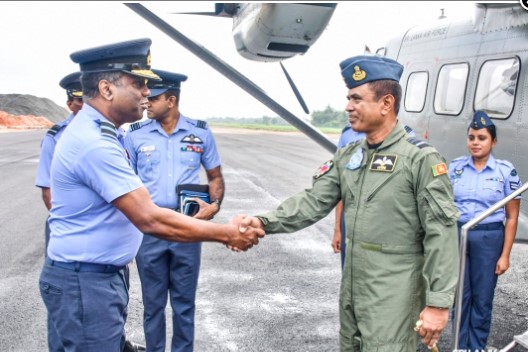
Colombo, January 18: The Sri Lanka Air Force (SLAF) on Monday conducted a test-landing on an 850-meter section of the renovated runway at the Hingurakgoda airport in Polonnaruwa district. An Y-12 aircraft, piloted by the Commander of SLAF, Air Marshal Udeni Rajapaksa, successfully conducted the test landing. The SLAF said that the next stage of construction would extend the runway by another 850 meters and that the ultimate aim is to lay a 2,500-meter runway, to receive larger aircraft such as A320 and Boeing 737.
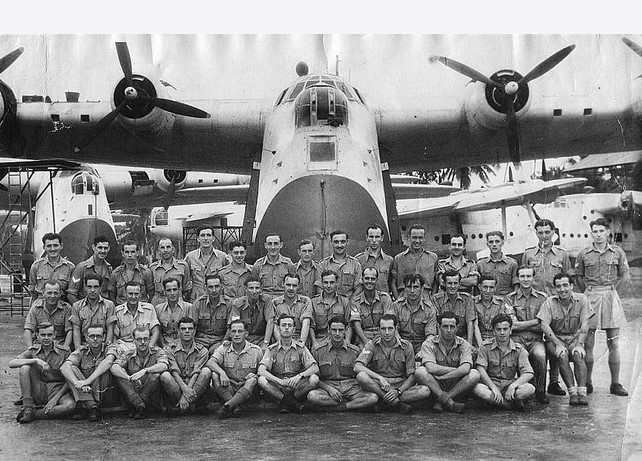
The rebuilding of the Hingurakoda airfield to receive big passenger aircraft is meant to inspire the extension and modernization of several air fields in the island that had been laid out by the British at a feverish pace in 1942 when the Japanese were knocking at the doors of Ceylon in World War II.
But the British had neither an army, nor a navy, nor an air force worth the name in Ceylon. By March 1942, Adm. Geoffrey Layton (RN), had been put in charge of both the defence forces and civil institutions in Ceylon as an emergency measure. He built airfields at breakneck speed, often having run-ins with the equally outspoken and acerbic Ceylon Works Minister, Sir John Kotelawala. Sir John’s ire stemmed from Layton’s ordering the demolition of solid buildings in Colombo to make way for military facilities. Because of the conversion of the Colombo Race Course as an airfield, Royal College had to be vacated and converted into a military hospital.
Be that it may, in 1942-43, Layton had bulldozed his way into laying airfields at the Colombo Racecourse, Ratmalana, Katukurunda, Negombo, China Bay, Minneriya, Vavyniya, Kankesanthurai, Sigiriya, Dambulla, Mawanella, Koggala, Kalametiya and Puttalam. It was said that the RAF could lay an airfield in three days flat! The Royal Navy’s Fleet Air Arm (FAA) also got facilities at China Bay , (Trincomalee), Colombo Racecourse, Ratmalana, Katukurunda, and Puttalam.
These airfields, primitive though they were, rendered yeoman service in the defence of Ceylon, especially Colombo and Trincomalee which had strategic assets. As former Sri Lankan navy chief Adm.Jayanath Colombage said, these were laid out in such a way that pilots could operate safely without sophisticated equipment.
China Bay was upgraded to accommodate the USAAF’s Boeing B-29 Super Fortresses. Ground troops had to be rushed from other parts of the Empire such as Australia, India and East Africa. The Eastern Fleet moved in from Singapore and aircraft were flown in from North Africa after containing the German forces there.
The Spitfires and Hurricanes based in the coastal airbases played an affective counter to Japanese aircraft, when they attacked Colombo and Trincomalee on April 5 and 8 respectively. A Catalina aircraft based at Koggala gave intelligence about a Japanese fleet approaching Ceylon a day before the fleet’s aircraft bombed Colombo port on April 5, 1942. But because the information was not relayed to Colombo on time, more than 2000 service personnel and 85 civillians were killed in just 20 minutes in and around the Colombo port. However, despite the devastation, the port continued to operate.
In 1946, after World War II ended, the airfields were decommissioned and handed over to the Ceylon government, which in turn handed them over to the Ceylon or Sri Lankan Air Force later. When the war against the Tamil militants were raging, these airfields were used by the SLAF and, to some extent, by domestic private sector flight operators.
Tourist Flights
After the internal conflict ended in 2009, efforts were on to use them for running tourist flights. But these efforts are still to bear fruits for lack of a suitable policy framework. Domestic aviation has a future in the tourism section. But it has a long way to go. The Word Bank did a study and came to the conclusion that the market was not good enough for the private sector to run domestic services profitably, though Sri Lanka had a large number of airfields which ranged from the Bandaranaike International Airport (BIA) in Katunayake to airports that are a little more than landing strips.
With the exception of Mattala International Airport (MIA) (which was only commissioned in 2013), most of the remaining 14 domestic airports were (and are still) operated by the SLAF. Some civilian aviation services are given by private sector operators on a small scale.
According to the proceedings of a seminar organized by Organization of Professional Associations (OPA), since the end of the internal war in 2009, the domestic aviation market had grown and accounted for nearly 60,000 airport passengers in 2014 (the total of arrival and departure at each of the airports). This was a significant increase from 2010-2012; when domestic passengers averaged lower than 10,000 per year.
However, the costs of offering domestic air services was found to be too high for the demand. Tourism growth was expected to continue to generate an increasing demand for domestic aviation services, and to be the primary contributing factor – even if not the only one – to growing traffic volumes. However, the relationship between tourism growth and demand for domestic air services was not direct and factors such as the nature and characteristic of Sri Lanka’s tourists, their preference for tourist destinations, the supply of domestic air service and the availability of alternative transport options played a major role, the World Bank’s report revealed.
“Overall the market is fairy underdeveloped: the limited tourist demand for some of the domestic routes, limited availability of schedules seats and perceived high cost of air tickets from private operators are some of the key factors leading to the low levels of traffic. A key consideration from the analysis of the domestic aviation market is that the low traffic volume limits the opportunities for private sector participation and, more in general, for profitable operations,” the report said.
The government subsidized the SLAF’s involvement in the management of domestic airports and in the provision of commercial air services. Helitours played a relevant role in the market as it contributed to serve and generate demand for air services which might not have been be available otherwise. But the report noted though the price distortion created by the subsidized fares made it harder for private sector operators to enter the market and to compete effectively, and therefore retarded the development of the domestic aviation industry.
Growth in Tourist Arrivals
Sri Lanka experienced rapid growth in inbound tourism since the end of its domestic conflict in 2009. It grew from 450,000 in 2009 to over 1.5 million in 2014 and is now racing towards 2 million in 2025. It is expected to go up to 5.4 million in 2035. The number of tourist passengers (counting in and out airport movements) at BIA of 3.1 million (in 2014) would be 10.8 million (in 2035).
It is also expected that the nature and characteristics of Sri Lanka’s tourists will change. While traditionally dominated by visitors from Europe in search of beach holidays, primarily on the South Coast of the country, Sri Lanka’s tourism market is increasingly being characterised by visitors desiring broader holiday experiences including cultural, heritage, shopping and beach elements. This is leading to the emergence of of multi-destination and circular tourism routes as more popular alternatives to the single destination beach holiday, the report said.
Inbound tourism growth is expected to generate an increased number of visits in each of the key tourist regions. Taking into account these factors into econometric modelling, the World Bank developed a 20-year traffic forecast for domestic aviation in Sri Lanka.
Some key considerations impacting on the traffic forecast included: 1) Sri Lanka is a relatively small island in aviation terms and as a result internal flight distances are relatively small. The longest domestic flight leg is between Colombo and Jaffa at approximately 275 km, with all other airports being under 200 km. Average sector distance in comparable countries is between 250 and 300 km, approximately 60% longer than Sri Lankan average flight distance. These are considered short journeys in aviation terms and suggest a limited opportunity to use air transport compared to surface access.
2) The other key factor is the increasing strength of competition from road transport, the better the road network the stronger the competition. Sri Lanka is in the process of upgrading its road network with new expressways and this will significantly reduce road transit times and costs, and therefore eroding the advantages of air travel. In essence, improving the road network has effectively increased the minimum distance at which aviation becomes attractive. For example, time saving from air travel is expected to reduce to as low as less than 2 hours for travels from Colombo to Ancient Cities or to the South Coast.
3) Lastly, air travel is not more expensive than private car hires but is significantly more expensive than bus/ coach services which are often used by tour operators.
The potential domestic aviation activity was expected to rise from a base level of 135,000 airport passengers in 2014 to 307,000 in 2021, before declining to approximately 198,000 in 2024 as improvements in road networks come in place. Thereafter, the Consultants forecast that domestic aviation growth would resume, provided there were no further significant improvements in surface connectivity towards some 350,000 passengers by 2035.
Overall, the consultants cautioned that the total demand for domestic aviation services through the forecast period would remain relatively low. Total forecast demand for domestic seats by 2035 would b 250,0002 across the entire country. Compare this with the 450,000 and 713,000 seats within the current Cambodian and Laotian domestic aviation markets respectively.
Furthermore, if additional surface transport improvements were implemented beyond those assumed within this study, the demand for domestic aviation services was likely to be significantly lower than this.
Field visits to the airfield also found that the amount of additional investments in those selected airports were not justified. The limited size of the domestic aviation market left limited room for private sector participation. The potential to achieve sufficient economies of scale to generate profitable business was unclear both in the short and in the medium-long term.
END
