


By P M Amza/Colombo Telegraph
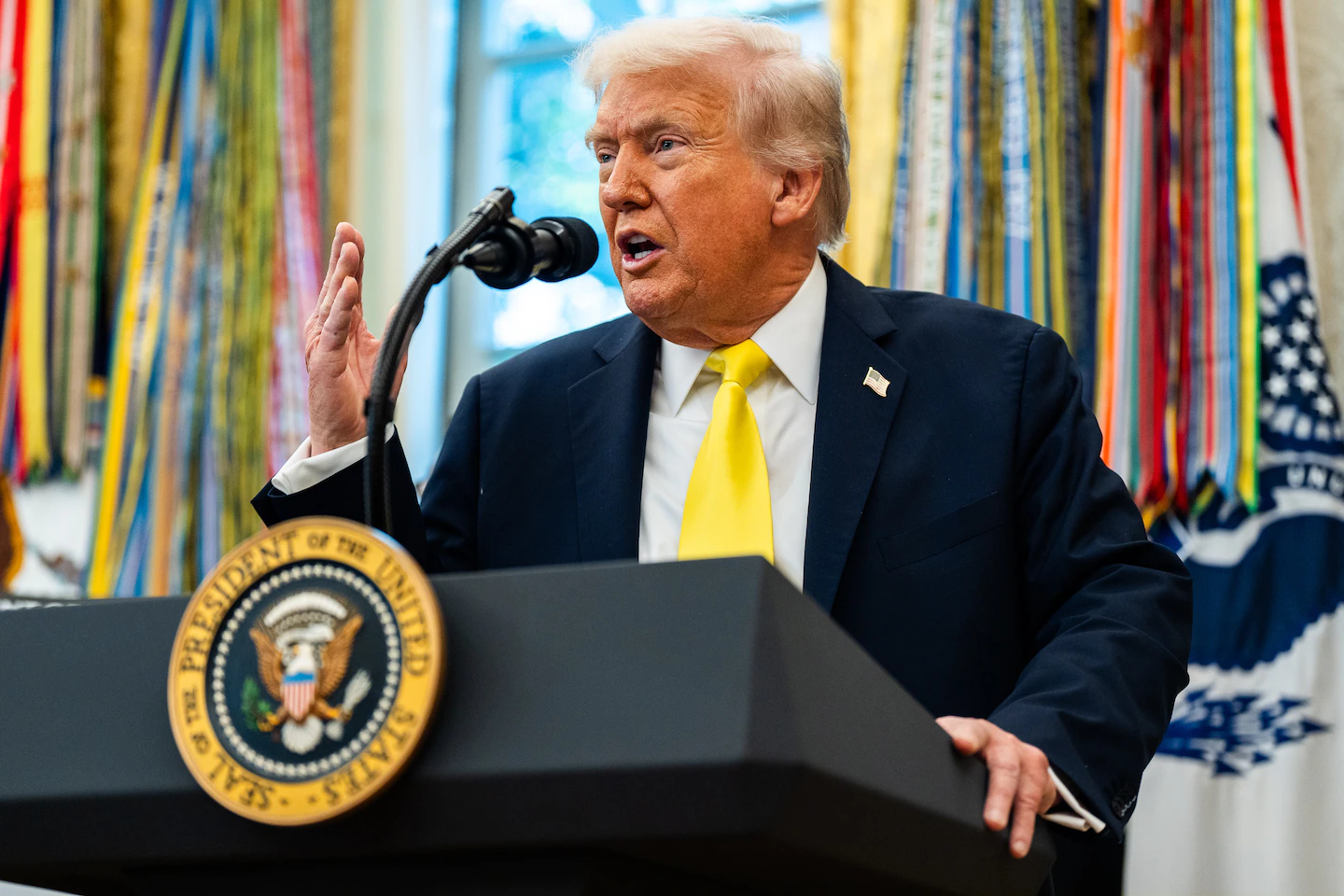
Colombo, January 31- The world is entering a period in which the foundational assumptions of the post-1945 international order no longer hold. Mechanisms that once anchored global stability are eroding; international law, long regarded as a shield for small states, is now applied selectively; and the multilateral institutions created to moderate great-power behaviour are losing credibility. The unilateral U.S. extraction of Venezuelan President Nicolás Maduro—conducted without multilateral authorisation—demonstrated how deeply established norms of sovereignty can be overridden when they collide with strategic imperatives. The political paralysis over Gaza and the emergence of extra-institutional formats reflects a larger pattern of systemic decline. President Donald Trump’s proposal of a “Board of Peace,” composed of selected world leaders to address the Gaza conflict outside the United Nations structure, further illustrates how major powers increasingly view the UN system as optional rather than essential.
Middle-Power Liberalism and Its Limits
At Davos, Canadian Prime Minister Mark Carney presented an optimistic vision for managing international affairs—anchored in a renewed commitment to multilateralism, coordinated diplomacy, and global governance frameworks for emerging technologies. This is a model that suits middle powers with institutional capacity, economic depth, and reliable alliances. Yet for Sri Lanka—geopolitically vulnerable, economically constrained, and situated in a contested maritime corridor—the prescriptions of middle-power activism must be recalibrated. Small states cannot afford the luxury of normative idealism detached from structural realities.
Enduring Relevance of “The Power of the Powerless”
In 1978, Czech dissident—and later president—Václav Havel articulated the principle that those without conventional power can nevertheless exert influence through moral legitimacy, consistency, and the courage to expose contradictions within dominant systems. His insights resonate profoundly today. For small states like Sri Lanka, whose ability to compel change through military or economic power is minimal, diplomatic influence emerges from credibility and principled behaviour. Havel’s framework provides a relevant foundation for small-state agency in an increasingly unstable world.
The New Vulnerability of Small States
Across multiple theatres, the erosion of global norms is unmistakable. The Maduro operation confirmed that sovereign immunity—once regarded as inviolable—can be overridden when the strategic interests of powerful states dictate. The political gridlock over Gaza and the growing appetite for informal mechanisms outside multilateral structures reveal a deeper shift: powerful nations are increasingly willing to bypass established norms in favour of unilateral or ad-hoc arrangements. These developments collectively suggest that legal frameworks are becoming subordinate to geopolitical calculation, weakening the protections upon which small states traditionally depend.
Iran and Cuba Escalations
This erosion of norms has been magnified by recent developments involving the United States. Since early 2026, President Donald Trump has escalated pressure on Iran, warning that “time is running out” to conclude a nuclear arrangement and deploying a major U.S. naval armada—including the USS Abraham Lincoln—to the region. Trump’s assertion that failure to negotiate could result in action “far worse” than previous strikes signals a readiness to employ force outside collective processes. Iran, in turn, has warned of strong retaliation, while Russia has criticised the heightened military posture.
Simultaneously, the Trump administration has intensified economic coercion against Cuba, declaring a national emergency and authorising tariffs on goods from countries that supply oil to the island. Havana has denounced these measures as attempts to undermine its sovereignty at a moment of acute economic strain. These escalations—military brinkmanship toward Iran and economic pressure on Cuba—underscore how powerful states increasingly use coercive instruments outside traditional multilateral frameworks. They reinforce the broader argument that the global order is drifting away from predictable norms toward a system defined by discretionary power.
Global Landscape Ahead
Contrary to the assumption that global leadership is simply shifting from the United States to China, the world is fragmenting into overlapping spheres of influence. The Indo-Pacific, the Gulf, Europe, Africa, and Central Asia now operate as distinct theatres, each with its own strategic logic. For small states situated near critical sea lanes, this fragmentation brings heightened vulnerability but also opportunities for calibrated diplomatic manoeuvre. Navigating this environment requires discipline, strategic clarity, and a deep understanding of regional power dynamics.
Small-State Agency and the Moral Dimension
Small states retain meaningful diplomatic influence when they operate from a position of ethical clarity rather than geopolitical ambition. Their claims—whether concerning climate security, debt sustainability, maritime governance, or labour mobility—carry legitimacy precisely because they do not arise from hegemonic aspirations. In forums where great powers are increasingly distrusted, principled positions articulated by smaller states can garner moral weight and shape debate in subtle yet consequential ways.
Coalitions as Multipliers of Influence
Effective coalition-building offers small states an avenue to amplify their influence without direct confrontation. Sri Lanka can pursue coalitions centred on Indian Ocean security, climate adaptation, maritime governance, education mobility, and labour migration frameworks. These coalitions provide diplomatic insulation in an era of volatility and enable Sri Lanka to influence outcomes in areas critical to its long-term interests.
Strategic Ambiguity: A Necessary Survival Strategy
Given its strategic geography, Sri Lanka cannot afford rigid alignment with any major power. It remains within India’s immediate security sphere, engages extensively with Chinese investment, features in U.S. Indo-Pacific calculations, and is deeply integrated with the Gulf through labour and remittances. For Sri Lanka, strategic ambiguity is not indecision; it is survival. It provides the flexibility needed to balance competing pressures, retain autonomy, and avoid entanglement in the rivalries of major powers.
Non-Alignment: Modernising an Old Doctrine
In this evolving environment, the principles of Non-Alignment regain significance—not as Cold War nostalgia, but as a pragmatic doctrine for small-state resilience. The original Non-Aligned Movement sought to shield smaller states from bipolar rivalry. Today, the pressures come from several overlapping power centres. For Sri Lanka, Non-Alignment is a practical necessity: a disciplined approach to neutrality that permits productive engagement with major players without being absorbed into their strategic orbit. Modern Non-Alignment emphasises balanced diplomacy, economic diversification, institutional coherence, and principled foreign policy positions rather than rigid equidistance.
Economic Diplomacy as the Anchor of Sovereignty
Economic vulnerability remains the primary constraint on foreign policy autonomy. Sri Lanka must expand export markets, deepen engagement with ASEAN and African economies, strengthen labour mobility frameworks, and prioritise skills-based migration pathways. Reducing dependence on a narrow group of lenders or markets is essential for rebuilding strategic space.
Middle-Power Partnerships as Strategic Balancers
Middle powers offer Sri Lanka vital diplomatic and economic breadth without the coercive demands of great powers. Partnerships with Japan, Türkiye, the European Union, South Korea, the United Kingdom, the United Arab Emirates, and Saudi Arabia broaden Sri Lanka’s options, enhance institutional cooperation, and reduce reliance on any single geopolitical actor. These relationships offer resilience and flexibility in an increasingly complex strategic environment.
Soft Power and the Unused Potential of the Diaspora
Sri Lanka’s global diaspora remains a significantly underutilised asset. As demonstrated by countries such as Ireland and Armenia, diaspora networks can help secure trade openings, mobilise political goodwill, and enhance national influence abroad. A more integrated approach to diaspora engagement can bring meaningful benefits across economic, cultural, and diplomatic domains.
Conclusion: Reclaiming the Power of the Powerless
The greatest threat to Sri Lanka is not the assertiveness of major powers but the disappearance of global safety nets. As norms weaken and geopolitical competition intensifies, powerful states increasingly justify coercive actions under the banners of stability or security. The militarisation of the Indian Ocean may pressure smaller states into making decisions compromising their neutrality. Economic coercion—through lending conditions, market structures, or investment leverage—remains a constant danger.
Sri Lanka’s resilience will depend on realism, restraint, balance, and principled diplomacy. Its influence will derive not from military might but from disciplined neutrality, diversified partnerships, moral legitimacy, and strategic engagement with global institutions. The fading world order, though unsettling, provides an opportunity for Sri Lanka to redefine its external posture with clarity and purpose. In a world where coercion often replaces consensus, the “power of the powerless” becomes not a metaphor but a practical strategy for statecraft. ENDS
END
