

By P.K.Balachandran/Daily Mirror
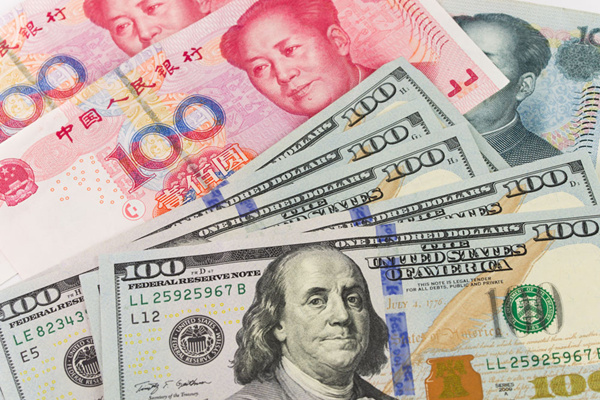
Colombo, January 13- US President Donald Trump had several of objectives in invading Venezuela and taking its President Nicolas Maduro and his wife hostage. One of the key aims was to prevent the de-dollarisation of Venezuela’s foreign trade and to warn other countries against abandoning the US Dollar in favour of other currencies, especially the Chinese Yuan.
In 2018, Venezuela had announced that it would “free itself from the dollar” and started accepting Yuan, Euros, Roubles, and anything but US Dollars for oil. It was petitioning to join BRICS (Brazil, Russia, India, China and South Africa) where South Africa was pushing for non-US Dollar trade. On its part, Venezuela was building direct payment channels with China bypassing the American SWIFT entirely.
Economist Richard Werner writing in www.investorsobserver.com points out that the regime change in Venezuela is part of a broader effort to defend the US-led Dollar payment system, which began as a petrodollar system in the 1970s, when US and Saudi Arabia agreed to use the US Dollar to make and accept payments for oil. In return, the US agreed to provide Saudi Arabia security guarantees and access to its financial markets.
The US-Saudi deal forced global energy buyers to hold Dollars, creating a sustained international demand for the Dollar and enabling the US to exert outsized influence over the global financial system.
However, Werner contends that this system is now under threat. That is why the US attacked and took over Venezuela, which had been trading with China accepting Yuan rather than the US Dollar.
“Venezuela, with the world’s largest oil reserves, challenged the Dollar by selling oil in Yuan, Euros and Roubles, bypassing the Dollar, and building alternative payment channels with China,” Werner says. He points out that the Venezuelan move was a part of a wider de-dollarization effort led by Russia, China, Iran, and the BRICS nations, which were increasingly seeking to settle trade outside the US Dollar system.
Fall in Dollar-denominated Trade
This effort is working out satisfactorily though the dollar still reigns. Citing data compiled by Bloomberg, market analytics firm Barchart reported that the Dollar’s share of global foreign-exchange reserves had fallen from nearly 65% at the start of the 2000 to around 40% in 2025.
Analysis by Otavio Costa show that, for the first time since the mid-1990s, gold holdings as a percentage of central-bank foreign reserves have surpassed holdings of US Treasury bills. Financial Times reported in June 2025 that Central banks expected to keep buying more gold, and anticipated their holdings of US Dollars would fall over the next five years.
Geopolitical concerns, sanctions risk, and worries about the status of the US Dollar had driven global Central banks to make record purchases of bullion. Gold overtook the Euro to become the world’s second-largest reserve asset, behind the US Dollar.
Gold prices had surged 30 per cent since January 2025 and had doubled in two years, as global uncertainty and market volatility propelled investor demand for bullion.
A record 95 per cent of respondents to a World Gold Council survey expected global Central banks’ gold holdings to increase over the next 12 months, the highest level since the annual poll started in 2018. Three-quarters of respondents expected the Central banks’ US Dollar holdings to decline over the next five years.
Ghana is paying for oil imports using gold, reflecting a structural change in its international trade approach. Zimbabwe Introduced gold-backed ZiG digital currency
The US Dollar fell roughly 9% against a basket of major currencies in 2025, its second-weakest annual performance since 2003, according to the website “The Kobeissi Letter”.
List of Countries Dropping the US Dollar
In 2021, 47% of China’s total volume of transactions worldwide was in Yuan. China had also signed agreements with over 40 other countries to trade in Yuan. Argentina settles its IMF dues and Chinese imports in Yuan. Russia has reduced its holding of US Dollar and introduced Rouble and Yuan in its interactions, particularly in trade with China. It formed the SPFS payment system against SWIFT.
India is advocating the use of its Rupee in bilateral trade with Sri Lanka and the UAE. The Reserve Bank of India has established special Rupee accounts in banks in 20 countries. Algeria is shifting to the Yuan and the Rouble. Brazil’s trade with China is in Yuan. South Africa is calling for local currencies for trade amongst the States in BRICS.
Iran has been trading oil in Yuan and the Rouble, using the Mir payment system. Turkey is increasing local currencies in trade agreements. Pakistan is paying for Russian oil imports in Yuan. Bangladesh is settling Russian nuclear plant project loan in Yuan. Cuba is using Yuan and Euro for getting around sanctions. Saudi Arabia is accepting Yuan for oil sales to China. UAE is a also using non-dollar currencies in trade with China and India.
The ASEAN countries have made significant progress in establishing local currency settlement frameworks, reducing transaction costs and enhancing regional financial cooperation. The Commonwealth of Independent States (CIS) members are conducting approximately 85% of cross-border transactions using local currencies rather than the US dollar, following Russia’s lead in creating alternative payment infrastructures.
Malaysia is actively promoting local currencies in cross-border trade with neighbouring countries. Mauritius is negotiating trade works by means of the Indian Rupee in order to avoid excessive dependence on the US Dollar. Indonesia is encouraging the use of local currencies in regional trade through the ASEAN Payment Network. Thailand is using QR payments and local currencies in ASEAN trade. Philippines is joining the ASEAN push for local currency settlements. Singapore is also promoting digital cross-border payment systems outside the US Dollar framework.
De-Dollarization in Africa
African countries are increasingly seeking monetary sovereignty through de-dollarization initiatives. There are several East African countries which are jointly working on regional currency initiatives while some have prohibited the use of foreign currencies in all domestic transactions.
Malawi is working toward local currency trade. Kenya is exploring Yuan for oil payments. Uganda is using Yuan in trade with China. Zambia is trading in non-dollar currencies. Iran and Russia have entered into a currency agreement with Russia and fully removed the US Dollar.
Aggressive US Response
The United States has responded forcefully to the de-dollarization trend, with political and economic warnings against countries abandoning the dollar. President Donald Trump had declared: “Many countries are leaving the Dollar. They not going to leave the Dollar with me. I’ll say, you leave the Dollar, you’re not doing business with the United States because we’re going to put 100% tariff on your goods.”
America has been enforcing Dollar dominance both by deals and treatment with an iron fist. In 2000, Saddam Hussein had announced that Iraq would sell oil in Euros instead of dollars. In 2003 Iraq was invaded, Saddam was overthrown and executed for having so-called “Weapons of Mass Destruction” in 2006.
In 2009, Muammar Gaddafi of Libya proposed a gold-backed African currency called the “Gold Dinar” for oil trade. In 2011, NATO bombed Libya and Gaddafi was sodomized and murdered. The Gold Dinar died with Gaddafi.
The 2022 US freezing of roughly US$ 300 billion in Russian reserves marked a watershed. Since then, Washington has doubled down: the budget for the 2025 fiscal year requests a record US$ 231 million for the Treasury’s Office of Terrorism and Financial Intelligence to expand sanctions enforcement.
But these aggressive moves may be undermining the Dollar’s global dominance rather than strengthening it. Reserve managers, unnerved, have quickened efforts to diversify into gold, Yuan, and regional payment rails, pushing the dollar’s share of official reserves below 47% for the first time.
J.P.Morgan’s Assessment
In a report in July 2025, J.P.Morgan said that fundamentally, de-dollarization could shift the balance of power among countries, and this could, in turn, reshape the global economy and markets. The impact would be most acutely felt in the US, where de-dollarization would likely lead to a broad depreciation and underperformance of US financial assets versus the rest of the world.
For U.S. equities, outright and relative returns would be negatively impacted by divestment or reallocation away from US markets and a severe loss in confidence.
In the light of global rapid de-dollarization, Trump’s aggressive bid to foist Dollar-dominated trade on the world, could push countries to expedite rather than delay de-dollarization to protect themselves from US hegemony.
END
US, Venezuela, Dollar’s power, now challemnged in BRICS, Latin America, China, Russia, Africa,
