

By P.K.Balachandran/Daily News
Colombo, February 24 – According to the Global Terrorism Index (GTI) for 2025, Pakistan was the hardest hit by terrorism in South Asia and the second biggest victim of this scourge in the world. The Global Terrorism Index 2025 published by the Institute for Economics and Peace, ranks countries by a composite score incorporating terrorist incidents, fatalities, injuries, and hostages taken.
Globally, Pakistan ranked second only to Burkina Faso with a high overall score of 8.374. Afghanistan ranked 9th with a score 7.262. India ranked 14th with a score 6.41. Other South Asian countries like Bangladesh ranked much lower (around 35th, score 3.03). Nepal, Bhutan, and the Maldives had negligible or very low terrorism. Sri Lanka was totally free from terrorism.
The South Asia Terrorism Portal, an Indian research agency, and Pakistani security reports confirm escalating violence in 2025 in Pakistan, with hundreds of attacks and thousands of fatalities, including high security force losses. The surges took place mainly in the Khyber Pakhtunkhwa Province (KP) and Baluchistan.
A study conducted by the Lahore-based Centre for Security, Strategy, and Policy Research (CSSPR) says that since 2021, there has been a steady rise in both the frequency and lethality of terrorist strikes in Pakistan. In 2021, terrorist incidents increased to 275 from a much lower base. By 2022, they had risen sharply, with 643 incidents reported. Pakistan was ranked sixth in the Global Terrorism Index in 2022.
The terrorist surge intensified in 2023, with incidents increasing to 689 and deaths reaching 490, elevating Pakistan’s rank to the fourth position in the world. 2024 saw 1,099 incidents and 1,081 deaths.
In 2025, 699 terrorist attacks claimed at least 1,034 lives. 2025 also saw a record 1,313 militants being killed in military operations against them. Pakistan was number two in the world in 2025.
In the aftermath of recent suicide bombings (at the Imam Bargah at Islamabad, one in Bajaur and two in Bannu), the Pakistan Air Force attacked terror hideouts in Afghanistan. The terror groups targeted were the Fitna al Khwarij (FAK) and their affiliates, and the Islamic State of Khorsan Province (ISKP).
‘Fitna-al-Khwarij’ is the term the Pakistani officially uses for the militant group generally called Tehreek-e-Taliban Pakistan (TTP).
The CSSPR study found that in recent years, suicide attacks numbered 21. Besides, there were 85 arson attacks, 11 drone attacks, 138 ambushes; 364 armed assaults; 364 explosions; 112 logistical disruptions; 62 extortions; 57 abductions 57; 24 executions; and 292 targeted killings.
Suicide Bombings
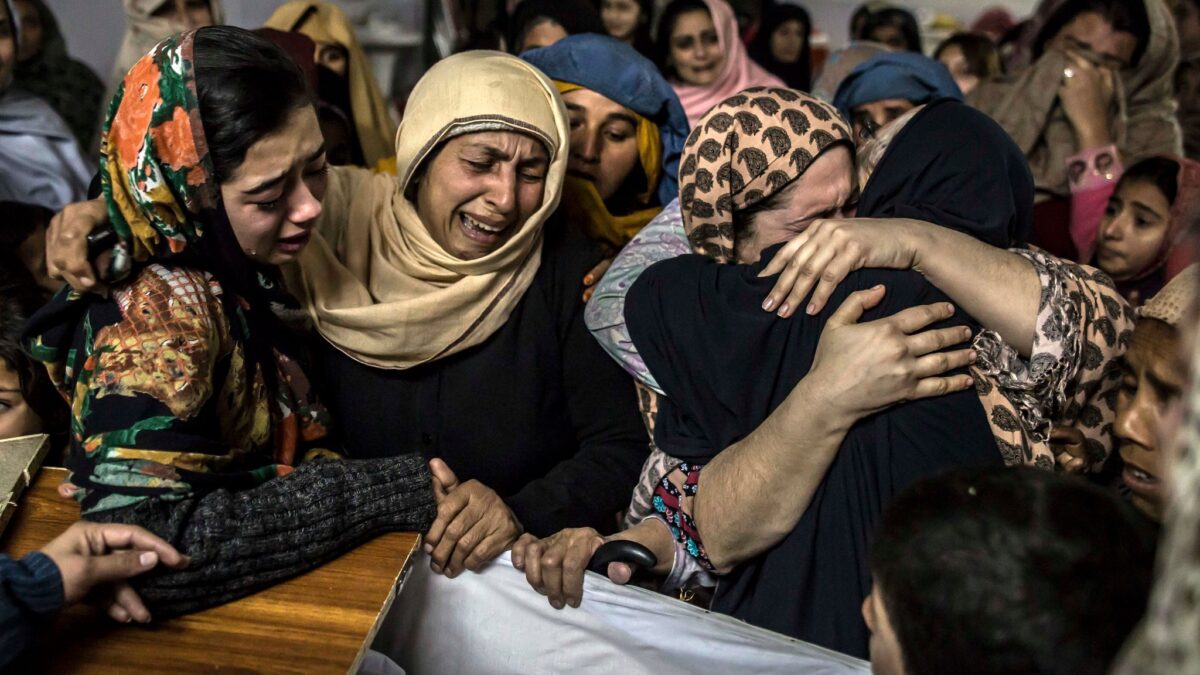
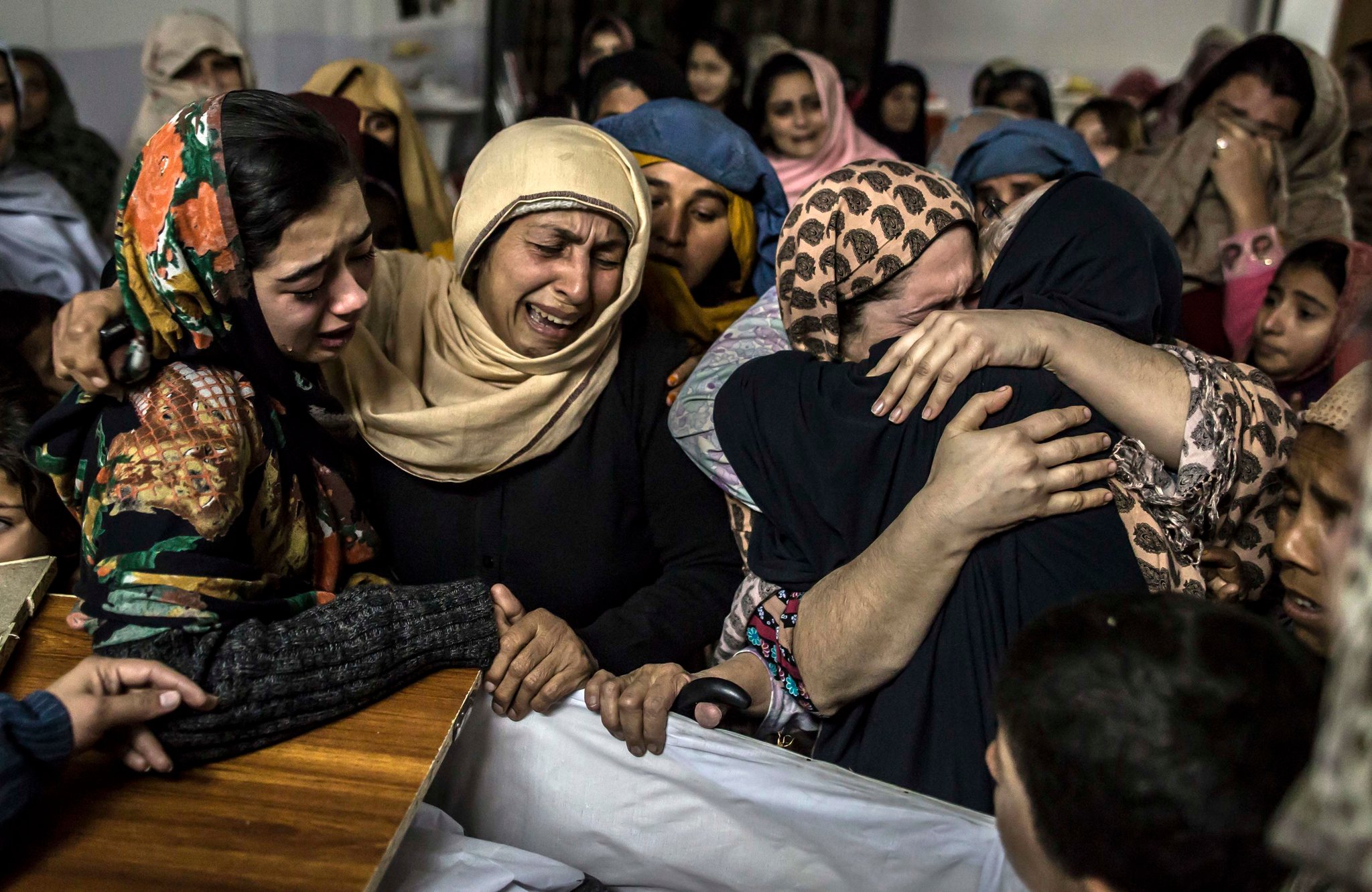
On February 6, 2026, there was a suicide bombing at a Shia mosque near the capital, Islamabad, which killed at least 31. The Tehrik-i-Taliban Pakistan (TTP) or the Islamic State (IS) was blamed as these had previously attacked Shia worshippers. Shias are a minority Muslim community in Pakistan which is majority Sunni.
The attack on the Shia mosque came a week after the Baloch Liberation Army (BLA) carried out multiple attacks in Baluchistan, killing 50. The security forces killed more than 200 terrorists in retaliatory actions.
In November 2025, a suicide bomber had struck outside a court complex in Islamabad, killing 12. In the first 9 months of 2025, Pakistan was hit by nearly 20 suicide attacks carried out by major terrorist groups, including the Baloch Liberation Army (BLA), the TTP, and Ittihadul Mujahideen Pakistan (IMP).
Among these, six attacks happened in Baluchistan, and 14 occurred in the Khyber Pakhtunkhwa Province (KP) bordering Afghanistan.
The BLA carried out four major suicide bombings targeting Frontier Corps convoys in Turbat, Nushki, and Khuzdar, resulting in high casualties among security personnel and civilians. One of these suicide attacks was carried out by a female bomber.
Suicide Bombing Combined with Gunfire
A suicide bombing is sometimes accompanied by gunfire to cause maximum damage. The TTP and its factions carried out multiple attacks in North Waziristan, Tank and Gulistan often combining suicide bombings with direct gunfire. The attack at Khaddi in North Waziristan was one of the deadliest such attacks, killing 13 soldiers and 20 civilians.
Drugged Suicide Bombers
An intelligence report said that terrorists affiliated with the BLA were being drugged with powerful narcotics before being sent on suicide missions. Security forces uncovered large amounts of injectable drugs, crystal meth, opium, and hashish from BLA hideouts in Baluchistan. Officials told the media that militants were routinely given these substances to induce fearlessness.
Significant incidents include BLA’s attacks in August 2024 that killed more than 74 people; the Bannu Cantonment strike in July that killed eight soldiers and injured over 140, and the deadly bombing at Quetta’s railway station in November that claimed 32 lives.
Simultaneous Attacks Over a Wide Area
Terrorists had progressed from staging isolated attacks in the rural areas to coordinated, high-impact attacks in urban and sensitive locations.
According to the UNSC’s Analytical Support and Sanctions Monitoring Team’s fourteenth report, around 6,000 active Tehrik-i-Taliban Pakistan (TTP) members are operating in Pakistan’s tribal belt bordering Afghanistan. The group has also begun blocking areas for extortion and abductions.
In Balochistan, militants have staged several urban takeovers, such as the seizure of Surab City and Tump tehsil, where government offices and banks were attacked and set ablaze.
Zehri has also faced multiple blockades this year, during which Baloch militants seized control of the city, burned a paramilitary station, and robbed a private bank.
Militants Prepare to Rule
After the death of the TTP’s leader Mullah Fazlullah in June 2018 in a drone strike in Afghanistan, Noor Wali Mehsud took control. Under Mehsud’s leadership, internal discipline improved. He also expanded the group. He had inherited a coalition of 13 militant outfits which he increased to 42. The TTP, a Pakhtun group, aligned its objectives with the grievances of other ethno-nationalist movements in Pakistan.
According to security analyst Iftikhar Firdous, the TTP has set up seven “ministries”, each responsible for a specific aspect of its operations. To maintain its control over the region, the TTP has also established eleven Provinces, each governed by an “Emir” whose council oversees finances and logistics. The restructuring indicates that the TTP aspires to govern the area like the Taliban rules in Afghanistan.
Fallout of US Withdrawal from Afghanistan
After the US withdrawal from Afghanistan, the TTP’s linkages with the Afghan Taliban have only grown stronger. According to the UNSC’s Analytical Support and Sanctions Monitoring Team’s fourteenth report, the TTP enjoys “considerable freedom of manoeuvre” and support in Afghanistan under the Taliban.
The US had left behind a humongous quantity of sophisticated weapons when it left Afghanistan in 2020. According to the figures put out by the Pentagon, the US had left behind around 300,000 weapons. This has resulted in the growth of a thriving black market in US-made weapons at the Afghanistan-Pakistan border.
Use of Modern Weapons
Partly due to the access to the American weapons left behind in Afghanistan, terror groups in Pakistan are using advanced weapons.
They are also adopting new tactics to strike high-value targets. The TTP has been using quadcopters and it launched multiple drone attacks on the Bannu Police Station.
After the Jaffar Express train hijacking in Baluchistan, it was reported that an M4A1 carbine rifle built by American manufacturer Colt was recovered from the attack site. Militants have also used heavy weaponry, including rocket-propelled grenade launchers. In a series of attacks on police in Peshawar, the militants used RPG launchers.
In October 2024, in an intelligence-based operation was conducted in Bajaur in Khyber Pakhtunkwa province to neutralise two suicide bombers, troops seized a large amount of foreign arms, including AK-47s, AMD-65s, M4 rifles, ammunition, and explosives.
In a 2024 attack on the Turbat Naval Base, the BLA used US-made M32 multi-shot grenade launchers and night thermal vision equipment.
Attacks on China-funded projects
Baloch groups have been targeting Chinese personnel working in China-Pakistan Economic Corridor (CEPEC) projects in Baluchistan. There were attacks on China’s Consulate in Karachi in 2018. A bus carrying Chinese personnel was bombed in Dasu in 2021. There was a suicide attack outside Karachi University. A convoy was attacked in Bisham in 2024. In 2019, the BLA released a video sternly asking the Chinese to leave Baluchistan.
The mainstream Pakistani media seek stern military action against the terrorists. The daily “Dawn” has asked Islamabad to get the UNSC to ban these terror groups so that drastic action could be taken.
But human rights activists have been calling for an end to the politico-economic discrimination against Balochis. Rights groups say that terrorism will continue to thrive unless long standing local grievances are addressed.
END
