


By P.K.Balachandran
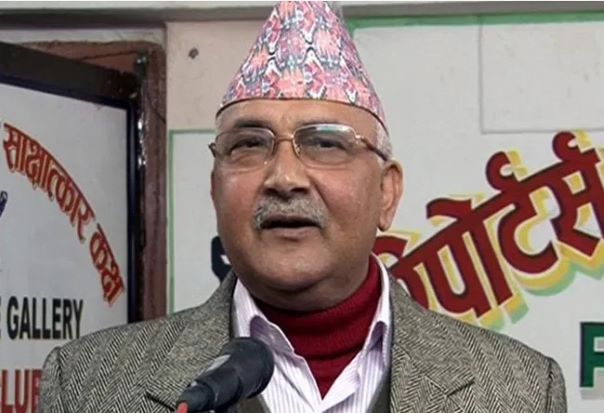
Colombo, September 10 – Nepal’s Prime Minister K.P. Sharma Oli, resigned on Tuesday after violent protests by youths over a controversial ban on social media.
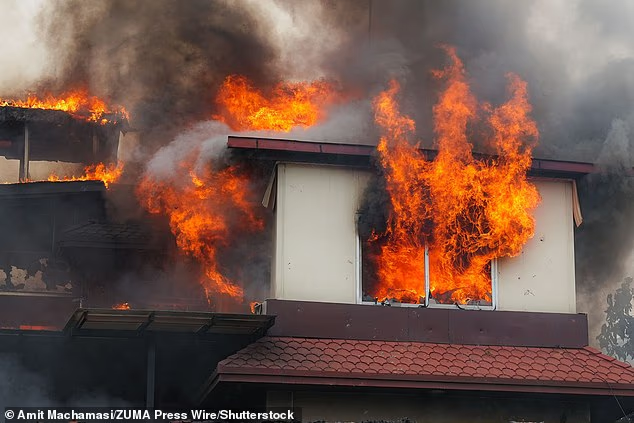
At least 22 people had died in police firing and several police officers were killed in clashes with mobs in various parts of the country. Several government offices were gutted. The residence of Prime Minister Oli was set on fire.
A report that Oli had fled the country could not be confirmed.
The Army, which took charge of security later on Tuesday, denied that President Ram Chandra Poudel had also resigned.
Oli submitted his resignation letter to President Poudel, the Prime Minister’s office said on Tuesday, adding that the move was intended to allow a political solution to emerge.
Both President Poudel and the army appealed for calm and dialogue to end the turmoil.
Social Media Issue
Last week, Oli’s government had banned several widely used social media networks, including Facebook, X and YouTube, on the ground that they had failed to comply with a new requirement to register with the government and submit to governmental oversight.
The government’s case was that while social media platforms, operating globally, generated billions of dollars in annual revenues for themselves, they paid little or no tax in the countries they operated because they did not have a physical presence there.
But the ban on Facebook, X and You Tube was seen by the youth of Nepal, who were major users of social media, as a brazen attempt by Prime Minister Oli to throttle freedom of speech.
Social media had 14.3 million users in Nepal as of January 2025. The number of accounts covered nearly half of the total population of Nepal. 72.8 % of adults were using it.
On its part, the government feared that with nearly three-fourths of the voting population actively using social media, the media could be used to spread “misinformation” or “subversive” content.
The youth however considered the expression of such “fears” as a “sinister ploy to quell dissent.” Therefore, the agitating Nepalese youth not only demanded the lifting of the ban on social media but also Oli’s ouster from office.
As reasons they cited the all-round failure of Oli to give Nepal a meaningful government and crushing dissent with a heavy hand.
Political Parties Support Gen Z
All political parties, including Oli’s coalition partner the Nepali Congress, and even a faction in Oli’s own Communist Party (Marxist-Leninist), echoed the youths’ demand for Oli’s exit.
Oli, once a popular and plucky Communist leader who refused to be cowed down by the economic blockade imposed by powerful India in 2015, is today seen as a non-performing Prime Minister and a dictator with scant regard for the needs, aspirations and sensitivities of people.
Oli has now gone the way of Prime Minister Sheikh Hasina of Bangladesh. Once a popular and effective leader of Bangladesh, Hasina was seen as a dictator from January 2024 onwards and was ousted in August that year by a mass movement.
Police Firing and Assaults on Police
Tens of thousands of people surrounded the Parliament building. “Stop the ban on social media. Stop corruption, not social media,” the crowds chanted, waving the Nepalese national flag.
A nervous police force opened fire on the demonstrators killing people. The Nepalese media said that the country has seen people’s movements in 1950, 1990 and 2006, but never before had the government killed 19 people in a single day.
The killings led to Home Minister Ramesh Lekhak quitting the government. The Minister for Agriculture and Livestock Development Ramnath Adhikari also resigned.
In his resignation letter, Adhikari said that instead of recognising the citizens’ natural right to question the rulers and stage peaceful protests, the Oli government responded with widespread suppression, killings, and use of force, “moving the country towards authoritarianism rather than democracy.”
As it happened in India, where “Khalistani separatists” were blamed the successful farmers’ agitation in Delhi, Oli justified his hardline by blaming unnamed “infiltrators” who, he said, could not be allowed to hold the nation to ransom.
However, subsequently, Oli did see the writing on the wall and lifted the ban on social media. But this did not stop political leaders and the agitating youth from continuing to call for his resignation.
Senior Nepali Congress leaders, including Shekhar Koirala, asked the party to quit the government. The main opposition Communist Party of Nepal (Maoist Centre) also issued a statement demanding Oli’s resignation.
Stepped up Demands
Meanwhile, the agitators stepped up their demands to include a ban on those leaders who had failed multiple times when voted to power. Such leaders should not be allowed to return to public office, the agitators said.
The other demand was the establishment of an independent, transparent and impartial watchdog similar to an ombudsman, to hold officials accountable for corruption, abuse of power, and injustice.
Widespread Arson
On Tuesday, with the support of state security forces, mobs took control of all key infrastructures. Government offices, including those of the President, Prime Minister, Singha Durbar, the main administrative hub of the government, and houses of senior ministers, were torched and key infrastructures reduced to rubble.
Files and case documents from the Office of the Attorney General, the Special Court, and the Kathmandu District Court were taken outside and set on fire.
Witnesses reported that surrendering police personnel were dragged onto the street and assaulted by the mob. Kathmandu District Police confirmed the deaths of three officers stationed at the Koteshwor division.
President’s Plea
In a press note issued by him, President Ramchandra Paudel urged all Gen-Z protestors and concerned parties to engage in dialogue to resolve the crisis peacefully. Highlighting that grievances in a democracy can only be addressed through negotiations, Paudel said.
“With Prime Minister KP Sharma Oli’s resignation already accepted, I firmly believe that all sides, out of respect for the people, the nation, and democracy itself, will cooperate in seeking a solution,” the President said.
He expressed confidence that dialogue with Gen-Z representatives and other stakeholders could pave the way toward a peaceful settlement.
Army Appeals
The Nepali Army reaffirmed its commitment to safeguarding the lives of the Nepali people, and appealed for restraint and unity as the country grapples with escalating unrest.
The Nepali Army Headquarters underscored that protecting the nation’s historical, cultural, archaeological, and national assets is a shared responsibility of all citizens.
“The Nepali Army, ever dedicated to the security and welfare of Nepal and its people, remains committed to protecting lives and property,” the statement read. “In these difficult times, it is our collective duty to safeguard the nation’s historical, cultural, and national heritage. Therefore, we earnestly urge the youth and the broader public to maintain restraint, uphold social harmony, and preserve national unity to prevent the situation from worsening.”
Western Missions Embassies Express Concern
Seven Kathmandu-based foreign embassies and the United Nations expressed serious concern over Monday’s killings of protesters by police.
“We are deeply saddened by the violence seen in Kathmandu and elsewhere in Nepal today, including the tragic loss of life and injury during demonstrations,” the embassies said in a joint statement on Monday night.
“We extend our sincere condolences to the families of the victims, all those affected, and wish those injured a swift and full recovery, ” the statement issued on behalf of the embassies of Australia, Finland, France, Japan, Korea, the United Kingdom and the US said.
“Our governments reaffirm our strong support for the universal rights of peaceful assembly and freedom of expression. We urge all parties to exercise maximum restraint, avoid further escalation, and ensure that these fundamental rights are protected,” the statement added.
Likewise, Hana Singer–Hamdy, the UN resident coordinator for Nepal expressed sorrow over the loss of life and injuries during Monday’s demonstrations. “Heartfelt condolences to the families affected. I urge all parties to exercise maximum restraint and caution ensuring that citizens can safely and peacefully exercise their democratic rights”, she wrote in social media platform, X.
Roots of Oli’s Unpopularity
Nepalese commentator Achyut Wagle writes that Oli had rendered the Nepal a “dysfunctional, largely derailed democracy.”
It was not long ago that Oli enjoyed wide popular support for standing up against the blistering economic blockade by India in the aftermath of the promulgation of Nepal’s new constitution in 2015. However, Oli never elevated himself to be a statesman, Wagle says.
“Instead, he stuck to his pet traits of chicanery, machinations and brackish apolitical retorts. Lately, megalomania, hubris and a penchant for self-righteousness prevented him from listening to sane counsel essential for good governance. The goon-style politics which he promoted throughout his political life is perhaps his greatest weakness,” Wagle adds.
“There were conscious and persistent efforts to curtail media freedom, censure social media and limit individual freedom. Both, the federal facet of the constitution and the spirit of republicanism, were often trampled. The federal government by ominous designs expended a lot of energy to recentralise political and economic decision-making,” the commentator points out.
“Taking advantage of a comfortable majority in both houses of the federal Parliament, the government treated both lawmakers and Parliament as order carriers of the government. Not a single bill of national importance was properly discussed in the House.”
Other Factors?
There is a view that foreign forces and Western commercial interests hostile to the pro-Beijing Oli such as the US, India and the social media companies could have been behind the youth agitation. There is also a theory that the ousted Nepalese monarch and his followers could have had a hand in it.
But it cannot be denied that the anti-Oli movement stemmed from his own failures. The monarchists are undoubtedly a lobby in Nepal and they have the support of India’s BJP and RSS. But the monarchist lobby has been weakened considerably since the monarchy was overthrown in 1990.
Chronic Instability
Nepal has been politically very unstable. With Oli’s going now, Nepal has seen 13 changes in the Prime Ministership in 17 years. Unless the political parties put their heads together and devise workable rules of engagement, the country will see more instability. And till stability is established Nepal will continue to be a happy hunting ground for international meddlers.
END
