

By P.K.Balachandran/Daily News Supplement
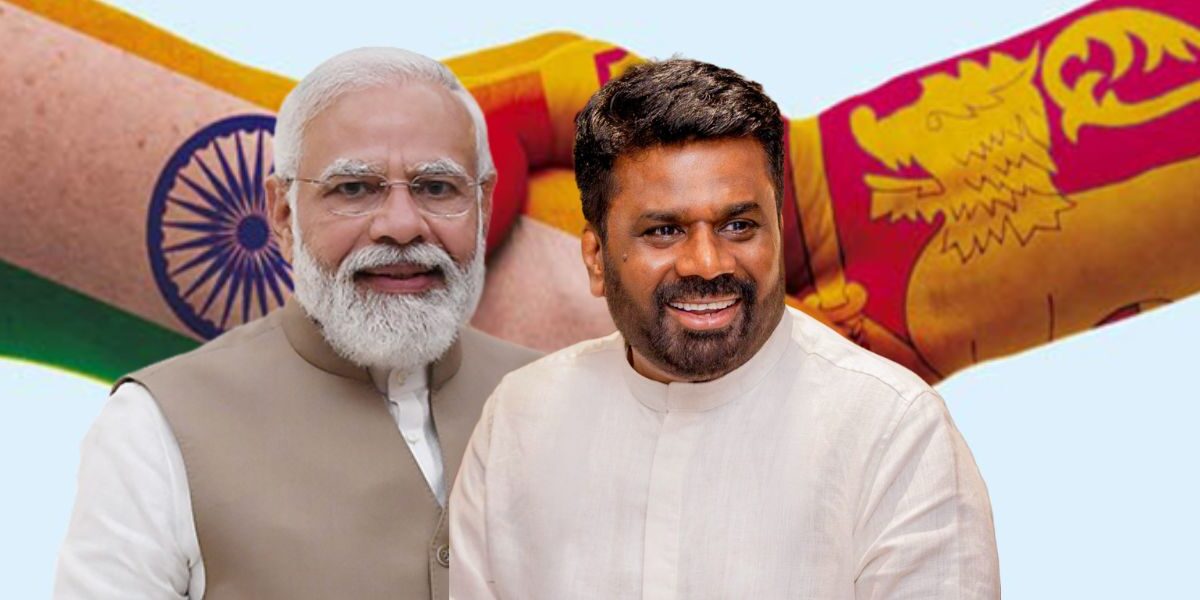
Colombo, April 4 -Indian Prime Minister Narendra Modi will be visiting Sri Lanka from April 4 to 6 to consolidate and strengthen economic and strategic ties with the southern neighbour in the context of challenges that New Delhi is facing in Sri Lanka and other South Asian countries.
The policies of the left-nationalist government of President Anura Kumar Dissanayake in Sri Lanka are still a matter of conjecture. Following the overthrow of the India-friendly Sheikh Hasina government in Bangladesh and the successor government’s lurch towards Pakistan and China, there is worry in New Delhi.
India’s relations with Nepal came under a cloud recently following rumours that the Bharatiya Janata Party (BJP) government in India is backing a movement by Hindu nationalists to restore the monarchy in Nepal. The Maldivian President, Mohmed Muizzu, who seemed to have abandoned China not so long ago, seems to be moving towards Beijing with the implementation of a Free Trade Agreement.
In this fluid context, it is important for New Delhi to strain every nerve to see that its relations with Sri Lanka remain on an even keel. Therein lies the criticality of Modi’s visit.
Economic Dimension
The existing economic relationship between India and Sri Lanka is strong . As of now, India is among Sri Lanka’s top trade partners, with bilateral trade reaching US$ 5.54 billion in 2023-24. India’s exports amount to US$ 4.11 billion and Sri Lanka’s US$ 1.42 billion. Between April and November 2024, two-way trade totalled US$ 3.67 billion.
But the scope for improvement is vast, especially looking at it from the Sri Lankan angle. Sri Lanka is still to exploit the India-Lanka FTA operationalized in 2000. Modi’s visit is planned to enhance the depth and range of economic ties.
India’s Foreign Direct Investment (FDI) in Sri Lanka stood at US$ 2.25 billion through 2023, with U$ 198.1 million in 2023 alone. FDI was US$ 80.55 million from January to September 2024. Key sectors covered by Indian FDI include energy, hospitality, real estate, manufacturing, telecom, and finance. In addition, negotiations for an Economic and Technology Cooperation Agreement (ETCA), had resumed in October 2023 after a five-year hiatus.
Several connectivity projects are on the anvil. Under discussion are an Economic Land Corridor linking Trincomalee and Colombo, a multi-product pipeline with UAE participation, and a power grid interconnection. India has also committed U$ 61.5 million to develop Kankesanthurai port in Jaffna, alongside plans for ferry services between Rameswaram and Thalaimannar.
Prime Minister Modi and President Dissanayake will virtually launch a solar energy project in Sampur, in Trincomalee district. In fact, energy cooperation is poised to be a cornerstone of the economic partnership.
In 2022-23, when Sri Lanka was in dire straits economically having defaulted on its loans, India had rushed aid to the tune of US$ 4.5 billion to keep the economy afloat. It later played a key role in securing a debt repayment scheme at the Paris Club of donors.
Defence Cooperation
Modi’s visit may go down in history for expanding and deepening defence and strategic cooperation between the two countries if the proposed enhanced defence pact is signed.
In his March 28 press conference in New Delhi, Indian Foreign Secretary Vikram Misri announced that a new defence cooperation agreement will be signed during Modi’s visit. “We are working on a new agreement on defence cooperation with Sri Lanka and we very much hope that that can be concluded during this particular visit,” Misri said without giving any details.
But media reports said that the new agreement was drafted after accommodating Sri Lankan inputs. The new agreement aims to deepen defence ties amid India’s concerns over China’s growing presence in the Indian Ocean. It will build on the existing annual defence dialogues, naval exchanges and joint exercises. The agreement is expected to provide Sri Lanka with defence assets and enhance collaboration in maritime surveillance and counter-terrorism.
Sale of Arms?
There is speculation in Sri Lanka about India’s wanting to sell some of its indigenously made arms and also setting up manufacturing facilities in Sri Lanka.
India’s defence exports surged to a record high of Rs. 23,622 crore (approx. US$ 2.76 Billion) in the Financial Year 2024-25. Indian Defence Public Sector Undertakings (DPSUs) have shown a significant increase of 42.85% in their exports in the FY 2024-25 reflecting the growing acceptability of Indian products in the global market and the ability of the Indian defence industry to be a part of the global supply chain. The private sector and DPSUs have contributed Rs. 15,233 crore and Rs. 8,389 crore respectively in defence exports of 2024-25.
In May 2024, the then Sri Lankan State Minister of Defence, Premitha Bandara Tennakoon, had said that the Sri Lankan armed forces primarily used the Type 56 (T56) assault rifle, which fires 7.62×39 mm cartridges, along with various pistols that use 9 mm cartridges. Since Sri Lanka’s manufacturing capability was limited, it was in touch with India to fill the gap, Thennakoon said though he added that there were no immediate plans to make any purchases.
However, the minister added that Sri Lanka could benefit from adopting the Indian model of making weapons within the country. “I think we also should get into manufacturing.”
The media both in Si Lanka and abroad have been highlighting the proposed Defence Cooperation agreement. Opposition to it has gathered steam in the island nation. The Samagi Jana Balawegaya (SJB) leader Tissa Attanayake accused the National Peoples’ Power (NPP) government of lacking in transparency.
“NPP and JVP have always stated that agreements can only be signed by the government or the President for the duration of the contract, which is limited to five years. Any agreement extending beyond this period should be subject to public approval. We demand transparency regarding these agreements,” Atttanayeke said.
Namal Rajapaksa, National Organizer for the Sri Lanka Podujana Peramuna (SLPP), asked: “Prime Minister Modi is visiting Sri Lanka this week. What agreements are being signed? What benefits will Sri Lanka receive? We need clarity on these matters.”
The Sarva Jana Balawegaya voiced serious concerns about the defence cooperation agreement. “This is a very dangerous situation. Sri Lanka has never signed a defence agreement with another country before. Such an agreement directly impacts our national security. We urge the government to inform the public and present these agreements to parliament,” the Sarva Jana Balawegaya said.
However, Indian Foreign Secretary Vikram Misri emphasized that the agreement is not new but rather an update to existing cooperation.
“If I am not mistaken we are working on an update of an existing agreement on defence cooperation with Sri Lanka and we very much hope that can be concluded during this particular visit,” he said.
Fisheries Imbroglio
In every bilateral meeting between Sri Lanka and India, the issue of Tamil Nadu fishermen poaching in Sri Lankan waters in the North and the arrest of the intruders by the Sri Lankan law enforcement agencies would be taken up. This time too it is slated for discussion.
“In 2024 alone, over 500 fishermen have been arrested—that is two per day. The Indian External Affairs Minister himself admitted in March that 97 fishermen were still in Sri Lankan prisons. This must stop,” Tamil Nadu Chief Minister M.K. Stalin said when he presented a resolution in the State Assembly asking New Delhi to retrieve Katchativu island given to Sri Lanka in the mid-1970s.
The resolution was passed unanimously.
Vikram Misri had said on March 28 that India would seek a humanitarian approach to the problem and also facilitate meetings between the affected Indian and Sri Lankan fishermen to resolve the issues through talks.
However, the problem has been enlarged or heightened by a new factor- the Tamil Nadu State Assembly passing a resolution on “retrieving” Kachchativu island. The island had been recognised as part of Sri Lanka by a bilateral agreement. But Tamil Nadu fishermen and Tamil Nadu governments have been insisting that the fishermen get shot at or arrested for fishing around Kachchativu, which, according to them, should rightfully belong to India. The Sri Lankans challenge both claims and point out the poachers come very near the Sri Lankan shores.
Since the Tamil Nadu State Assembly has passed a resolution seeking the retrieve of Kachchativu, the matter will be taken up by both sides at the Colombo talks. But no change in the status quo is expected given the fact the New Delhi cannot go back on an agreement that it had signed after long and arduous negotiations.
Adani Controversy
At least a section of Sri Lankans apprehend that India might use the Modi-Dissanayake talks to pressurise Sri Lanka to yield to the Adani group on the tariff issue plaguing its 484 MW wind power project in Mannar.
But it is doubtful if the matter will be taken up at the formal talks as it is a commercial dispute between an Indian private sector company and the Sri Lankan government. Sri Lankans however think that, given the close links between Modi and the Adanis, the question would be discussed at least informally.
END
