
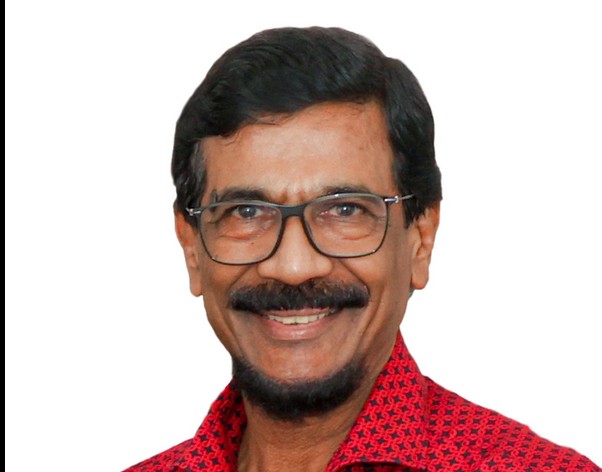

By D.B.S. Jeyaraj/Daily Mirror
Colombo, February 24 – “Power behind the throne” is a phrase that is generally used to refer to someone who doesn’t hold an official leadership position, but is actually the one who effectively wields control. The phrase is generally used in the context of politics and/or governance to describe someone who is influentially on par with the official leader in practice and has a great deal of control in decision making.
Different countries at different times have had different leaders along with different powers behind the seats of power. In India for instance Narendra Modi is the Prime Minister and De Jure ruler, but it is said that the real power behind the throne is the powerful Home Minister Amit Shah.
Likewise in Sri Lanka the President and leader of the ruling Janatha Vimukthi Peramuna (JVP) led National People’s Power (NPP) Government is Anura Kumara Dissanayake (AKD). However it is widely believed that the power behind the throne who calls the shots is the JVP General-Secretary Tilvin Silva.
Opposition party members go to the extent of alleging that Tilvin is the De Facto president running the country. 464/20, Pannipitiya Road, Pelawatte, Battaramulla, where the JVP headquarters is located, has been referred to as the unofficial nerve centre of the JVP led NPP Govt.
Recently in Parliament the ITAK Batticaloa MP Shanakiyan Rasamanickam remarked in lighter vein that the viewpoints expressed by Tilvin seemed to reflect the Government’s official position in several matters and queried tongue in cheek whether Tilvin was in effect the real President.
Marcus Agrippa
I recently came across a review of a book titled “The Power Behind the Throne: Marcus Agrippa’s Service, Strategy, and Power”. The book authored by Marcus. L. Gray Phd is about an overlooked figure in Roman History -Marcus Agrippa.
The reviewer states thus about Agrippa: “Marcus Agrippa never ruled Rome. He wore no crown, claimed no permanent throne, and left behind no manifesto. Yet without him, Augustus Caesar’s empire would likely never have endured……….. Agrippas leadership was not loud, charismatic, or self-promotional. It was disciplined, restrained, and relentlessly effective.”
When I read the above excerpt, I was struck by the fact that the lines were quite applicable to Tilvin Silva also in the current Sri Lankan context. The usually soft-spoken Tilvin keeps a low profile and avoids the limelight. He holds no position in the Government, Parliament or any local authority. He is only the Party General -Secretary. Yet he is regarded by some as a parallel centre of power to President Dissanayake. Ambassadors and High Commissioners call on him. Tilvin leads party delegations to foreign countries.
Tilvin was in India last week heading a JVP delegation. Earlier he led a JVP delegation to China. The JVP led NPP Govt has been engaged in a balancing act between India and China since it assumed office. It is interesting to note that AKD made his first official foreign visit to India and followed it up with a trip to China. In the case of Party boss Tilvin, his first trip after the JVP formed a Govt was to China followed by India now. AKD and Tilvin maintain this balance in sequencing their visits to India and China.
Pelawatte Control
Opposition party representatives have frequently taken pot shots at Tilvin alleging that the Govt is controlled by Pelawatte. The insinuation is that the JVP Gen Sec is controlling or running the Govt from the JVP headquarters located at Pelawatte in Battaramulla. The allegation is that all key decisions are taken by the party Gen Sec and that the JVP led NPP Government only endorses it like a rubber stamp.
Tilvin has frequently refuted these accusations. His explanation has been that the JVP Politburo and Central Committee meet frequently at the Pelawatte party head office and discuss key issues. There are also joint sessions with the NPP National Executive Committee. AKD and several other ministers and state ministers participate in these discussions in their capacities of Politburo and Central Committee members. Presidential and Govt decisions are taken separately at the Presidential secretariat and Cabinet secretariat.
In an interview published in the Sunday Times of Feb 22, 2026, Silva was asked “The common perception is that you, as General Secretary of the JVP, are the real power behind the throne?
Tilvin’s reply was: “Earlier, the governments were run by one individual. When one became the executive president, he/she acted alone, and others became yes men and followed the leader. We are different. We formed the National People’s Power (NPP), of which the JVP is a part. If we are taking any new decisions, we consult as the NPP and implement these changes. In addition to that, the Cabinet also takes its own decisions.
AKD-Tilvin Rift
Rumour mills fuelled by the opposition have been working overtime to spread tales about inner party divisions and an AKD-Tilvin rift. Internal differences and tensions are a fact of life of in any organization or party. As for the JVP, it is interesting to note that both the JVP Leader AKD as well as the Gen Sec Tilvin have been residing in the JVP Headquarters precincts at Pelawatte. At one point Anura moved out for a while after being elected President. ‘Tilvin Ayya’ wrote to him saying that party comrades as well as himself (Tilvin) would like Anura to return. So AKD returned to Pelawatte. Nowadays it is said that AKD stays at the party office during some days of the week while Tilvin resides at the party office most of the time and goes home once a week.
The JVP has a six member Politburo and twenty-eight member Central Committee. Tilvin is the senior most member of both the Politburo and Central Committee. He became a full-fledged member of the JVP in 1978 and adopted the nom de guerre Susil. He was the Kalutara district JVP Secretary when arrested and jailed in 1987. He spent seven years in prison and was released in late 1994. Tilvin was elected as the JVP Gen Sec in 1995 and has been holding that post for 31 years.
Tilvin Ayya/Loku Ayya
The be-spectacled Tilvin with his brushy moustache and goatee chin beard is liked, loved, admired and respected by JVP members due to his seniority and amiable disposition. He is called Tilvin Ayya by most JVP/NPP seniors including President AKD and Prime Minister Harini Amarasuriya. To many of the younger JVP members Tilvin is “Loku Ayya”.
70th Birthday
Tilvin will be celebrating his milepost 70th birthday on February 26. It is against this backdrop that this column focused on Tilvin this week. Though I have never met Tilvin personally, I am writing this two-part article relying on information provided by knowledgeable persons along with interviews and speeches given by Tilvin as well as articles about him.
Methsiri Tilvin Silva born on February 26,1956 hails from Mullapitiya in the Beruwela electoral division of Kalutara district. Tilvin’s father was a carpenter by profession. His mother a housewife also wove ropes out of coconut fibre to supplement the family income. Tilvin was the eldest of five children (four boys and a girl).
Due to the family’s financial difficulties, the eldest son Tilvin could not pursue studies for the GCE (AL) Exam. He quit school and found work at a tourist hotel in the Kalutara district. Later he got a job at a hotel in the Kandy district.
Leftist Tendency
Even as his father became a strong UNP supporter, Tilvin began to lean towards the Left. Those were days of the cold war between the United States (USA) and the Union of Soviet Socialist Republics (USSR) or Soviet Union. There were many colourful publications in Sinhala promoting communist and Soviet propaganda. Russian literature too was available in Sinhala. Thus Tilvin became greatly enamoured of the Soviet Union and acquired a Leftist tendency.
Refused Govt. job
So great was Tilvin’s adherence to Left wing ideology that he developed contempt and hate for the capitalist UNP. After the UNP gained power in 1977, Tilvin’s father who was the Mullapitiya UNP branch leader managed to arrange a Grama Sevaka job for his eldest son through the then Beruwela MP Bakeer Markar. But Tilvin refused adamantly to take a job from the UNP govt. This led to a situation where the father and eldest son were not on talking terms for many years.
When the first JVP insurgency occurred in 1971, Tilvin was only 15 years old. The then JVP didn’t have a strong hold in Kalutara district at that time. So Tilvin was not affected or influenced by the JVP then. However, the left-leaning Tilvin’s perception of the JVP began changing after he moved to Kandy as a tourist hotel employee.
Rohana Wijeweera
The ban on the JVP was lifted and imprisoned cadres released in 1977. The JVP began re-establishing itself under Rohana Wijeweera’s leadership. Tilvin was part of an enraptured audience when Rohana Wijeweera spoke at a JVP rally held in the Bogambara stadium. Tilvin was captivated by Wijeweera and managed to exchange a few words with the JVP Leader who invited the idealistic young man to join the party.
Tilvin followed up the brief meeting with Wijeweera by attending the famous five lectures of the JVP and a fortnight long educational camp conducted by the party. A firmly convinced Tilvin joined the JVP formally in 1978. In 1979 he was elevated as a full time Party worker.
Somawansa Amarasinghe
Since Tilvin was from Kalutara, he was assigned to that district. The JVP Kalutara district Secretary and Beruwela electorate organizer was Somawansa Amarasinghe. The latter too was from Payagala in the Kalutara district. Amarasinghe took a liking to Tilvin and brought him under his wing. Tilvin was appointed as Kalutara district JVP youth front secretary and made a Kalutara district committee member. He also functioned as a personal assistant to Amarasinghe.
Tilvin has acknowledged in several interviews that Amarasinghe was his mentor and guide while in the JVP. Tilvin worked diligently to build up the JVP in the Kalutara district. It is said that he walked miles and miles going from house to house to meet potential recruits.
In 1982, Wijeweera contested the presidential election. Tilvin accompanied Amarasinghe to several districts engaging in propaganda for Wijeweera. The results were terribly disappointing; Wijeweera polled only 273,428 (4.19%) votes and came third.
Black July 1983
This disappointment was followed by another shock. After the 1983 July anti-Tamil pogrom, the UNP Govt. led by J.R. Jayewardene falsely blamed three leftist parties for the Black July. They were the CP, NSSP and JVP. Subsequently the ban on the Communist and Nava Samasamaja Party was lifted, but not the ban on the JVP. The latter that had entered the democratic mainstream was compelled to go underground. There was a crackdown on the JVP in 1985,
This was a hard, bleak period for the JVP. Many senior cadres and leaders wilted under pressure and dropped out of the movement. Amarasinghe and his deputy Tilvin were among those who remained steadfast and continued to work for the JVP. Amarasinghe adopted the names Siri Ayya and Reggie Uncle while Tilvin used the nom de guerre Susil.
Kalutara District Secretary
Despite the adverse circumstances, Tilvin grew in stature within the underground movement. In early 1987, Tilvin Silva alias Susil was appointed as the JVP Kalutara district Committee Secretary. He was also inducted into the JVP Central committee.
The signing of the Indo-Lanka accord in July 1987 and the presence of the Indian Army in the Northern and Eastern Provinces was a watershed in the Island’s history. The JVP launched a violent campaign against the accord. It also began arming itself clandestinely in a big way. Tilvin too was involved in acquiring an arsenal for the movement.
“Susil and Sujatha”
Meanwhile a romance blossomed. Seetha Ediriweera from Devinuwara, who bore the nom de guerre Sujatha, was moved to the Kalutara district by the JVP high command and appointed as a full time activist in charge of the District’s women’s league. Gradually both “Susil and Sujatha” fell in love. They planned to marry in October 1987 when the unexpected happened in September. Tilvin along with three others were arrested by the Police at Wadduwa near Panadura, while transporting firearms. They put up no fight.
Later Tilvin was to say that they were only collecting the arms then and were not ready to confront the Police. The arrest and consequent detention changed Tilvin’s life. What happened next would be related in detail in the second part of this article.
(D.B.S.Jeyaraj can be reached at dbsjeyaraj@yahoo.com)
