
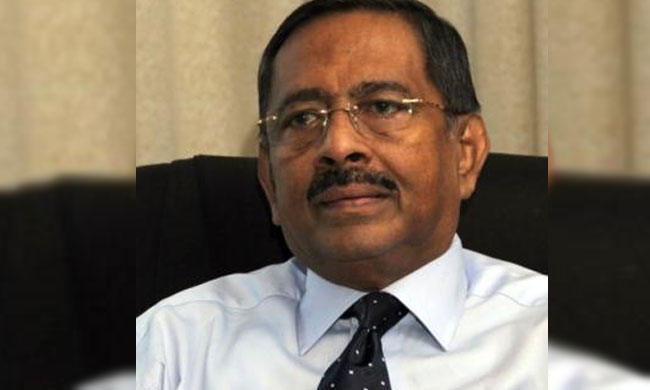

By Mohamed Ayub/Daily Mirror
Colombo, January 17 –Sri Lanka’s best-known war correspondent, Aqbal Athas, died here on January 13 aged 81, leaving a void that is difficult to fill.
If not for an exclusive revelation by Athas in the Sunday Times in 2003, when the ceasefire agreement between the Sri Lankan government and the Liberation Tigers of Tamil Eelam (LTTE) was in force, Sri Lanka’s history between then and now would have been totally different.
If he had not got wind of the goings on at the highest-level then, hundreds if not thousands of soldiers, LTTE cadres and civilians might still be dying, especially in the Northern and Eastern Provinces, bombs might still be exploding even in Colombo, and perhaps the government’s control over those two provinces by now would have been nominal.
The LTTE had withdrawn from the peace talks in April 2003, and the government was in a situation where it was prepared to do anything to get them on board again. Against this backdrop, Major General (retd.) Tryggve Teleffeson, the head of the Sri Lanka Monitoring Mission (SLMM) — a team primarily from the Scandinavian countries that monitored the ceasefire violations — had put forward a bizarre proposal to the government.
According to his plan the Sri Lanka Navy should recognise the LTTE’s Sea Tigers as “a de facto Naval unit and the LTTE should be excluded from the law concerning limitations on outboard motors (OBMs) horsepower.” Teleffson also sought to confine the Sri Lanka Navy’s exercises, particularly live firing to specified areas at sea, and wanted to carve out separate areas in Sri Lanka’s territorial waters for “training and live firing.”
Had this plan been put in place, that would have been the end of the Navy’s supremacy in Sri Lankan waters, and would have resulted in the free flow of arms and ammunition to the LTTE arsenal under cover of the ceasefire agreement.
The destruction of over ten ships that transported heavy weapons to the LTTE during the ceasefire by the Navy with the intelligence assistance of all three-armed forces was one of the major contributors to the defeat of the LTTE in 2009. Kumaran Pathmanathan (KP) who assumed the leadership of the LTTE after Prabakaran told D.B.S. Jeyaraj during an interview for the Daily Mirror that the Navy had prevented his organisation from smuggling even a “Panadol” in to the country since 2007. It was that supremacy of the Navy that Teleffson wanted to dismantle.
Iqbal Athas thwarted this sinister plan through his “Situation Report” in the Sunday Times, and we witnessed how history unfolded thereafter, ending the war.
Athas passed away on Tuesday at the age of 81. He started his career as a reporter at the now defunct Independent Newspapers Ltd (INL) and ended as an internationally renowned journalist covering an armed conflict for over three decades.
His “Situation Report, ” first in the “Weekend” published by Independent Newspapers Ltd and later in the Sunday Times was the first weekly account of the separatist war in a Sri Lankan newspaper. It was not merely an account of a chain of incidents. Rather, it was an objective weekly analysis of the war theatre, identifying all the protagonists of both belligerent parties with details.
Iqbal seemed to have a vast knowledge about warfare as well as internal armed conflicts of many countries and international wars, apparently gained through wide reading. He used simple language and rarely used jargon, thus constantly expanding his readership. His widely acclaimed ‘Situation Report” contained a lot of exclusive information which was a direct result of him maintaining a huge number of contacts which he had cultivated over several decades.
When I first joined INL as a reporter for the Tamil daily Dinapathi, Iqbal acted as director of the INL news pool, guiding newspapers of all three languages — Sun, Weekend, Dawasa, Riviresa, Dinapathi and Chinthamani. He, along with Sinha Ratnatunga, the current Chief Editor of the Sunday Times, groomed hundreds of journalists first at INL and later at Wijeya Newspapers Ltd. (WNL).
Despite always being objective in reporting, and having contacts with the armed forces as well as Tamil rebels, Athas in my view was a patriot as he stood firm for an undivided Sri Lanka. When the police raided the safe house of Army’s Long Range Reconnaissance Patrol (LRRP) unit in Athurugiriya, Iqbal’s piece on it in the Sunday Times in January 2002 carried the headline “The Great Betrayal.”
He was so loyal to the country that he did not hesitate to criticise the flaws in military operations and exposed corruption involving high ranking military officials and politicians, disregarding the imminent danger that he would have to face. “I became an irritant to politicians of successive governments who painted rosy pictures of victories and poured billions in public money, some to the war effort and some to help themselves. Millionaires, both in and out of uniform, were born,” he once wrote.
In fact, he had close shaves several times due to his writings. Iqbal recalled several such incidents in a special article he had written on the occasion of 25th anniversary of the Sunday Times.
“One night in February 1998, a group of well-built men, all clutching Browning automatic pistols, forced their way into my house at Wijerama in Nugegoda,” he wrote. They attempted to abduct him at gun point, but had to flee when his seven-year-old daughter Jasmin raised loud cries that could be heard from the road outside.
Iqbal Athas added: “The wheels of justice did not move. Not until Bill Richardson, then United States Ambassador to the United Nations visited Colombo.”
Richardson had raised the issue with President Chandrika Kumaratunga, following which the perpetrators were arrested and jailed for nine years.
Ten days prior to the assassination of Lasantha Wickremetunga, Editor of The Sunday Leader, a group of armed men had attempted to climb the high wall around Iqbal’s house. However, they had withdrawn when a police vehicle accidentally approached there.
The next day, he received a telephone call: “We could not get you last night. But we will kill you soon if you don’t stop writing.”
Two days after the assassination of Wickramatunga, he was alerted by one of his sources saying that he would be the next target, citing the presence of unidentified persons around his house. He left home the next day and lived in Thailand for months.
However, in 1994, Iqbal won the International Press Freedom Award from the Committee to Protect Journalists (CPJ) at a ceremony in New York’s Grand Hyatt. Among those who congratulated him personally at that occasion was renowned US diplomat Richard Holbrooke who later served as President Barrack Obama’s Special Envoy for Afghanistan and Pakistan.
There are many things that young journalists could learn from Iqbal Athas, one of which is his objective outlook towards events. Nobody would find his political party through his writings. He is the best example of professional journalism in Sri Lanka that comes to my mind.
END
