
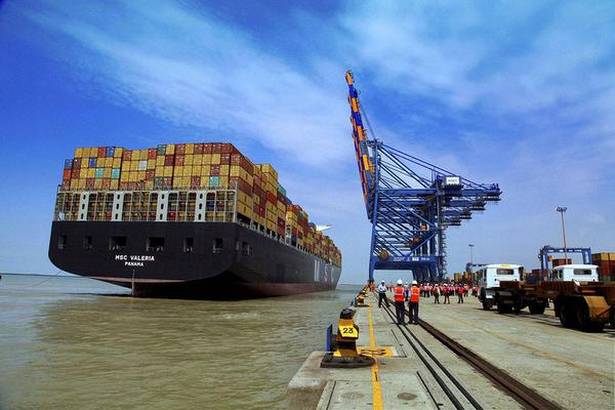

By P.K.Balachandran/Sunday Observer
Colombo, February 15 – India has signed seven Free Trade Agreements (FTA) and Comprehensive Economic Partnership Agreements (CEPA) since 2021, covering partners across Africa, West Asia, Europe and the Indo-Pacific.
Generally, these FTAs were signed with the aim of expanding markets for Indian goods and services. However, the India-EU FTA signed last week was substantially prompted by the growing differences between India and Europe on the one hand and the US, led by President Donald Trump, on the other. Trump’s abrasive remarks about India and its economy and about Europe’s inability to stand on its own legs pushed these two entities to demonstrate their autonomy from the US.
The FTAs signed so far have expanded tariff-free access for Indian exports, with the aim of increasing bilateral trade by billions of dollars. But behind the veneer of glamour and unabashed expression of hope, there are hard realities that have to be faced and tackled before the projected benefits begin to flow.
India-EU FTA
The India-EU FTA was hailed as the “Mother of All Pacts” and marketed as one covering two billion people and almost a quarter of global economic output. Radical tariff reductions mark the India-EU FTA. Under it, India will eliminate or reduce duties on 96.6% of EU goods, while the EU will liberalise 99.5% of its tariff lines on imports from India.
These will be done over the next seven years, with the deal coming into force in 2027 after ratification and enactment of the relevant protocols.
In 2024, EU-India trade in goods was worth over €120 billion – with €71.4 billion in EU imports and €48.8 billion in EU exports. The EU imported services from India to the tune of Euro 37 billion and exported services worth Euro 28 billion.
The FTA gives access to the EU for Indian IT services and digital firms. It stops short of unfettered labour mobility, but it improves recognition of qualifications, short-term entry for professionals and gives market access in areas such as financial services, maritime transport, and digital trade. For the Indian economy, in which services account for over half of GDP and a rising share of exports, this is a big opening.
Reciprocally, EU companies will gain greater access to key services sectors in India, including financial services, maritime transport, and professional services.
India’s average tariff on industrial goods has exceeded 16%. Its reduction through the FTA will be a shot in the arm for Europe’s capital-intensive industries such as motor vehicles. Indian tariffs on cars will fall from 110% to 10%. Car parts will eventually become tariff-free. For European manufacturers, this is Open Sesame to India, the world’s fastest-growing large automotive market.
Agriculture has long been the most sensitive area in EU–India negotiations. Currently, Indian tariffs on food products average 36% and can reach 150%. In 2024, EU agri-food exports to India were worth only €1.3bn, due in large part to prohibitive tariffs. With the FTA, Europe’s high-value agri-food exports are set to gain meaningful access to India’s rapidly expanding middle-class consumer market.
Spirits and wine, subject to tariffs of up to 150%, will benefit from a substantial reduction to a flat 40%, while beer tariffs will fall from 110% to 50%.
Already, EU’s trade with India supports 800,000 jobs. The FTA is expected to reinforce employment across sectors. India’s consumer base of 1.4 billion and its vast pool of human capital are major attractions for the EU.
Lower Indian tariffs on European machinery, components and capital goods will reduce the cost of producing in India for export. This is particularly relevant for fields like electronics, pharmaceuticals, chemicals, and automotive components.
India’s Small and Medium Enterprises (SME) sector will be a great beneficiary. The India-EU FTA envisages the setting up of SME contact points that will share up-to-date information on tariffs, customs procedures, and market entry requirements.
Road Blocks
However, outcomes from the FTA will not be automatic as Indian firms will face stringent European requirements on quality, environmental compliance and labour standards. India has accepted these requirements, including those under the Paris Agreement. But compliance costs can be high, especially for small entrepreneurs and exporters.
India will also have to ensure investment protection and good dispute settlement mechanisms. Political durability will be another factor in the successful implementation of an FTA. The government’s efficiency, friendliness and cooperation will have to be ensured from top to bottom in the bureaucracy particularly at seaports and airports.
India will have to align its workers’ skills, testing infrastructure, and regulatory capacity with European benchmarks. State governments and regulators should cooperate with all such endeavours.
India-US FTA
India and the US have been discussing an FTA for long. But the process was stalled by drastic US conditions and India’s reluctance to import more and abandon Russian oil purchases. India was greatly reluctant to lift the ban on foreign products in its agricultural sector.
Then all of a sudden this week, Trump and Indian Prime Minister Narendra Modi announced that US tariff rates on Indian imports would be slashed to 18% from 25% that was imposed earlier. The 25% extra tariff imposed for buying Russian oil will also be lifted.
Many Indians are thrilled with this bonanza. But a closer look reveals disturbing features in the announcements made thus far.
Trump unilaterally announced that India had agreed to several measures, including stopping Russian oil imports, reducing tariffs and non-tariff barriers “to Zero”, and buying US goods including energy, to the tune of $500 billion plus. A tall order indeed.
Indian authorities are showing reluctance to confirm these clauses. Modi hailed the agreement but did not refer to any of the terms mentioned by Trump.
In addition, the question of giving the US, market access, especially to the Indian agricultural sector (like the soyabean and dairy sector), which India has been reluctant to open for political reasons, remains unanswered.
Has India Silently Submitted to Trump?
On February 2, Trump said that Modi had “agreed to stop buying Russian Oil, and to buy much more from the United States and, potentially, Venezuela”, adding that this would help end the war in Ukraine.
But the Indian Foreign Ministry did not comment on this issue, as The Hindu pointed out.
However, it may be recalled that in October 2025, Indian refiners began to cut Russian Ural oil orders by 38% from the previous year. In 2019, India had stopped oil imports from Iran and Venezuela after Trump threatened sanctions. Would India import oil from Venezuela as desired by Trump? This raises the fundamental question as to whether India has lost its proclaimed “strategic autonomy.”
The US has also threatened to impose 25% tariffs on countries “doing business” with Iran, which includes India. The Indian investment in Iran’s Chabahar port, allowed by the US previously, has to be called off now. It has apparently been called off as the Indian budget for the year 2026-2027 has no allocation for the Chabahar port.
The 23-year-old Chabahar port project is now part of history. It was to be India’s gateway to the Central Asian republics, as the Pakistan-Afghanistan-Iran route is not available to India because of the perpetual conflict with Pakistan and disturbed conditions in Afghanistan and Iran.
Trump has grandiloquently declared that Modi had “committed to “buy American” in addition to buying over $500 billion of U.S. Energy, Technology, Agricultural products , coal, and many other products.
This is a huge commitment for India, though the goal has to be realised over a period of time. At present, India-US bilateral trade in goods stands at US$131 billion, and India’s investment in the US is US$ 40 billion. Thus, India has a long way to go and the path is arduous.
The Indian government and Indian industry will have to put their heads together to come up with strategies and work plans to measure up to the demands of a hard and harsh task master like President Donald Trump.
END
,
