

By P.K.Balachandran/Daily News
Colombo, July 1–If Zionism’s physical representation is the State of Israel, its political manifestation is the power of the Jews in the United States, with New York as its impregnable fortress.
From the founding of Israel against armed Arab resistance in 1948 until the June 2025 Iran-Israel war, for a period of about 77 years, Israel had never been defeated in war. And in the US, Zionists had always been a decisive factor in politics, particularly in New York, the country’s financial capital.
But Iran’s unexpectedly good showing in the 12-day war in June against the combined armed might of Israel and the US, dented the notion of Zionism’s military invincibility. And the upset victory of the vocal Palestine supporter Zohran Mamdani in the Democratic Party’s primary in New York against veteran Andrew M. Cuomo dented Zionism’s claim to political invincibility in the US, considered to be its fortress outside Israel.
Zionism
Zionism is a religious and political movement that brought Jews from around the world back to their ancient homeland in Palestine and re-established “Israel” as the locus of Jewish identity. Zionism was a product of murderous anti-Semitism in Europe, Czarist Russia and Nazi Germany.
But Marxists and the people of the Global South consider post-war Zionism an aggressive and discriminatory ideology that had forcibly pushed out Palestinians from their ancestral lands and expanded Jewish settlements. In the eyes of many people, particularly in the Muslim world, Zionism is a manifestation of Western imperialism. That it is unabashedly backed by former Western colonial powers and the US, is cited as evidence.
But the performance of the Iranian war machine in June stalled the combined Israeli-US onslaught. It was the sudden ceasefire unilaterally enforced by President Donald Trump, which saved Israel from ignominy. For the first time, a West Asian Islamic State had put Zionist arrogance in its place.
New York Democratic Primary
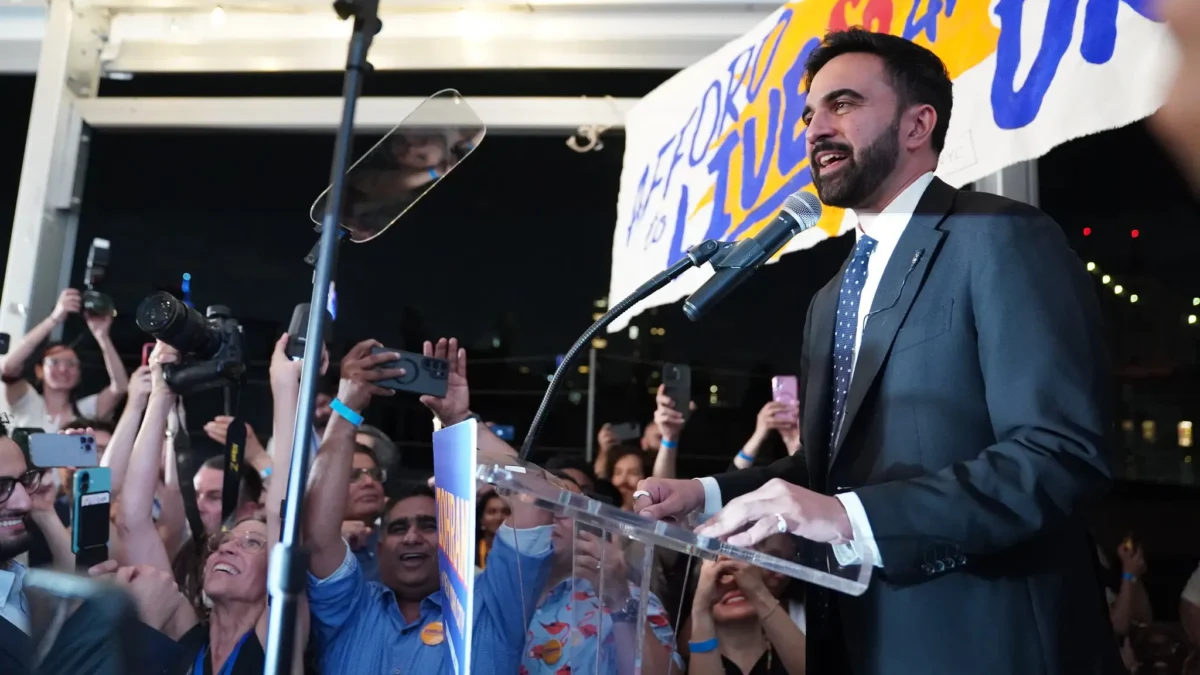
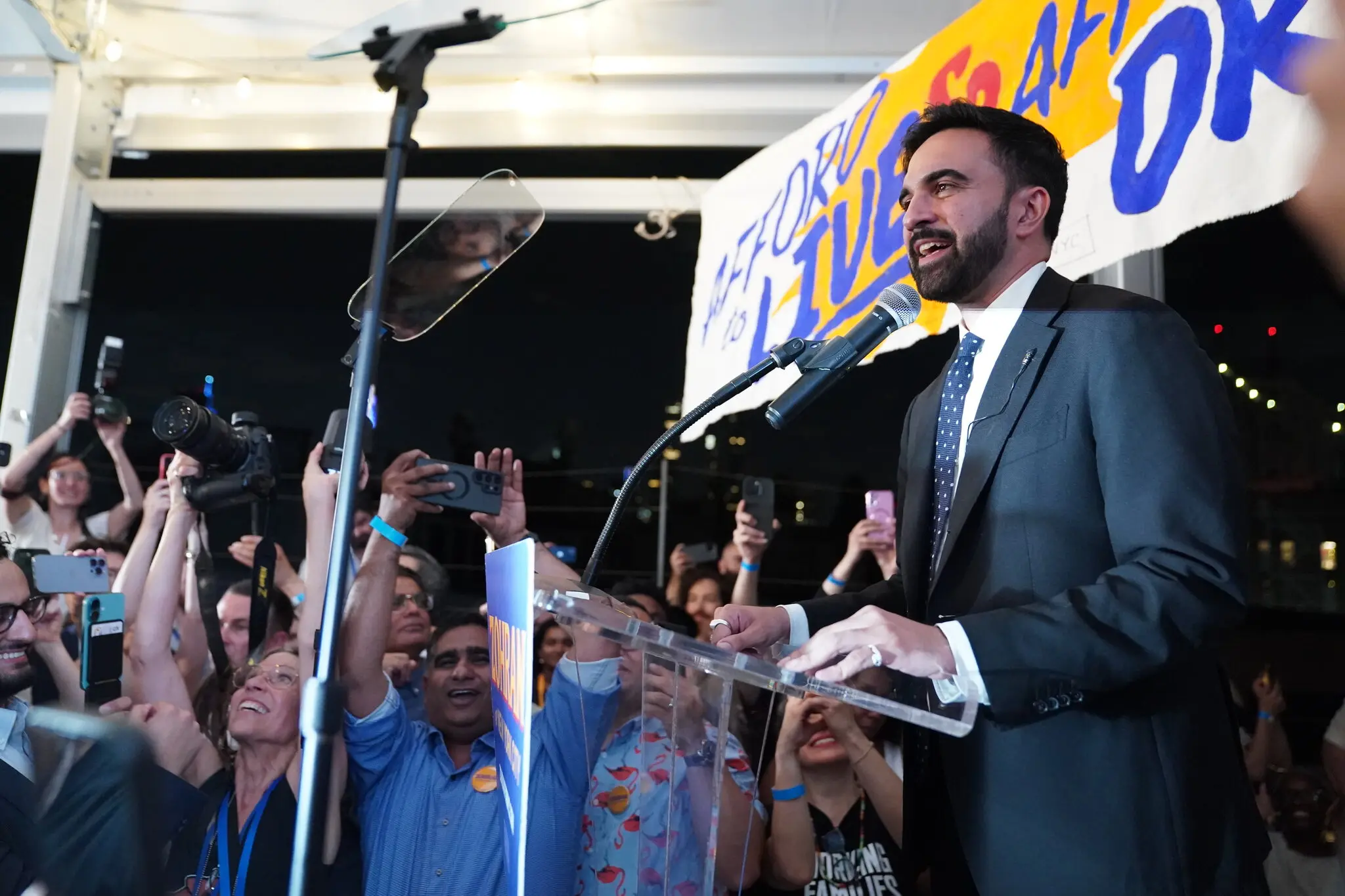
In the same month in New York, which has the largest Jewish population outside of Israel, and which is also the epicentre of Zionism in North America, Zohran Mamdani, a 33-year old Muslim of Ugandan and Indian origin, beat Andrew Cuomo in the Democratic party’s primary ahead of the November Mayoral election.
Although the election was only the primary of a political party, it is widely believed that Mamdani might win the November election though he will be facing the combined wrath of the conservatives, pro-Israel and right wing elements from both the Democratic and Republican Parties. If Mamdani wins, he will be the first non-White Muslim man of Indian-African origin to be Mayor of New York.
In their campaign, Cuomo and several Democrats mocked at Mamdani’s promises, particularly free public buses and city-run grocery shops. To defeat him, millions of dollars were spent. But unlike his opponents, Mamdani had connected with the millennials of New York, who craved for his down-to-earth policies.
“I was blown away by his personable skills, with the way he talks to people and the way he can relate to just the average person, and the way he humanises the voters who felt very frustrated with the way things were going,” 30-year old Harry Krizmanich told the BBC.
This chimed with a New York Times report which said that Israel’s standing in the US had fallen “precipitously” since the Gaza war. “Opposition to Israel and its government (even questioning its existence as a Jewish state) is increasingly acceptable to broader swaths of the Democratic party, even in areas where pro-Israel Jews had long been a bedrock of the party,” the report said.
Surprisingly, even Mamdani’s outrageous statement that Israeli Prime Minister Benjamin Netanyahu was a “war criminal” who he would arrest if he came to New York, did not seem to put off the Jewish voter.
Mamdani had won several Jewish Democrats like Jerrold Nadler, one of the city’s most prominent Jewish leaders who had vowed to “fight against all bigotry and hate.” According to a poll released by Pew Research Centre in March-May, nearly seven in 10 Democrats expressed an unfavourable view of Israel, compared with 37% of Republicans.
Harsh Living Conditions
Younger Jews, like young people from other religious and ethnic groups, were driven by existential concerns about high prices. Surveys revealed that 25% of New Yorkers were poor without money to buy food. Rents had skyrocketed and transport was expensive. Mamdani’s focus on these issues with promises of relief, came as a breath of fresh air.
According to the World Socialist Website, the election of Mamdani has shattered certain popular myths. The first myth is that socialism is “toxic”. His reform proposals related to soaring housing costs, child care, and other social problems and these clearly struck a chord. He also dented the myth that criticism of Israel’s genocide in Gaza amounts to anti-Semitism. That Americans want war to maintain their dominance was also disproved. Several US cities had seen demonstrations against Israel and the war in June.
Mamdani’s win refutes the media narrative that Trump’s re-election in 2024 marked a permanent right-wing shift in the American population and that American politics necessarily is built on racial antagonism.
Zionism Remains
However, New York Times noticed concerns in the larger Jewish community in the US about the increasing legitimization of “anti-Semitism” which they saw as opposition to existence of Israel itself.
President Trump, a representative of the right wing, had called Mamdani “a 100% Communist lunatic,” while insulting his appearance, voice and intelligence. Others on the far right stoked fears about his Islamic faith and spread baseless conspiracy theories. It was also pointed out that Mamdani was not US-born and that he became a US citizen only seven years ago.
Abdaljawad Omar, a Palestinian scholar and theorist whose work focuses on the politics of resistance, decolonization, and the Palestinian struggle, advices caution in the valuation of the June events.
Writing in Mondoweiss.net he says that Mamdani’s victory “does not indicate the emergence of a coherent pro-Palestinian mainstream but an erosion of the sanctity of Israel’s place in American moral life.”
He goes on to say that “the shift, at this stage, is not from marginality to centrality for Palestine—but from unquestioned centrality to uneasy displacement for Israel.”
However, the more a beleaguered Israel insists on its unique status, the more visible its violence will become. “This will have the unintended consequence of people in the West getting to see the ugly side of Israel which could hasten the alienation from it,” the scholar predicts.
Omar concludes saying; “In the end, the shift we are witnessing is not the triumph of an alternative narrative, but the slow implosion of the dominant one under the weight of its own excesses.”
“Paradoxically, it is not anti-Zionist discourse that has produced this rupture, but Zionism itself—its saturation of the symbolic space, its demand to be centred in every moral reckoning, its compulsion to speak even when no one is asking. This is the logic of ideological overproduction, when a system can no longer sustain its own fictions, not because they have been disproven, but because they have been repeated too often, too loudly, with too little shame.”
Continuation of War
A wounded Israel will not meekly accept its humiliation at the hands of Iran. It will launch attacks (presumably with US support) until it destroys Iran’s nuclear program and overthrows the Islamic clerics ruling Iran.
But battle-hardened Iran will be no walk war. Furthermore, Iran will have the support of Russia and China and much of the Global South. Its proxies, the Hamas, Hisbullah and the Houthis, have not been obliterated. There is a ceasefire now, but lasting peace is a far cry in this part of the world.
END
