

Colombo, March 23 (CIR)– Sri Lanka’s swift and measured response to a high-stakes maritime crisis involving an Iran-linked vessel has placed the island nation at the center of a complex geopolitical moment.
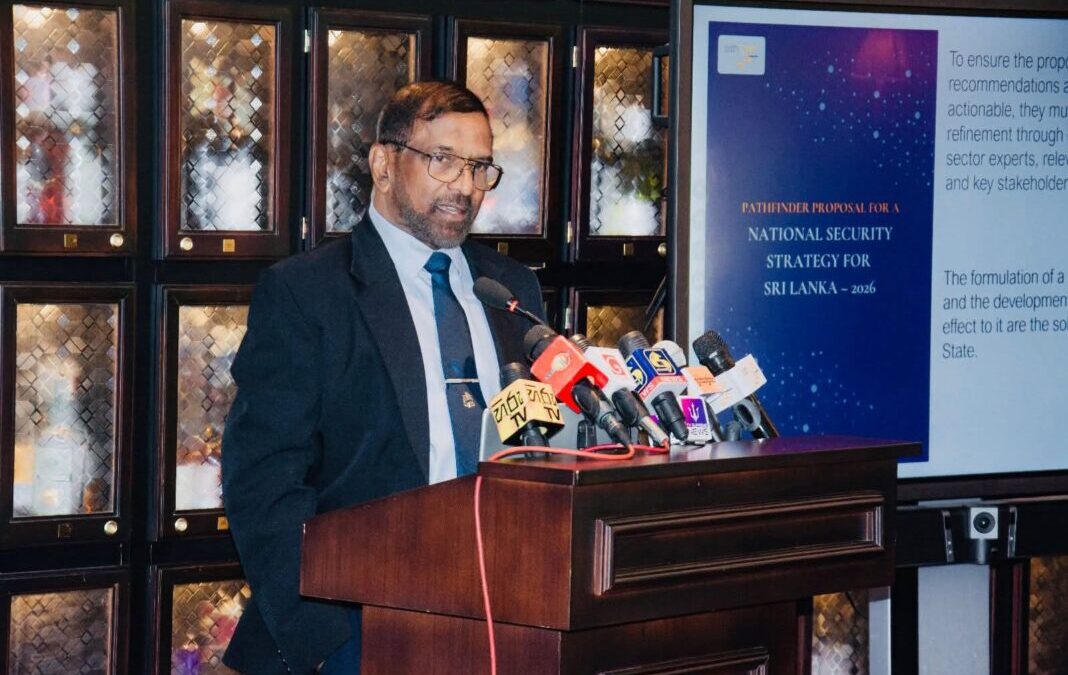
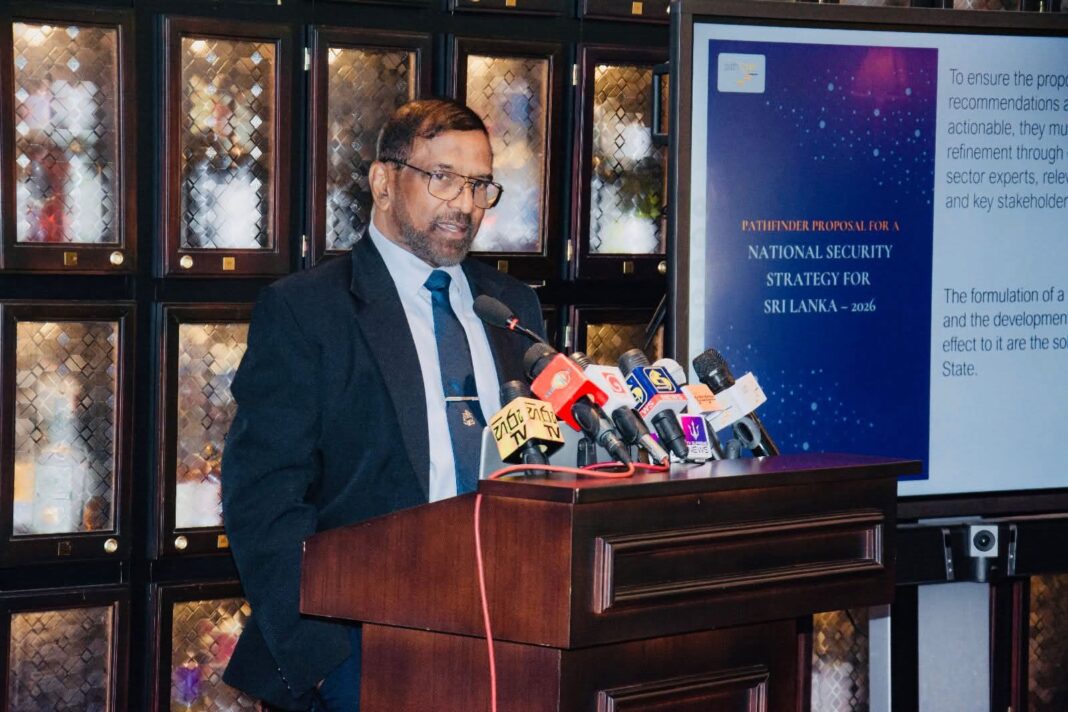
In this wide-ranging interview, former foreign secretary and maritime security expert Jayanath Colombage speaks on Colombo’s decisive act within international maritime law, how the incident has exposed deeper structural gaps in national security, maritime governance, and foreign policy strategy. From navigating neutrality in a volatile global landscape to identifying emerging economic opportunities amid regional instability, Colombage outlines both the risks and the strategic openings facing Sri Lanka in an increasingly contested Indian Ocean. Excerpts:
Q: From a maritime security and diplomatic perspective, how do you assess Sri Lanka’s response to the incident of IRIS Dena and its aftermath?
A: Sri Lanka has an international obligation to respond to distress calls within its extensive ‘search and rescue region’ in the Indian Ocean.
When the distress signal was received, authorities acted immediately. The Maritime Rescue Coordinating Centre in Colombo coordinated a rapid response, with the Sri Lanka Navy, Coast Guard, and Air Force reaching the site swiftly. Initially, 34 survivors were rescued, followed by the recovery of 84 bodies.
At that stage, humanitarian responsibility took precedence over diplomacy. The priority was to save lives and ensure safety, which Sri Lanka ensured with efficiently.
Q: What followed the rescue operation?
A: Survivors were brought ashore for medical care, while the deceased were transferred to Galle National Hospital for testing and identification.
Meanwhile, another vessel, IRIS Bushehr, approached Sri Lankan waters fearing further attacks. Sri Lanka allowed it to anchor offshore but withheld immediate port access, reflecting a cautious approach. Around 200 crew members were later evacuated to a naval facility in Welisara, demonstrating a balance between humanitarian responsibility and neutrality.
Q: How did Sri Lanka balance neutrality, and was there any delay in response?
A: Sri Lanka’s response reflected a careful balance between humanitarian obligations, international law, and geopolitical neutrality. Despite the vessel’s link to Iran amid tensions involving the U.S. and Israel, authorities prioritized safety.
The vessel was kept in place while approximately 208 crew members were evacuated. Plans to move it to Trincomalee proved impractical due to technical, operational, and legal constraints. It remains off Colombo.
Sri Lanka fulfilled its obligations under international law while maintaining neutrality, and the response has been widely viewed as measured and effective. While some criticism of delays exists, the core actions such as rescue, evacuation, and repatriation, were carried out promptly.
Q: What are Sri Lanka’s challenges now?
A: Sri Lanka cannot allow the vessel to depart if it risks re-entering hostilities, as that could compromise neutrality. Both the vessel and crew must remain under supervision until a diplomatic or legal resolution is reached.
Q: What structural gaps has this incident exposed?
A: Sri Lanka lacks a formal national security strategy and a well-defined foreign policy framework. While the response was effective, reliance on ad hoc decision-making is not sustainable.
Various advisory documents exist, but the state must consolidate them into a coherent, government-led strategy. This crisis shows Sri Lanka can act decisively but, more complex crises in the future, may not yield similar outcomes without a structured framework.
Q: Given the unpredictability of global politics, is a fixed strategy still relevant?
A: The global environment is increasingly fluid, with weakening adherence to international law and multilateral institutions. While some argue that fixed strategies quickly become outdated, this underscores the need for a flexible, adaptive framework.
What Sri Lanka needs is a clear baseline; a national security and foreign policy framework that guides decision-making while remaining responsive to change.
Q: Should Sri Lanka consider the appointment of a national security advisor?
A: In principle, yes. But effectiveness depends on institutional design and independence. The National Security Council currently lacks a clear legal framework, and decision-making has often been ad hoc.
Similarly, past national security advisor roles have been informal and based on personal trust rather than structured, merit-based processes.
In countries like India, the role has evolved into a highly professional position held by individuals such as Ajit Doval and Shivshankar Menon, with significant expertise in intelligence and diplomacy. Sri Lanka, by contrast, faces both structural and political constraints.
The priority should be establishing clear legal frameworks and transparent appointment criteria. A system that balances trust with expertise is essential for building a credible national security architecture.
Q: What are the key gaps in Sri Lanka’s maritime security framework?
A: Maritime security extends far beyond a military function and is not the responsibility of the Navy alone. It involves a wide network of stakeholders, including shipping, ports, logistics, fisheries, tourism, and maritime services. Yet, a key gap in Sri Lanka is the absence of a clearly defined, comprehensive national understanding of what maritime security entails.
Threats range from piracy and smuggling to illegal fishing and environmental disasters. The MV X-Press Pearl incident showed how even non-deliberate events can have far-reaching consequences.
Addressing these risks requires a layered, coordinated approach. Sri Lanka maintains maritime surveillance through naval assets, Air Force reconnaissance, shore-based radar, and systems such as the Automatic Identification System (AIS) to track merchant vessels.
However, maritime security cannot be managed within national boundaries alone. The Indian Ocean is a shared space, prompting the development of regional cooperation frameworks, including the Colombo Security Conclave, which brings together Sri Lanka, India, Maldives, Mauritius, Seychelles, and Bangladesh to enhance coordination across multiple domains.
Regional cooperation mechanisms such as the Colombo Security Conclave exist, but recent incidents highlight gaps in detection and intelligence-sharing. Strengthening coordination and integrating advanced monitoring systems is essential.
A growing challenge is the increasing presence of submarines in the Indian Ocean. Unlike surface vessels, they operate undetected and may include nuclear-capable platforms, adding a largely invisible but significant strategic risk.
In this context, maritime intelligence is as important as physical surveillance. Integrating satellite monitoring, radio-frequency tracking, and real-time intelligence-sharing with regional partners, particularly India and the Maldives, is essential to achieving effective maritime domain awareness.
Q: With all these developments, is the idea of the Indian Ocean as a “Zone of Peace” still realistic?
A: The concept of the Indian Ocean as a “Zone of Peace,” first proposed in 1971 by Sri Lanka and Tanzania. It remains one of the most ambitious yet unrealized diplomatic visions of the post-colonial era.
Adopted by the United Nations General Assembly with strong support, the proposal aimed to prevent militarization and nuclearization, restrict new military bases, and preserve the region for peace, stability, and development. However, Cold War rivalries, particularly between the U.S. and the Soviet Union undermined its implementation, as major powers had little incentive to demilitarize a strategically vital region.
Today, revival appears even more complex. The global order is more fragmented, strategic competition has intensified, and the Indian Ocean has become increasingly contested. Yet, the core rationale remains highly relevant. For many regional states, the Indian Ocean is not just a geopolitical arena but a lifeline for trade, fisheries, and economic growth. Continued militarization risks undermining both stability and long-term development.
While a binding agreement among major powers is unlikely, regional states can still strengthen cooperation and promote shared principles of neutrality and stability.
Sri Lanka, which once played an active diplomatic role, could adopt a more outward-looking approach to help advance these efforts.
Q: Why has the government been relatively quiet on its position?
A: Concerns over the government’s apparent silence must be understood within the realities of diplomacy, particularly in a sensitive and polarized geopolitical environment.
Sri Lanka is effectively walking a diplomatic tightrope. Any premature or overt alignment could carry significant strategic and economic risks. The country maintains close ties with India and the U. S., while also managing its long-term friendly relationship with Iran. In this context, neutrality is not just a principle, it is a necessity.
This helps explain the government’s cautious, and at times ambiguous, public posture. Not all diplomacy is conducted in the open. While public expectations favor clarity and immediacy, effective diplomacy often unfolds away from the spotlight.
There is a deliberate balance between public signaling and “quiet” or backchannel diplomacy. Public statements are carefully calibrated to avoid escalation, while substantive engagement, negotiations, assurances, and coordination, typically occurs through direct, closed-door channels.
In this case, restraint should not be mistaken for indecision.
While calls for transparency are valid in a democratic context, diplomacy does not always allow full public disclosure. Its effectiveness is measured not by what is said openly, but by how skillfully complex situations are managed behind the scenes.
Q: You mentioned diplomacy behind closed doors. Some observers suggest that major powers may quietly influence Sri Lanka to revive agreements such as the Acquisition and Cross Servicing Agreement (ACSA) and Status of Forces Agreement (SOFA). Do you see Sri Lanka becoming vulnerable to such influence?
A: Without speculating on specific agreements, the broader issue highlights an important strategic lesson: reliance on external security guarantees has limits.
Several West Asian states, including the United Arab Emirates, Bahrain, Kuwait, Oman, and Qatar, have long maintained close security ties with the U. S. , hosting military bases as part of a broader strategic exchange. However, recent developments have exposed the limits of such arrangements. Even strong partnerships do not always translate into assured protection in every scenario, prompting concerns about overdependence.
For Sri Lanka, entering defense agreements or allowing foreign military presence requires careful long-term consideration. Such decisions shape strategic posture and carry risks of entanglement in external conflicts.
The goal should be balance – engaging with major powers while preserving strategic autonomy.
The lesson is not to reject partnerships, but to manage them carefully. For Sri Lanka, the challenge is to engage major powers without becoming dependent, and to strengthen its security without being drawn into conflicts beyond its control.
Q: Some suggest there is an opportunity to benefit from this crisis if Sri Lanka plays it smart. Do you agree?
A: While the situation is complex and carries risks, it also presents potential strategic opportunities, if approached with caution, clarity, and long-term planning.
One immediate avenue is diplomatic leverage. By extending humanitarian assistance to Iran, Sri Lanka has created space for constructive engagement on practical issues of mutual interest, including safeguarding energy shipments through the Strait of Hormuz. Such engagement must remain measured and non-transactional, but it underscores how responsible conduct can translate into diplomatic goodwill.
Beyond this, regional instability raises a broader question: whether Sri Lanka can position itself as a stable hub for energy, logistics, and financial services.
More broadly, the country could position itself as a stable hub for energy, logistics, and finance. The Trincomalee Oil Tank Farm and Port City Colombo offer potential in this regard.
However, attracting investment requires regulatory clarity, political stability, and strong infrastructure. Any move must also account for regional sensitivities, particularly with India.
Sri Lanka should not pursue short-term gains but focus on gradually establishing itself as a reliable and neutral node in regional networks.
The crisis presents both risks and opportunities. Sri Lanka’s ability to navigate them will depend on coherent policymaking, strategic balance, and its capacity to build long-term credibility in an increasingly contested Indian Ocean.
This interview was conducted and edited by Gagani Weerakoon. She leads the editorial at the Center for Investigative Reporting (CIR).
END
