

By P.M. Amza
Colombo, December 3 – With Putin’s New Delhi visit approaching, competing Western and Russian narratives are occupying India’s media space. A fierce debate has taken place in the pages of The Times of India—between the envoys of the United Kingdom, France and Germany on one side and the Russian Ambassador on the other.
This has transformed New Delhi into an unexpected arena of geopolitical contestation. This exchange, though limited to op-eds, reflects deeper global fractures surrounding the Ukraine conflict.
Incompatible narratives, clashing interpretations of diplomacy, and a long history of mistrust come through the exchanges.
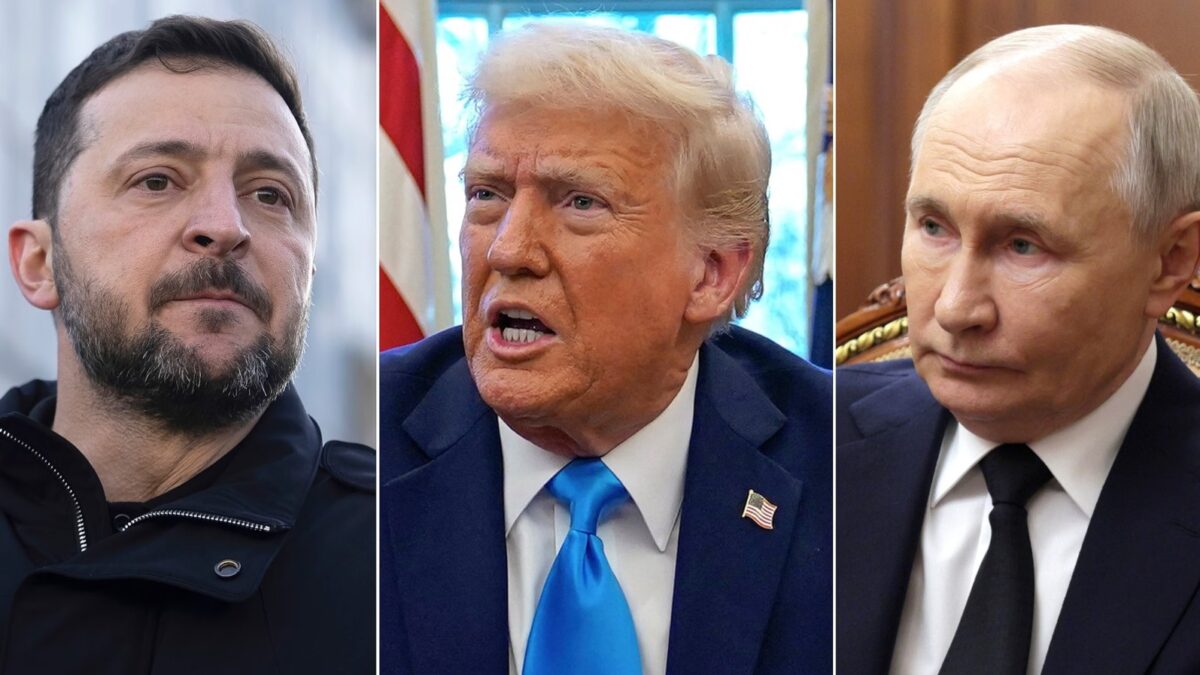
Into this already charged environment enters President Donald Trump’s proposed peace plan. The central question now is whether the latest initiative will face the same fate as the Minsk Agreement of 2015 and the Istanbul Understanding of 2022, both of which were, according to Russia, quietly undermined by Western powers despite the promise of peace.
The article co-authored by the ambassadors of the UK, France and Germany framed Russia as the sole aggressor and presented the conflict as an unambiguous violation of international law. Their argument rested on the premise that the burden of stopping the war lies entirely with Moscow. In response, the Russian Ambassador’s counter-article accused Europe of systematically sabotaging past peace processes—arming Ukraine, derailing negotiations, and transforming what could have been a containable regional conflict into a prolonged geopolitical confrontation.
The public exchange of sharply contrasting viewpoints in the media is unfolding at a particularly sensitive moment, coinciding with the impending visit by President Vladimir Putin to India on December 4 and 5, 2025.
This high-profile engagement has heightened geopolitical tensions in New Delhi, with Western envoys subtly reinforcing their interpretations of the Ukraine conflict, while Russia seeks to shape Indian public sentiment ahead of the summit.
India, long a strategic partner of both Moscow and key European capitals, has inadvertently become an information battleground where competing global narratives play out in the public domain. The timing of these exchanges underscores the extent to which major powers now view India as an influential center of political messaging and diplomatic leverage.
Both articles overlook the underlying socio-cultural tensions that fueled the conflict long before geopolitical rivalry overtook the discourse. For Russia, the erosion of Russian language rights in Ukraine, the declining role of Russian culture in public institutions, and the restructuring of Ukraine’s religious and linguistic identity after 2014 generated deep unease.
Policies restricting Russian-language media, education reforms limiting the use of minority languages, and the growing influence of the newly recognized Orthodox Church of Ukraine were interpreted in Moscow as attempts to sever centuries-old cultural ties.
Ukraine, on the other hand, sees these reforms as essential to nation-building following independence, especially after the annexation of Crimea. From Kyiv’s perspective, reducing Russian cultural influence was both symbolic and strategic. Yet these reforms had real consequences for large Russian-speaking populations in the east and south, and they remain central to Moscow’s narrative that the conflict emerged out of cultural suppression—an argument that continues to color its negotiating posture.
The Minsk Agreement, signed in February 2015 and guaranteed by Germany and France, was presented as a comprehensive roadmap to de-escalation. It envisaged decentralization, constitutional reforms granting special status to parts of Donetsk and Luhansk, withdrawal of heavy weapons, prisoner exchanges, and an immediate ceasefire. At the time, it was hailed as the most credible opportunity to stabilize the region.
Years later, however, statements by former German Chancellor Angela Merkel and former French President François Hollande suggested that Minsk was never intended to be implemented in full.
Their admission that it served primarily to “buy time” for Ukraine to strengthen its military capabilities was taken by Russia as confirmation that Western governments had used diplomacy tactically rather than sincerely.
This revelation hardened Moscow’s mistrust and shaped its future engagement with skepticism, reinforcing the belief that Western commitments were provisional rather than genuine.
Barely a month into the 2022 escalation, Russian and Ukrainian negotiators met in Istanbul. Reports from mediators indicated substantial progress. Ukraine was prepared to consider neutrality, international security guarantees were under discussion, and talks were moving toward phased Russian withdrawals. The framework resembled a pragmatic compromise that might have halted the fighting early.
Yet the negotiations collapsed abruptly. Russian officials and some Turkish intermediaries claim that Western intervention—particularly the visit of then-UK Prime Minister Boris Johnson to Kyiv—discouraged Ukraine from continuing the talks. Kyiv denies this.
Nevertheless, the Istanbul channel closed just as serious concessions were reportedly on the table. Much like Minsk, the failure of Istanbul reinforced Russia’s view that Western actors preferred prolongation of hostilities to compromise.
Aainst this backdrop, President Trump’s original 28-point peace proposal—later reported to have been streamlined to 19 points during the Geneva negotiations—resembles a return to earlier diplomatic frameworks. The plan reportedly includes territorial compromises, neutrality arrangements, strengthened international monitoring, exchange of prisoners, reconstruction assistance, and the possibility of demilitarized or internationally supervised zones.
At its core, the proposal follows the same logic behind Minsk and Istanbul -. Freeze hostilities, create diplomatic space, and build the foundations of a new security arrangement in Eastern Europe.
Yet the geopolitical environment that suffocated earlier agreements remains unchanged. Russia insists that any settlement must recognize “territorial realities” on the ground, while Ukraine faces constitutional, political, and public-opinion barriers to ceding land.
Europe and the United States remain divided—some capitals privately acknowledge that territorial compromise may eventually be necessary, while others reject it outright, arguing that no peace arrangement should reward territorial gains made through force.
This discord mirrors the fragmentation that crippled Minsk and Istanbul, raising the possibility that Trump’s initiative—whether in its original 28-point form or in the revised 19-point Geneva draft—may also falter due to external political fractures rather than battlefield dynamics alone.
The most contentious aspect of the proposal is the idea of land swaps or internationally supervised referenda. While theoretically pragmatic, such measures challenge the international norm that borders must not be altered under military pressure. Accepting referendums in conflict zones may legitimize territorial acquisition by force and trigger dangerous precedents elsewhere.
For Ukraine, territorial concessions risk a domestic backlash, political instability, and constitutional complications. For Russia, failure to secure territorial recognition would undermine years of military and political investment. These conflicting imperatives create an almost immovable obstacle at the heart of any peace plan—an obstacle that both Minsk and Istanbul failed to overcome.
The recurring pattern that marked earlier failures appears to be resurfacing. Western governments remain divided on the extent to which Ukraine should be encouraged toward negotiation. States close to Russia’s borders prioritize deterrence and reject compromise, while others seek a pragmatic settlement to prevent an indefinite conflict. The United States itself is split between advocates of negotiation and proponents of continued military support.
These divergences create mixed signals for Kyiv—just as they did during Minsk and Istanbul. There is a risk that, despite rhetorical support for diplomacy, Western disunity may once again undermine the prospects for a negotiated settlement.
If the proposal succeeds, it could freeze hostilities, alleviate humanitarian suffering, and reopen channels for a broader Europe–Russia security dialogue. A frozen conflict may not be ideal, but it could stabilize the region and reduce the immense human and economic costs of war.
If it fails, however—due to territorial disputes, mistrust, or geopolitical interference—the conflict may deepen, militarization may intensify, and Europe’s security architecture may further erode. In that case, Trump’s plan may be remembered as yet another missed opportunity following the path of Minsk and Istanbul.
History shows that peace in Ukraine has often been undermined not only by battlefield realities but by diplomatic hesitation and strategic miscalculations. The failures of Minsk and Istanbul reflected wider geopolitical struggles rather than bilateral disagreements alone.
Whether Trump’s 28-point initiative breaks this pattern—or becomes another casualty of mistrust—will depend on the willingness of all actors, including Ukraine, Russia, and the West, to allow diplomacy to prevail.
END
(P.M.Amza is a former Sri Lankan Ambassador to many countries including Russia)
