
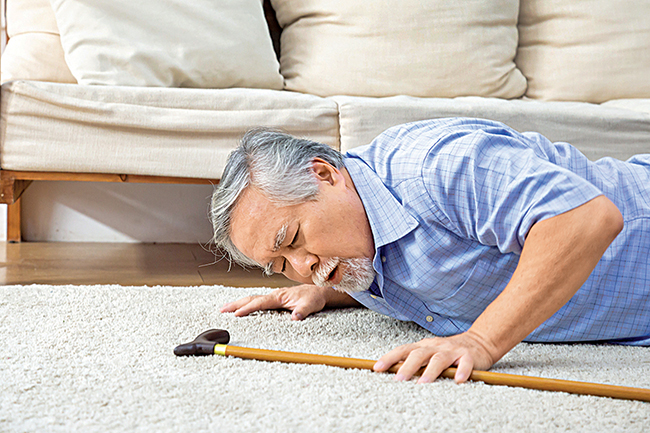

By P.K.Balachandran/Counterpoint
Colombo, January 14 – According to the World Health Organization (WHO), in 2021, falls were the second leading cause of unintentional injury deaths worldwide. Each year an estimated 684 000 individuals had died from falls globally of which over 80% were in low and middle-income countries.
Adults older than 60 years of age suffered the greatest number of fatal falls. There were 37.3 million falls that were severe enough to require medical attention occurred each year.
The world’s population is rapidly ageing. As a consequence, falls and injuries due to falls are increasing, making their prevention and management a critical global challenge. But multi-domain interventions tailored to an individual’s risks factors, when delivered, have been found to be effective in reducing falls and minimizing injury and deaths.
The Late Professor Bernard Isaacs (1924–1995), an expert on geriatric medicine at the University of Glasgow, famously said that it takes a child one year to acquire independent movement and ten years to acquire independent mobility, but an old person can lose both in a day!
Globally, falls occur in the case of 30% of adults aged over 65 years annually. The consequences for this age group are serious. The “Global Burden of Disease” study reported that nearly 17 million years of life were lost from falls in 2017. In high-income countries, approximately 1% of health care costs is accounted for by fall-related expenditures.
Death from fall rates among ethnic Chinese populations across South-East Asia are between 15 and 34%, and in Latin America and the Caribbean rates ranged from 22% in Barbados to 34% in Chile.
Fall Death Rates in US
In 2023, “USAFacts” reported that more Americans died from accidental falls (47,026) than motor vehicle accidents (44,762). American States with the highest fall death rates tended to have older populations and colder climates. Wisconsin had the highest rate in 2023 (25.3 falls per 100,000 people), while Alabama ranked lowest (5.2 falls per 100,000).
Age is one predictor of state-level differences in death rates from accidental falls. Maine and Vermont had the highest percentage of population over the age of 65, and they ranked second and third in death rates for falls.
Weather also mattered. Eight of the 10 states with the highest age-adjusted death rates were snowy in the winter.
Despite prevention efforts like safety campaigns and homes using more guardrails, risk factors such as increased prescription drug use and alcohol consumption offset progress.
Fall Rates in Sri Lanka
As in the case of populations elsewhere in the world, the Sri Lankan population is also rapidly aging. Therefore, falls among the elderly, are likely to emerge as a significant public health problem in the island.
According to a paper written by researchers at the Faculty of Medicine, University of Colombo, in 2021 (Hajanthy Jeyapragasam, Ajani Ilukkumbura, Punu Jayakody and Prof. Thashi Chang), falls were a major cause of morbidity, premature death, emergency admissions and hospitalization among the elderly.
The study included 128 participants aged 65 years or older living in the Anderson housing complex in Colombo 05. Each participant’s weight, height, vision, hearing, and tactile sensitivity were noted and their mobility (strength, reaction-time and balance) was assessed. The study found that 44% had experienced a fall in the past five years with a large proportion having fallen more than once. 63% of those who fell, sustained serious consequences such as fractures, internal bleeding, dislocation and severe pain which required medical treatment.
The researchers found a significant impairment in strength, reaction-time and balance among the participants. Almost 1/4th to 2/3rd of the sample failed the mobility tests. As to the environmental factors that caused these falls, the most common was found to be slippery floors. Almost three fourths of the 128 were at a significant risk of falling.
Risk Factors
Apart from age, the other risk factors were diabetes, hypertension, back pain, obesity, vision impairment, mobility impairment, slippery floors and polypharmacy (which is the simultaneous use of multiple medicines by a patient).
These factors could be modified with active intervention. Therefore, public health measures, including educational programmes for elderly groups and their families, are essential to reduce falls and their associated problems.
In Care homes and hospital settings, older adults should be considered as “high risk” and a standard comprehensive assessment followed by multidomain interventions should be considered.
Older adults at a low risk for falling should also be offered education about falls prevention and exercise for general health. Older adults in contact with healthcare for any reason should be asked, at least once yearly, if they have (i) experienced one or more falls in the last 12 months, and (ii) about the frequency, characteristics, context, severity and consequences of any falls.
If resources and time are available, the care giver or doctor should ask if the victim has experienced dizziness, loss of consciousness or any disturbance of gait or balance and if they experience any concerns about falling. Older adults who have experienced any such feelings should be offered an objective assessment.
Clinicians cannot rely solely on older adults reporting falls, as studies indicate that many do not report on their own for a variety of reasons. This is particularly true for men. Less than a third mentioned falls to their clinician (if not directly asked).
An adult who sustains an injury requiring medical (including surgical) treatment, may report recurrent falls in the previous 12 months. He may have been laying on the floor unable to rise independently for at least one hour. In such a case he may be suspected to have experienced a transient loss of consciousness. He should be regarded as being in a “high risk” category.
An older adult who does not have a history of falling, or who had a single non-severe fall and no gait or balance problems, is deemed as being at “low risk”. But “low risk” does not mean ‘no risk at all. Medical personnel should recommend primary prevention. The ‘low risk’ group should be reassessed annually.
Older adults who had a single non-severe fall but have gait and or balance problems, should be considered as being at ‘intermediate risk’ and would benefit from a strength and balance exercise intervention.
Finally, those at ‘high risk’. These include older adults with a fall and also showing one or more of the following characteristics: (i) accompanying injury, (ii) multiple falls ( more than two falls) in the previous 12 months, (iii) known frailty, (iv) inability to get up after a fall without help for at least an hour and (v) transient loss of consciousness.
These high-risk older adults should be offered a multifactorial falls risk assessment. Suspicion of a syncopal fall (fainting) should trigger syncope valuation and management.
Urinary incontinence may be related to falls. This should be treated by an urologist/gynaecologist. Cardiological investigations may need to be done. The victim should be tested for diabetes mellitus, osteoarthritis, neurological disorders including PD, polyneuropathy and stroke, cardiovascular diseases, cognition, depressive disorders, delirium, anaemia, electrolyte disorders, thyroid disease, frailty, sarcopenia, Parkinson’s disease, and fracture risk (osteoporosis).
He might have to be assessed for conditions such as pneumonia, especially in acute care setting. He should be tested for depressive disorders also.
Assessing the nutritional status is important through the Malnutrition Universal Screening Tool (MUST) and Malnutrition Screening Tool (MST). Obesity, Sarcopenia (including sarcopenic obesity); Vitamin (Vitamin D, B1, B12) and folic acid deficiencies and substance abuse should be enquired into.
Exercise programmes for fall prevention are recommended to improve balance – the duration being three times or more weekly which are individualised. They should progress in intensity for at least 12 weeks. Tai Chi and/or additional individualised progressive resistance strength training would help.
Impaired vision could be a cause. Vision loss is the third most common chronic condition in older adults. About 20% of people aged 70 years or older have a visual acuity of less than 6/12. Many older adults wear spectacles with outdated prescriptions or no spectacles at all and would benefit from wearing new spectacles with the correct prescription. This indicates the importance of regular eye examinations to prevent vision-related impairment and improve the quality of life.
Impaired hearing is an independent risk factor for falls in older adults. Possible explanations for the association between hearing loss and falls include coexistent vertigo that increases fall risk, reduction in cognitive capacity for maintaining balance given the cognitive load of hearing loss and a loss of auditory perception leading to reduced spatial awareness. Hearing loss itself is a highly prevalent condition among older adults. It can be readily treated with amplification.
Delirium, cognitive impairment and dementia are independent risk factors for falls among older adults. The key to preventing falls in older adults with these conditions is to deliver evidence-based, person-centred care. When delirium, dementia and cognitive impairment are managed well, falls are less prevalent.
Environmental factors are important in many falls. Environmental risk factors are influenced by the interaction between a person’s exposure to environmental fall hazards such as slippery stairs, poor lighting at entrances, lack of a grab rail. Some display risk taking behaviour that could lead to a fall.
Depression is a common and important cause of morbidity and mortality in older adults worldwide, affecting around 10–15% of older adults. If left untreated, symptoms may persist for years. Both untreated depression and antidepressant use contribute to fall risk. Untreated depression is independently associated with increased fall risk – a meta-analysis showed a 37% of increased risk.
Excessive concern about falling contributes to increased fall risk in depressed older adults. It negatively influences gait and balance and thereby increases tendency to fall.
Antidepressants contribute to (or cause) falling by causing sedation, impaired balance/reaction time, orthostatic hypotension, hyponatremia, cardiac conduction delay/arrhythmia and/or drug-induced Parkinsonism.
Therefore, while falling in old age is common and increasing with an ageing population, falls can be prevented and treated successfully given the comprehensive knowledge about the phenomenon and the availability of treatments.
END
