
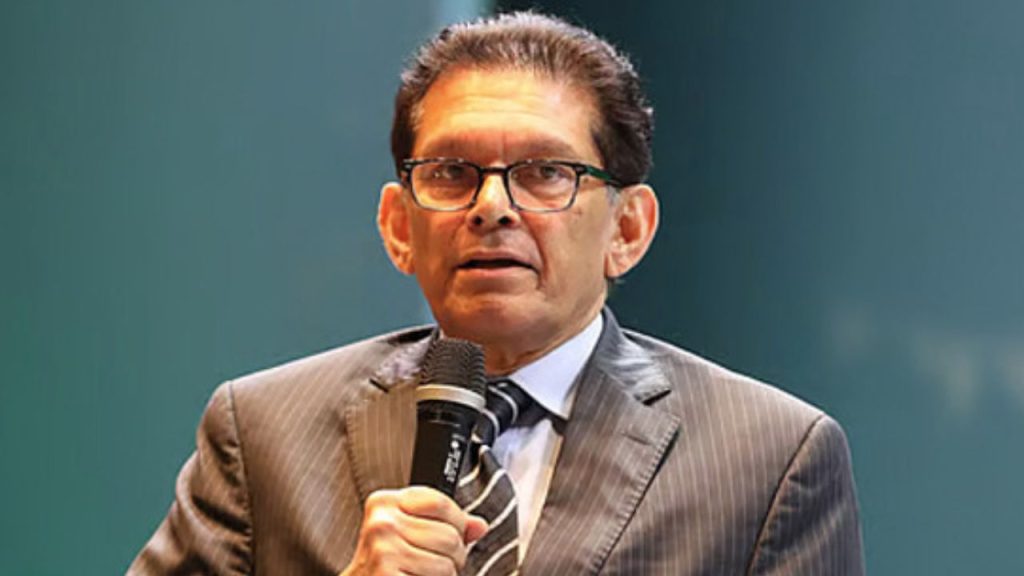

Dhaka, October 18 (TOB) – The appointment t of former National Security Adviser Khalilur Rahman as Bangladesh’s new foreign minister has surprised many in diplomatic and political circles.
Until Tuesday morning, speculation had centred on senior BNP leaders, including Amir Khosru Mahmud Chowdhury, as possible candidates for the post. Instead, Prime Minister and BNP Chairman Tarique Rahman selected the career diplomat to lead the country’s foreign policy.
The decision has drawn criticism from opposition figures. Shafiqur Rahman, ameer of Jamaat-e-Islami, said it was the ruling party’s prerogative to appoint whom it wished, but described the move as inappropriate. “Those who served in the interim government are now becoming part of a political administration. This naturally raises questions about how neutral they actually were,” he told journalists.
Nahid Islam, a lawmaker of National Citizen Party (NCP), echoed the criticism, arguing that members of the interim government should not join an elected administration.
He alleged that the appointment suggested Khalilur had been working in favour of a particular political group and claimed irregularities in the recent election had enabled the ruling party to secure a two-thirds majority.
Khalilur was a key figure in the interim government led by Nobel laureate Muhammad Yunus. Appointed High Representative on the Rohingya crisis in November 2024, he became the country’s first National Security Adviser five months later.
During his tenure, he enjoyed the confidence of Chief Adviser Yunus and played a central role in resolving the reciprocal tariff issue with Washington. He also helped facilitate an important meeting between Yunus and Tarique Rahman in London in June.
However, his return to public service was not without friction. After a long period outside government, he was brought back in 2024 to address the Rohingya crisis. His appointment initially received a lukewarm response from sections of the foreign ministry, despite his background as a foreign cadre officer. Observers say relations improved after Foreign Secretary Asad Alam Siam took office last June and began working closely with him.
Khalilur is widely regarded as intellectually equipped to handle complex global challenges. A graduate of the University of Dhaka’s Economics department, he topped his class and later secured first position in the inaugural Bangladesh Civil Service examination held in 1977, joining the diplomatic service in 1979.
He went on to study at the Fletcher School of Law and Diplomacy and the Harvard Kennedy School, earning an MA in Law and Diplomacy and a PhD in Economics.
In 1991, he joined the United Nations Secretariat as special adviser at the UN Conference on Trade and Development in Geneva. Over the next 25 years, he held senior positions in New York and Geneva. He briefly returned to Bangladesh in 2001 as private secretary to the chief adviser of the caretaker government. More recently, as national security adviser, he served as lead negotiator of the Bangladesh–United States Reciprocal Trade Agreement concluded in 2026.
Diplomatic observers say the new foreign minister must quickly articulate and implement the government’s foreign policy based on mutual respect and dignity. He faces the task of navigating a complex geopolitical environment marked by growing rivalry among major powers.
Former ambassador Md Sufiur Rahman said professionalism within the broader bureaucracy has eroded in recent years, and that the foreign ministry is no exception. He argued that the decline was particularly visible during the tenure of former foreign minister AK Abdul Momen and had not significantly improved under the interim government. “Now is the time to reverse the trend and restore professionalism and specialisation in the ministry to make it capable and effective,” he said.
Another former ambassador Mahbub Hassan Saleh described the appointment of a technocrat and career diplomat as a positive step. He noted that similar arrangements exist in other countries, including in the region. “As he does not have a parliamentary constituency to cater to, he can fully concentrate on foreign policy issues and strengthening Bangladesh’s foreign relations,” he said.
Among the key foreign policy challenges identified by analysts are restoring stability in relations with India, navigating an increasingly multipolar world, securing preferential market access, initiating free trade negotiations and addressing the Rohingya crisis.
Maintaining an independent foreign policy amid domestic political expectations will also be critical. As the ruling party, BNP has its own foreign policy priorities, which may require careful diplomatic positioning toward major powers.
Sufiur noted that foreign policy decisions are generally shaped by a small group of senior policymakers, particularly the prime minister, and that maintaining coordination within this group should not be difficult. He added that the global order is undergoing significant uncertainty, with major powers adjusting their positions, requiring Bangladesh as a developing lower-middle power to navigate carefully.
Saleh highlighted intensifying rivalry between the United States and China, with India playing a significant regional role. “Bangladesh needs China for economic development, while maintaining strong ties with the United States and India. The challenge will be to strike a careful balance among these competing forces,” he said.
He also emphasised the symbolic importance of the foreign minister’s first overseas visit, suggesting Brussels — headquarters of the European Union — as a strategic choice. The recently finalised Partnership and Cooperation Agreement between Bangladesh and the EU, he noted, could provide an appropriate occasion for such a visit.
As Khalilur assumes office, expectations remain high that his technocratic background and long diplomatic experience will help reinvigorate Bangladesh’s foreign policy at a time of mounting global complexity.
END
