
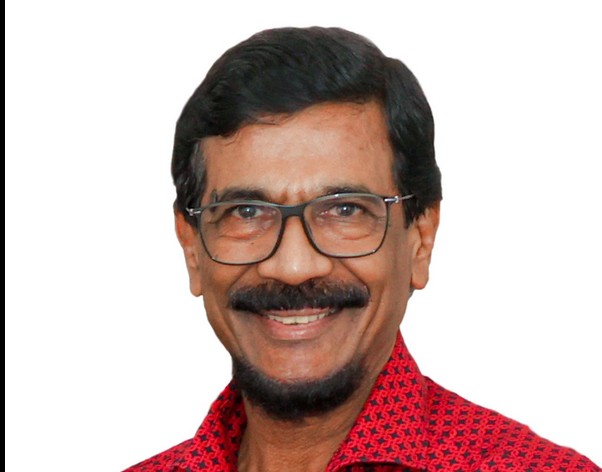

By Veeragathy Thanabalasingham
Colombo, April 3 – In recent times, opposition political circles have been raising criticisms that the Janatha Vimukthi Peramuna (JVP), the leading party of the ruling National People’s Power (NPP), intends to establish a one-party rule in Sri Lanka. Among Tamil politicians, M.A. Sumanthiran, the General Secretary of the Ilankai Tamil Arasu Kachchi (ITAK), has been at the forefront of voicing these concerns.
These criticisms were initially sparked by comments made by JVP General Secretary Tilvin Silva following his visit to China last June, where he discussed the ‘advantages’ of China’s one-party system.
Silva stated that Chinese Communist Party officials advised him that for a ruling party to implement effective, long-term reforms in Sri Lanka, it must remain in power continuously for 15 to 20 years. He noted that unlike five-year electoral cycles, China’s one-party system allows for consistent planning over 30 to 40 years.
According to Silva, the Chinese Communist Party suggested that winning three or four consecutive elections is essential to implement real change and maintain stability. He mentioned that the Chinese system allows for integrated planning and policy consistency, unlike the situation where policies shift every time a new government takes office.
“We feel there is a form of democracy in China. It is true that there is a one-party system in that country. But there is also a positive side to it, as it helps in working towards one direction and one plan,” Silva said.
He further added: “We have started to transform our country. However, if our government changes in the next five years while we are carrying out these transformation processes, everything we started will collapse. A different government will come to power and act differently. That is why we believe that only if a government remains in power for 15, 20, or 25 years can the country be moved forward under one vision and one policy framework. That is the advantage China has. They utilize it, and I believe it is one of the reasons for their rise.”
Sumanthiran shared these remarks on the ‘X’ social media platform last week.
Opposition parties—now largely weakened and fragmented—fear that the JVP might strive to establish a one-party rule, given its Marxist-Leninist ideological roots, its history of two armed insurrections to seize state power, and the fact that the NPP currently holds a two-thirds majority in Parliament.
Sumanthiran, who had previously expressed his fears domestically regarding the JVP leadership’s intent to establish a one-party state, also raised the issue during his recent visit to India.
In an interview in New Delhi with journalist M.R. Narayan Swamy, who is closely familiar with Sri Lankan affairs, Sumanthiran identified the government’s “Praja Shakthi” (People’s Power) project as a step toward a one-party system.
Sumanthiran warned that the danger of the JVP moving toward a one-party state faces not just Tamils, but the entire country.
Praja Shakthi
He alleged that the government is using this poverty alleviation scheme to bypass existing institutions and elected representatives. Instead, it utilizes structures comprised of individuals specifically chosen by the party—namely, party members and supporters—to lead development at the grassroots level.
Sumanthiran claimed that in the Tamil-majority Northern Province, the government has already begun setting up power structures parallel to local local authorities.
To usurp the remaining powers of Provincial Councils (where elections haven’t been held for years), the government has reportedly appointed five NPP Members of Parliament in the North as ‘shadow ministers.’
Sumanthiran noted that while President Anura Kumara Dissanayake appears willing to change long-held party positions and act reasonably, hardliners within his party oppose working harmoniously with other political forces now that the NPP has secured a two-thirds majority.
The government launched Praja Shakthi last June as a national movement for poverty alleviation, aimed at empowering local communities to lead their own development. The stated goal was to move away from direct cash transfers to the poor, instead empowering communities to identify and implement development projects based on priority.
The project is implemented through Community Development Councils (Praja Shakthi Sabhas) established at the Grama Niladhari division level. These councils are responsible for identifying local needs, formulating development plans, and monitoring progress across all districts.
The core grievance of the opposition is that the government’s approach creates a grassroots structure composed of ruling party loyalists that runs parallel to democratically elected local government bodies.
Critics argue that while the government cooperates with local councils under NPP control, it implements ‘Praja Shakthi’ in a way that undermines councils run by opposition parties.
Sumanthiran specifically complained that in the North and East, where Tamil and Muslim parties control local government, ‘Praja Shakthi’ hinders their effective functioning. When Community Development Councils work directly with Divisional and District Secretariats to implement projects, the importance and authority of elected local government bodies are marginalized.
Opposition parties point out the danger of these councils—filled with ruling party members or supporters—functioning as a party-political apparatus at the grassroots level under full government patronage.
Having abandoned the path of armed struggle three decades ago to embrace the democratic way, the JVP is no longer attempting to abolish the capitalist structure; instead, it is operating within that very system.
President Anura Kumara Dissanayake, who took over the leadership of the JVP more than two decades ago, has steadily steered the party toward parliamentary democracy. By moving past its violent history, the JVP has transformed into a political party widely accepted by the public. Although it presents itself as an opponent of the traditional political establishment, it functions in practice within the existing capitalist democratic framework.
Furthermore, the JVP rose to power through a new avatar—the National People’s Power (NPP)—formed in 2019 in alliance with various political groups, civil organizations, trade unions, women’s groups, and intellectuals. While the JVP remains the dominant force within the NPP, it is unlikely that the relatively liberal forces within the coalition would support or cooperate with any attempt to establish an anti-democratic, one-party rule.
It is already on record that President Dissanayake has openly stated that no single government, party, or individual can solve Sri Lanka’s deep-rooted crises. To date, there is no evidence to suspect him of being someone who justifies or supports one-party rule.
At the same time, although the Sri Lankan state is fundamentally characterized by ethnic majoritarianism, it possesses a deeply rooted multi-party democratic system. Therefore, establishing a one-party rule would be challenging both legally and practically. In particular, the political culture of Southern Sri Lanka is defined by intense inter-party competition, making it unlikely to permit one-party dominance.
However, for more than four decades since the introduction of the Executive Presidency, authoritarianism and the abuse of power have gradually increased. This evolution has weakened both the Parliament and various constitutional institutions.
While the abolition of the Executive Presidency has been a long-standing demand, it has yet to be realized. Recent history shows that presidents under this system have generally been focused on weakening opposition parties. The NPP government now faces the same allegation.
Nevertheless, unlike previous governments that held a two-thirds majority in Parliament, there is—as of yet—no evidence that the NPP has used its massive parliamentary mandate to act with the arrogance of power.
On the other hand, the NPP government continues to support a unitary and centralized state structure while showing a lack of interest in addressing issues related to the devolution of power. This has caused significant discontent among minority communities. The NPP’s hesitation to take firm steps to address the grievances of these communities—out of fear of sparking a racist backlash in the South—demonstrates that it remains a prisoner of communal politics.
Historically, one-party systems have often been established following revolutions or wars to justify the concentration of power and the establishing of political stability through a single ideology.
END
Criticism against the government on an intent to establish a one-party Rule
