

By P M Amza/Colombo Telegraph
Colombo, February 10 -Cricket in South Asia has long occupied a space far beyond the boundaries of sport. It is cultural memory, emotional identity, and a form of diplomacy that often succeeds where formal political mechanisms fail. Through periods marked by conflict, mistrust, and terrorism, cricket has repeatedly emerged as a bridge across national divides, offering the region a path toward solidarity even when geopolitics grows tense.
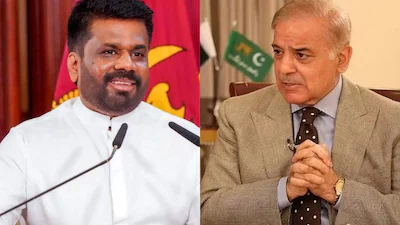
The latest reaffirmation of this tradition came when Sri Lankan President Anura Kumara Dissanayake publicly thanked Pakistan’s Prime Minister Shehbaz Sharif for agreeing that Pakistan would play its T20 World Cup fixture against India in Colombo. At a moment when India–Pakistan relations remain strained, the decision of both sides to play in Sri Lanka carries symbolic weight; it revives the idea that South Asia can lean on cricket to keep channels of engagement open when diplomacy becomes rigid.
Sri Lanka’s quiet but balancing role
Sri Lanka’s hosting of the India–Pakistan fixture is not merely logistical. It marks a restoration of Colombo’s traditional role as a trusted regional stabiliser—a place where South Asian rivals have historically been able to meet, compete, and communicate through sport when political tensions otherwise obstruct dialogue.
President Anura Kumara’s public appreciation underlines this symbolism. Pakistan’s acceptance to play in Colombo reflects deep trust in Sri Lanka’s neutrality and organisational capability, while India’s agreement shows confidence in Sri Lanka’s ability to host high-profile fixtures with fairness and security. In an era of shifting geopolitical alignments and overlapping strategic anxieties, this moment underscores the cultural glue that binds the region together, even when politics strains those bonds.
1996 – When Cricket Stood Against Isolation
The renewed spirit of 2026 instantly recalls one of the most iconic episodes of cricket diplomacy: the 1996 Cricket World Cup goodwill match. After the devastating Central Bank bombing raised global security fears, Australia and the West Indies refused to play their Colombo fixtures. In response, India and Pakistan—two nations often divided by hostility—joined hands to send a Combined XI to play a solidarity match in Colombo.
That gesture remains one of South Asia’s defining diplomatic acts outside formal diplomacy. The sight of Indian and Pakistani players taking the field together at the R. Premadasa Stadium signalled to the world that terrorism would not be permitted to isolate a South Asian neighbour. The scheduled India–Pakistan match in Colombo is built upon that same emotional foundation: courage over fear, unity over isolation, and cricket over division.
Sri Lanka’s Steadfast Decisions in 2002, 2008, and 2009
Sri Lanka’s current role also echoes its earlier decisions to stand by Pakistan during moments of vulnerability. In 2002, following a terrorist attack near the Protestant International Church in Islamabad, Sri Lanka kept its tour intact, reinforcing that regional solidarity must not be disrupted by violence. Again in late 2008, despite heightened security concerns, Sri Lanka agreed to tour Pakistan—a gesture of trust that culminated in the tragic Lahore attack of March 2009.
The attack was a grim turning point. The Sri Lankan team survived, Pakistani officers gave their lives, and international cricket in Pakistan halted for nearly a decade. Yet the tragedy also deepened the emotional connection between the two nations. It produced a shared sense of loss that continues to inform gestures of empathy and friendship between Colombo and Islamabad, reflected again in Pakistan’s willingness to play in Sri Lanka today.
2011 in London: Cricket as Sri Lanka’s Soft Power
Sri Lanka’s cricket diplomacy has not been confined to South Asia. In 2011, when I was serving as Acting High Commissioner in London, the arrival of the Sri Lankan national cricket team for its England tour became a powerful demonstration of the country’s soft power. The team—captained by Tillakaratne Dilshan and featuring two of Sri Lanka’s most admired global icons, Kumar Sangakkara and Mahela Jayawardene—generated extraordinary enthusiasm within the United Kingdom.
At the reception I hosted, an unusually broad cross-section of British public life attended: distinguished members of the House of Lords, senior MPs from the House of Commons, diplomats, journalists, and a vibrant representation of the Sri Lankan diaspora. What began as a formal gathering quickly evolved into a vivid display of Sri Lanka’s renewed visibility in the United Kingdom, at a time when the country was still navigating post-conflict scrutiny and calls for accountability. The warmth and admiration directed at Kumar Sangakkara and Mahela Jayawardene generated a level of goodwill that conventional diplomacy could seldom replicate. In that moment, cricket became a form of soft power—strengthening Sri Lanka’s profile, humanising its national narrative, and forging emotional connections across cultures in a way only sport can.
Cricket’s People-Led Diplomacy: When Societies Do What States Cannot
Cricket’s ability to bypass political deadlock lies in its emotional universality. While states negotiate cautiously, the sport instantly connects people across borders. Applause for a rival batsman, a graceful on-field moment, or even a shared disappointment creates forms of empathy that translate into diplomatic goodwill. These people-led currents often outlast political tensions and give leaders a softer platform upon which renewed engagement becomes possible.
The willingness of India and Pakistan to play in Colombo, and Sri Lanka’s readiness to host them, reflects this deeper sociocultural reservoir—a recognition that the region shares more than it disputes.
A Moment of Relevance in 2026 –Sport as Regional Stabiliser
The upcoming fixture arrives at a moment when South Asia grapples with fractured geopolitics, shifting alliances, and economic anxieties. Formal regional cooperation mechanisms remain fragile. Yet cricket continues to create openings for trust, continuity, and dialogue.
For Sri Lanka, hosting India and Pakistan reaffirms its credibility as an honest facilitator of regional engagement. For Pakistan, it signals that it remains fully reintegrated into mainstream international cricket. For India, it maintains a non-political channel of connection with its western neighbour.
From the iconic solidarity of 1996 to Sri Lanka’s consistent support for Pakistan in 2002 and 2008, and from the shared tragedy of 2009 to today’s Colombo-hosted India–Pakistan fixture, cricket has remained South Asia’s most enduring diplomatic bridge. It is a reminder that the region’s shared cultural identity is stronger than the crises that repeatedly test it.
Cricket across fire lines embodies South Asia’s resilience. It demonstrates that even in a fractured international landscape, unity can still emerge through the simple act of two nations agreeing to take the field together on a neutral ground that has long championed the spirit of the game.
As long as cricket continues to transcend politics and fear, the region retains a path toward dialogue, dignity, and hope—one match at a time.
END
(The author is a former Sri Lankan Ambassador to EU, Belgium, Turkey and Saudi Arabia and former Acting High Commissioner to UK)
