

By P.K.Balachandran/Sunday Observer
Colombo, March 8 – South Asia is a sub-continent of contrasts. On the one hand, it has produced the largest number of women Prime Ministers, but on the other, women’s participation in the formal workforce is just 33% when the world average is 58%, and in one country, Afghanistan, women are totally suppressed.
Five of the seven countries in South Asia have had women as Prime Ministers. One was an elected President. Two of the five countries that have had women as Prime Minister or President are Islamic. Benazir Bhutto, Sheikh Hasina and Khaleda Zia had the distinction of breaking the glass ceiling set for women in Islamic countries.
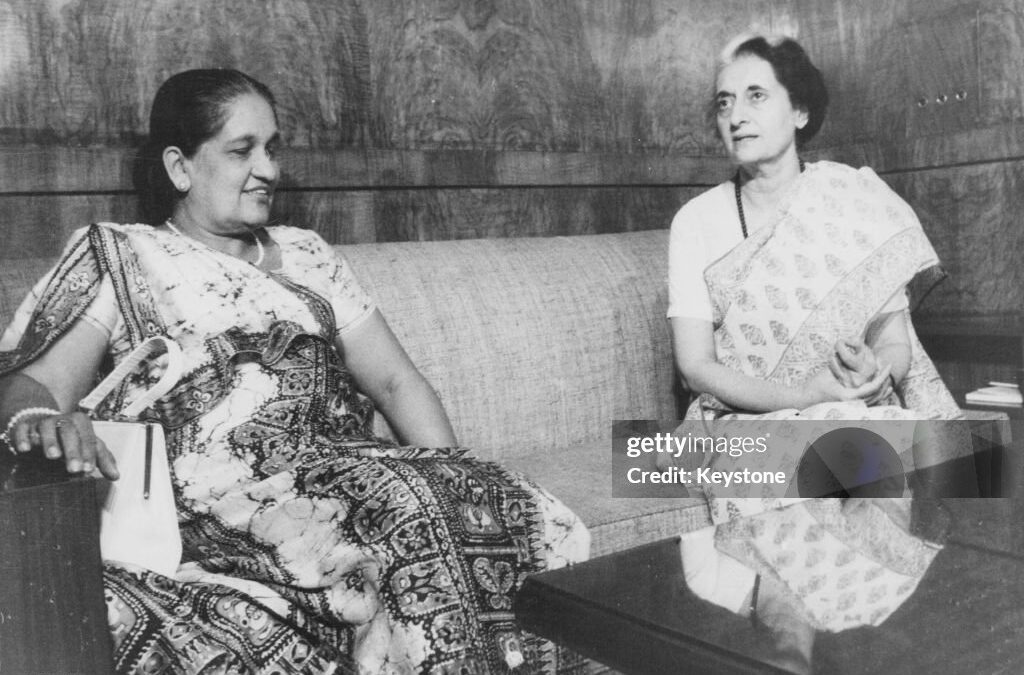
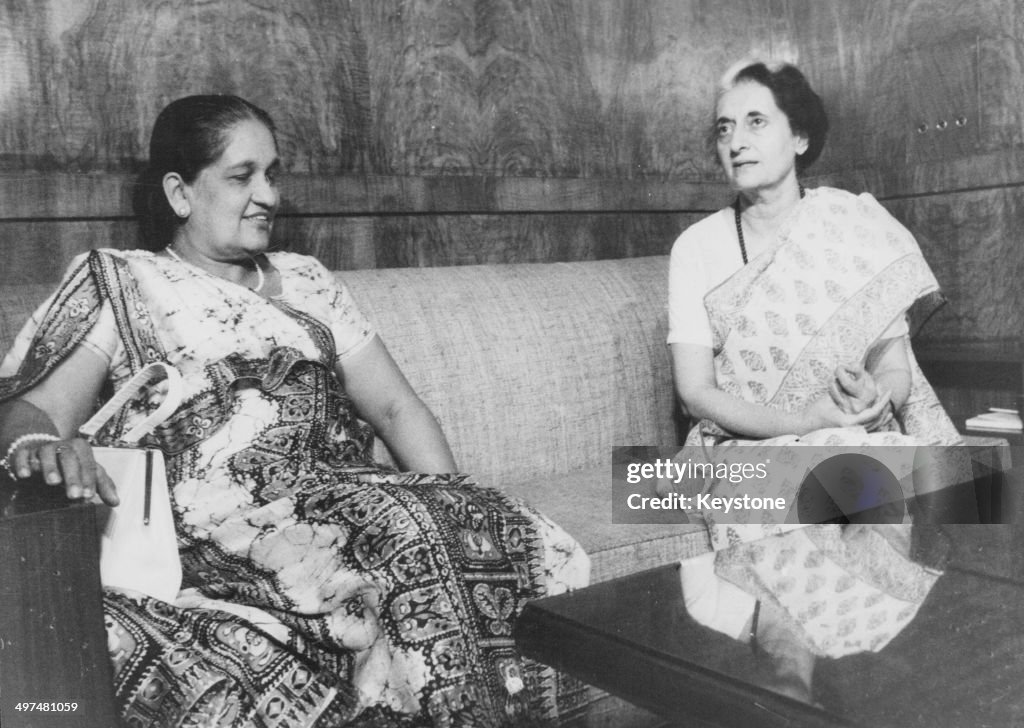
Sirimavo Bandaranaike of Sri Lanka had the unique distinction of being the first woman Prime Minister in the world. She served three terms between 1960 and 1965, 1970 and 1977 and 1994 and 2000. Her daughter, Chandrika Kumaratunga, became the first woman in South Asia to be a directly elected Executive President. She was in office from 1994 to 2005.
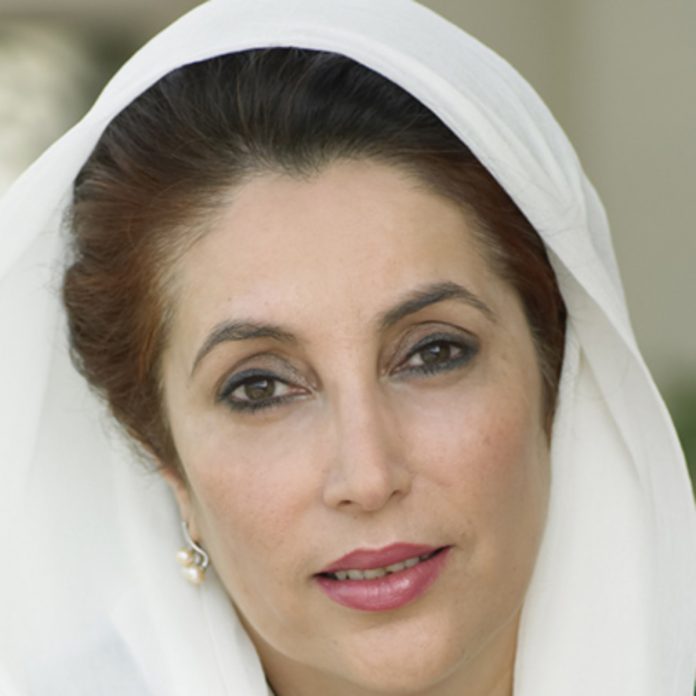
Benazir Bhutto of Pakistan was the first woman to serve as Prime Minister of a Muslim nation in modern history. She served two terms as Prime Minister, from 1988 to 90 and between 1993 and 1996. When she was killed in 2007, she was the second woman Prime Minister in South Asia to fall to an assassin’s bullet, the first being Indira Gandhi of India in 1984.
The other outstanding feature of South Asia’s women Prime Ministers is that all except Sushila Karki of Nepal, had served several terms. Sushila Karki was not elected but was appointed as an interim Prime Minister after the Gen.Z revolution in 2025.
Sirimavo Bandaranaike
Sirimavo Bandaranaike, better known as Sirima or Mrs. B, became Prime Minister without any political experience, having inherited the office after her husband SWRD Bandaranaike, was assassinated. But she proved to be a very competent leader of the Sri Lanka Freedom Party (SLFP), winning elections against the more established leaders of the United National Party (UNP).
Sirima brought about key changes in Sri Lanka, such. She changed the name of the country from “Ceylon” to “Sri Lanka”. Under her, Sri Lanka shed Dominion Status and became a self-governing Republic in 1972. The Western style market economy was replaced by a socialist economy in order to serve the poor better.
Import substitution replaced imports. She laid the foundation for local industries, implemented land reforms and nationalised banks, transport and foreign-owned plantations and schools. She democratised higher education through the standardisation system to favour backward districts, though this alienated Tamil students from the advanced Jaffna district, who became the nucleus of a separatist movement.
On the international stage, Sirima became a leading light of the Non-Aligned Movement (NAM), hosting a summit in Colombo in 1976. A tough but skilful negotiator, she swung agreements with India that were favourable to Sri Lanka, such as the repatriation of Indian origin Tamil plantation workers and the retention of Kachchativu island in the Palk Strait.
When India and China went to war over their border in 1962, Sirimavo organised the Colombo Powers Conference of non-aligned countries to bring about a ceasefire and talks. Later in 1971, when India and Pakistan were at war over East Pakistan/Bangladesh, she allowed Pakistan to use Colombo airport in transit on the condition that the planes carried only civilians and not troops or weapons. Earlier in the same year, she had secured Indian Air Force helicopters to quell the Janatha Vimukthi Peramuna insurgency.
Sirima will be remembered for proposing in December 1971 that the Indian Ocean be deemed a “Zone of Peace”. She foresaw the Indian Ocean becoming a flash point. The UN General Assembly endorsed her suggestion. She was forthright in condemning the inhuman treatment meted out to Zulfiqar Ali. Bhutto was overthrown by military dictator Gen Zia-ul-Haq in 1978-1979. Bhutto had been sentenced to death in 1978 for an alleged murder and executed in 1979 after a very controversial trial. Sirimavo appealed to Gen.Zia for clemency and even suggested that Bhutto be allowed to live in exile in Colombo.
Zia paid no heed and when he sent the choicest mangoes to her and other heads of government to placate them, Sirima sent the mangoes back to the Pakistan High Commission with a note saying: “I cannot accept a gift from a person whose hands have the blood of Pakistan’s elected Prime Minister Zulfiqar Ali Bhutto on them. He was not just the leader of Pakistan but a great spokesman of the Third World. Please return this gift to the sender.”
To advice her, Sirima had chosen competent and highly educated officials who could hold their own in international circles. But in the mid-1970s, Sirima’s charisma faded because her socialist policies, including nationalisation of foreign companies, foreign currency and import controls, led to a deterioration of the economy. Public resentment enabled the right wing leader, J.R.Jayewardene, to trounce her in the 1977 elections.
Indira Gandhi
Indian Prime Minister Indira Gandhi was at once a successful and a controversial leader. She had many domestic and international achievements to her credit, but she also imposed a two-year State of Emergency in 1975-77, which was a blot on India’s democratic credentials. She lost power in the 1977 polls but bounced back in 1980 because the successor government, torn by dissensions, failed to deliver.
Indira spurred India’s economic growth. She promoted the “Green Revolution” which meant growing high yielding varieties of foodgrains with improved seeds, fertilisers, pesticides and plenty of water. Thanks to her, India became self-sufficient in foodgrains. In 1969, Indira nationalized 14 private-sector banks and multiplied their branches to give credit access to the poor. It was under Indira’s Premiership that India sent its first man into space in a Soviet spaceship in 1984.
India flexed its coercive muscle in Indira’s reign. In 1971, she sent troops to help Bengali-speaking East Pakistan secede from West Pakistan after West Pakistan unleashed a reign of terror against Bengali speakers. It was her government which detonated India’s first nuclear bomb in May 1974. It was the first test by a nation outside the five permanent members of the UNSC. She extended India’s coercive power to Sri Lanka when she helped train Sri Lankan Tamil militants.
However, Operation Blue Star against Sikh separatists proved her undoing. The military attack against the Sikh militant hideout within the Golden Temple in Amritsar, Punjab, killed 575. Later in 1984, she was assassinated by her own Sikh bodyguards.
Benazir Bhutto
After the death of military dictator Gen. Zia-ul-Haq in a plane crash in 1988, elections were held in Pakistan. The Pakistan Peoples’ Party (PPP). headed by 35-year-old Benazir Bhutto, won the elections. She became the youngest Prime Minister and the first woman to lead a Muslim-majority country.
Her government focused on social reforms, women’s rights, healthcare, and education because she was a Harvard and Oxford graduate. She also aimed to reduce poverty. She restored labour and trade unions and freed prisoners. The People Worker Program, which improved the lives of the impoverished, was one of her significant contributions. Benazir hosted a three-day SAARC meeting in 1988, which helped foster good relations with India that also safeguarded both nations’ nuclear assets.
However, she had to deal with a powerful military which felt the loss of power after Zia’s death. More importantly, she had to face the conservative Pakistani society including fellow politicians. But what upset the apple cart was a massacre in Karachi for which her party was blamed. In 1990, her government was dismissed by President Ghulam Ishaq Khan on charges of corruption, although it was not proved.
In 1993, Benazir became the Prime Minister for the second time. Her second term focused on economic reforms and privatisation. She worked to strengthen foreign relations and attract investment. She worked on women’s rights, enhancing literacy and healthcare, challenged drug traffickers and built better ties with India.
But her husband, Asif Zaradari, proved to be her nemesis as he was known to take commissions up to 30%. Her brother, Murtaza Bhutto, mounted a challenge against her and was murdered, allegedly at the instance of Zardari. President Farooq Leghari dismissed her government in 1996, and Benazir went into exile. In 2007, under a deal with then-President Pervez Musharraf, she was granted amnesty, enabling her to return. But on December 27, 2007, she was assassinated.
Sheikh Hasina
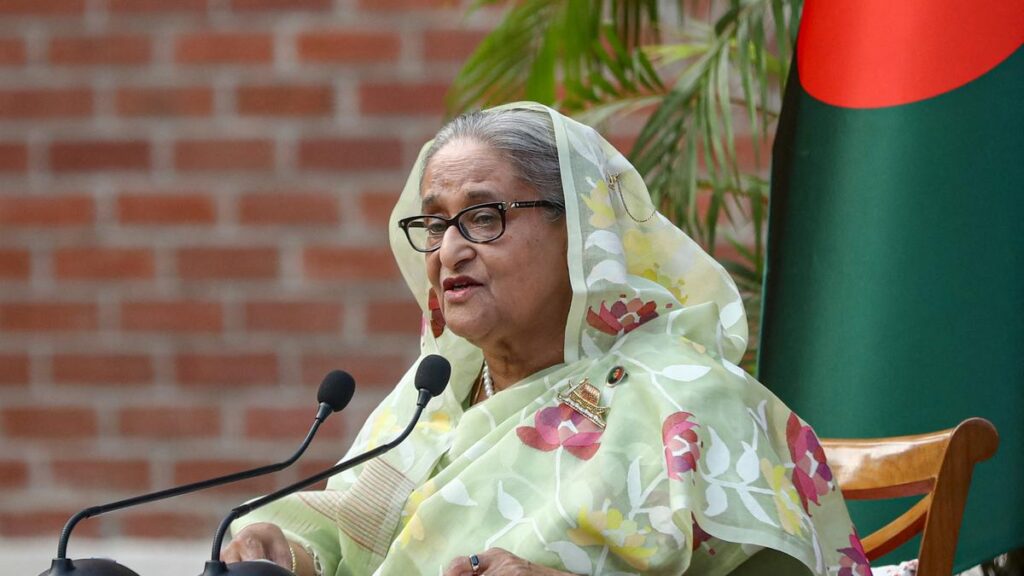
Sheikh Hasina Wajid, now in exile in India after she was overthrown by a students’ agitation in July- August 2024, was the longest serving Prime Minister of Bangladesh. Her regime saw an unprecedented economic growth of 6%. Poverty came down, and Bangladesh improved in human development indicators. Sheikh Hasina liberalised the economy and set up special economic zones. Foreign investments flowed, and the garments sector saw a boom in exports. GDP was projected to reach US$ 738.5 billion by 2027.
However, economic success coincided with a troubling decline in democratic freedoms, values and norms. This led to country-wide protests in July 2024. Earlier in January she had been elected for a fourth consecutive term, but very controversially. All major opposition parties had boycotted the elections. Thousands of political leaders were jailed. In July-August 2024, a widespread and violent agitation by students forced her to go into exile in India.
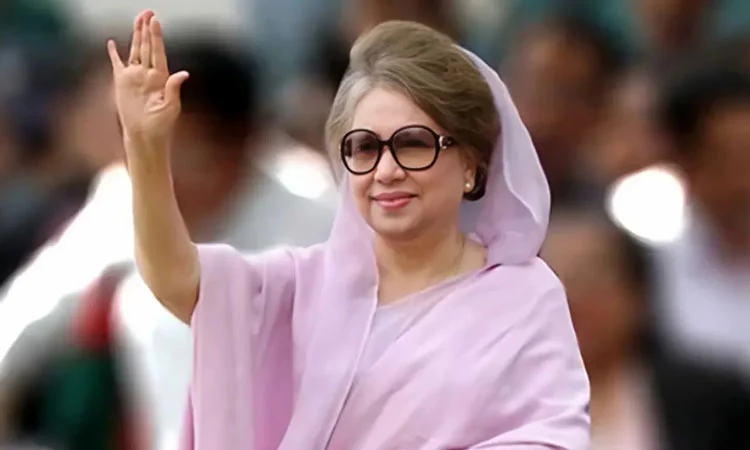
Khaleda Zia
Bangladesh leader Khaleda Zia’s rise to power in 1991 marked a watershed as she was the first female prime minister of Bangladesh and only the second in the Muslim world.
She entered politics in 1984 after the assassination of her husband, President Ziaur Rahman. She had no formal training in politics or leadership and relied only on an inherent quality to lead and an iron resolve to fight for democracy. She was an uncompromising opponent of military dictator Gen. H.M.Ershad. She stubbornly refused to participate in any election held while Ershad was in power. She became a living symbol of resistance to autocracy, and when in power, of resistance to big power hegemony.
During her three terms in office, from 1991 to 1995, briefly after the February 1996 election, and between 2001 and 2005, Khaleda made primary education free and compulsory, offered free schooling for girls up to 10th grade, and pioneered the “Food for Education” programme that brought thousands of children into classrooms
Economic reform was another hallmark of her leadership. Value Added Tax (VAT), the Privatisation Board and the Securities and Exchange Commission — institutions that helped Bangladesh step into global markets — all took shape under her watch.
Her short-lived government in 1996 delivered a singularly important democratic reform — the constitutional amendment creating the non-partisan Caretaker Government system for national elections. She established the Bangladesh Open University and the National University and approved private universities, a milestone in higher education. In 1991, when Khaleda addressed the Organisation of Islamic Countries Summit, she was the first woman head of government to do so.
However, Sheikh Hasina’s governments persecuted her, jailing her for corruption even when she was gravely ill and dying. Her son, Tarique Rahman, won the July 12 2026 elections and is the current Prime Minister of Bangladesh.
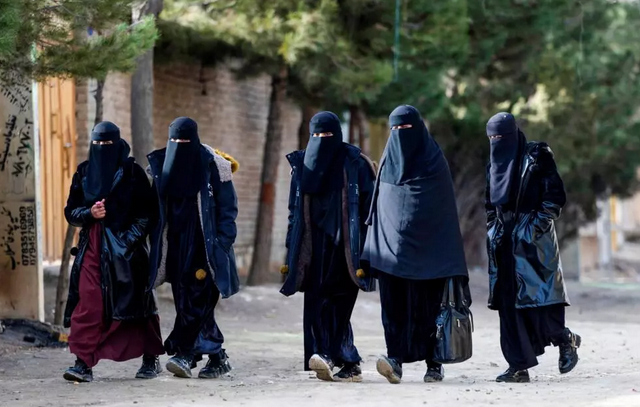
Taliban-ruled Afghanistan
Afghanistan stands in sharp contrast to other South Asian nations. Under the radical Islamist Taliban, there are no women political leaders. Women’s voices are not allowed to be heard in public. The excuse of tempting a man has closed women’s access to public spaces such as parks and educational facilities.
The Taliban shut beauty salons, putting 60,000 women out of a job. The ban took away a safe place that women had outside of the home. Women no longer have positions in healthcare. Male healthcare workers are often not allowed to examine women, leaving many women without medical aid.
Not only are women banned from public spaces, but they are also not allowed to leave the house without the accompaniment of a male relative. Nongovernmental organisations operating in Afghanistan had to get rid of female staff.
Indeed, South Asia is a sub-continent of contrasts vis-à-vis the condition of women. India, Bangladesh and Sri Lanka at one end of the spectrum and Afghanistan at the other end.
While some women have risen to the highest positions by dint of their own efforts, women in South Asia are by and large, home bound and out of the labour market. And in Afghanistan, they are nowhere in the public sphere because of the radical Islamist ideology of the rulers- the Taliban.
END
