

By P.K.Balachandran/Sunday Observer
Colombo, August 3 – The India-US talks on tariff and trade collapsed earlier this week upon India’s refusal to accommodate US demands for tariff concessions on American farm and dairy products.
President Donald Trump said on Wednesday that the US will impose a 25% tariff on goods imported from India starting on August 1 and added that there would also be an unspecified penalty. He did not elaborate on the amount or what the penalty was for.
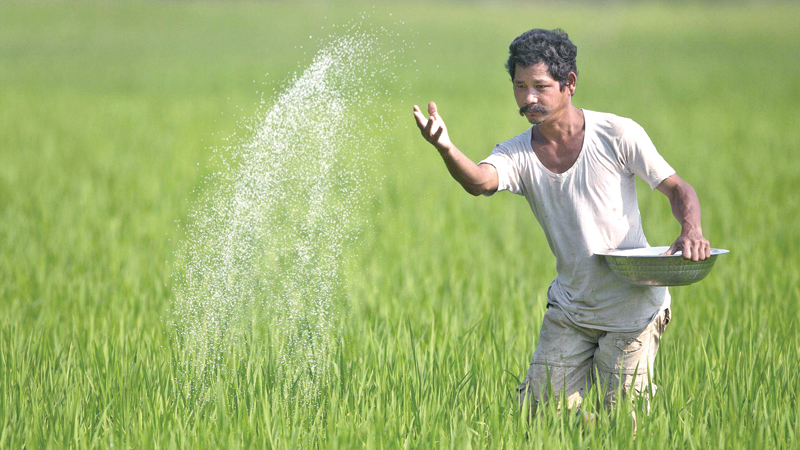
The new tariffs would indeed hit a wide range of Indian manufactured goods exported to the US. But India’s refusal to buy American farm and dairy products should help Prime Minister Narendra Modi harvest rural votes in the coming elections, as farmers are the largest and the most important vote-bank in India.
The essentially election-oriented Modi would rather demonstrate his commitment to the farmers than fight for industrialists, observers said. The logic is that industrialists have the resources to overcome tariff obstacles, but farmers are too handicapped to face foreign competition. Indian agriculture is marked by resource shortages as well as climatic hazards.
Trump’s Harsh Appraisal
Trump’s appraisal of India as a trading partner was blunt and harsh.
“While India is our friend, we have, over the years, done relatively little business with them because their Tariffs are far too high, among the highest in the World, and they have the most strenuous and obnoxious non-monetary Trade Barriers of any Country,” he wrote in a Truth Social post.
“They have always bought a vast majority of their military equipment from Russia, and are Russia’s largest buyer of ENERGY, along with China, at a time when everyone wants Russia to STOP THE KILLING IN UKRAINE — ALL THINGS NOT GOOD!” Trump added, giving decision a geopolitical context.
The US currently has a US$ 45.7 billion trade deficit with India and it has been keen on reducing it drastically. India levies nearly 39% tariff on US agricultural products, with rates climbing to 45% on vegetable oils and around 50% on apples and corn, according to a Reuters report.
India is Unfazed
India is unfazed by Trump’s harsh indictment and his punishing tariffs. The Indian commerce ministry, which was negotiating with the US, is yet to comment on it. But the leader of the Indian delegation, Minister Piyush Goyal, has said many times that India will not give up its vital interests to sign a trade deal with the US or any country. India’s “vital interest” in the US-India case is the farm and dairy sector. As stated earlier, the farm and dairy sector is important for garnering votes in Indian elections as rural folk are the single largest body of voters.
In their talks with the US, Indian officials were willing to grant greater access to US dry fruits and apples, but held back on corn, soybeans, wheat, and dairy products. Cheaper imports from the US would drive down local prices of essential food grains, handing the opposition Congress party a fresh opportunity to attack the government.
Furthermore, India does not allow genetically modified (GM) food crops, while most US corn and soybean production is GM-based.
Dairy remains a sensitive issue in India as Indian consumers are particularly concerned that cattle in the US are often fed with animal by-products, a practice that conflicts with Indian dietary taboos.
India has an Ethanol Blended Petrol (EBP) program. The EBP is meant to cut dependence on energy imports by blending domestically-produced ethanol with gasoline. Importing US ethanol would undermine domestic ethanol companies. The EBP helps manage surpluses of rice, sugarcane and corn by diverting them to ethanol production. Allowing imports of US ethanol would be a serious setback for India’s emerging distillery sector.
Indian Farmer Needs Support
The issue of votes apart, the Indian farmer is poor and needs support. The average Indian farm is just 1.08 hectares, compared to 187 hectares in the US. In the dairy sector, the average herd size in India is two to three animals per farmer, compared to hundreds in the US.
The Indian farmer relies on techniques passed down through generations which are very inefficient, in sharp contrast to US farmers who use cutting-edge equipment.
Industrial Sector Hit
However, it cannot be denied that Trump’s new tariffs will hit India’s industrial exports to the US, which were estimated to be around US$ 87 billion in 2024. These included labour-intensive products such as garments, pharmaceuticals, gems and jewellery, and petrochemicals.
Speaking on the US tariff hike to Reuters, a spokesman of Indian gem industries said: “The Indian gem and jewellery sector, in particular, stands to be severely impacted. The United States is our single largest market, accounting for over US$ 10 billion in exports – nearly 30% of our industry’s total global trade.”
N. Thirukumaran, General Secretary of the Tiruppur Exporters’ Association in Tamil Nadu said that India will be losing its competitive edge vis-à-vis Vietnam. S.C. Ralhan, President of the Federation of Indian Export Organizations said that exports of textiles, footwear, and furniture will become uncompetitive in the US market vis-à-vis imports from Vietnam and China.
According to the Manufacturers’ Association of India, Indian products will become 7% to 10% more expensive than those from its competitors.
Sakshi Gupta, Principal Economist of the HDFC bank in Gurugram near Delhi said that the higher US tariffs will cause volatility in the forex market with mounting depreciation pressure on the rupee.
What India Could Do?
For one thing India could stick to its high tariffs on imports from the US. It could even raise them. Alternatively, India could buy F35 fighter jets which Trump had offered in February.
But the question is, can India impose reciprocal tariffs given its dependence on the US for its strategic protection against China? As for buying US F-35s fighter jets, the chances are not very bright given the widespread opposition to it in India on grounds of cost as well as performance. India is more inclined to buy the Russian equivalent or manufacture its own aircraft the “Tejas.”
The Narendra Modi government could refrain from raising tariffs, allow India’s industrial sector to find ways of meeting the US tariff hike and expend its energy on supporting the agriculture and dairy sectors.
Refurbishing Modi’s Image
By not entering into a hurtful trade pact, even under tremendous pressure from the world’s only super power, Modi has put Trump in his place.
The stance will help him face on-going savage attacks from the opposition parties for not standing up to Trump’s claims in regard to the May India-Pakistan war. Trump had claimed 29 times that it was he who brought about a ceasefire between the two nuclear-armed neighbours by holding out a trade deal as a bait.
Trump had also feted the Pakistani army chief Field Marshal Asim Munir at the White House and hinted that India had lost 4 to 5 aircraft in the war against Pakistan, even as Modi was claiming a stunning military victory over Pakistan.
END
