

By Sugeeswara Senadhira/Ceylon Today
Colombo, January 16: The vision of women’s empowerment as a cornerstone for sustainable development has taken centre stage in global discussions, with recent high-profile events emphasising the importance of fostering gender equality through collaboration and innovation between China, Sri Lanka, and international stakeholders at large.
Recently, the Global Initiatives Implementation Alliance (GLIA) has launched the Global Action on Women’s Digital Empowerment (GLAWODE), for close cooperation between India and China with the DEVES (Digital Economy-based Vocational Qualifications Framework for Developing Countries) of Sustainable Development Goals (SDGs) initiative as its cornerstone. This transformative initiative aims to create a futuristic empowerment mechanism that leverages Human-AI Collaboration (HACOL) technologies to ensure women can thrive in the global digital economy.
Currently, a group of Sri Lankan women public servants are on a study tour in China in parallel to President Anura Kumara Dissanayake’s visit to Beijing.
GLAWODE is designed to empower women worldwide – especially in remote areas and vulnerable communities, providing them with the tools, skills, and resources to actively participate in and benefit from the digital economy. This initiative aligns with the principles of Common Prosperity, addressing income disparities, enhancing economic inclusion, and fostering balanced regional development.
Special emphasis will be placed on equipping women in rural areas to become drivers of local economic transformation. By addressing regional disparities, GLAWODE ensures that women from remote areas have equal access to resources and opportunities. It will provide scope for collaboration between Sri Lanka and China on Welfare Schemes such as Samurdhi and Aswesuma.
In November last year, Madam Sun Haiyan, Deputy Minister of the International Liaison Department of the Chinese Communist Party (IDCPC), met with Sri Lankan Prime Minister Harini Amarasuriya at the Temple Trees in Colombo. The meeting marked a new chapter in bilateral cooperation, with a major focus on strengthening women’s empowerment initiatives through partnerships in education, vocational training, and digital inclusion.
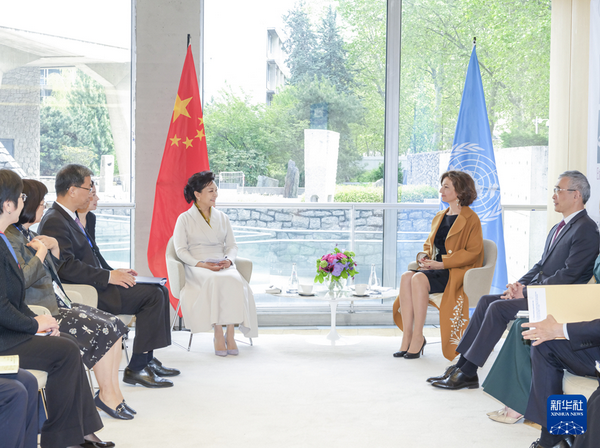
China’s top women leaders have visited Sri Lanka in recent years. Madam Peng Liyuan, wife of President Xi Jinping came to Sri Lanka when her husband made an official visit and she attended several functions including the distribution of Chinese gifts to women and children. Earlier this month, Madam Peng Liyuan, a Special Envoy for the United Nations Educational, Scientific and Cultural Organization (UNESCO) for the Advancement of Girls’ and Women’s Education, visited the UNESCO Headquarters in Paris. During the visit, UNESCO Director-General Audrey Azoulay applauded Peng’s extensive contributions to global women’s education and reaffirmed UNESCO’s readiness to strengthen its partnership with China to drive innovative initiatives in education for girls and women worldwide.
In November 2023, President Xi Jinping sent Madam Shen Yiqin, State Councillor of China to Sri Lanka as his Special Envoy to interact with Sri Lankan leaders with a special focus on the expansion of Chinese-assisted programmes on women and child welfare.
Sri Lanka has long been a pioneer in promoting gender equality. Universal access to free education since 1945 has led to one of the highest female literacy rates in South Asia, exceeding 90%. Women’s access to education has played a pivotal role in enabling their participation in politics and the workforce. Programmes such as Well Woman Clinics focus on reproductive health, while vocational training and microfinance initiatives have opened pathways for economic independence, particularly in rural areas. However, challenges like low female labour force participation (35%) and socio-cultural norms remain barriers to full empowerment.
By comparing these two nations’ historic efforts, it is evident that their collective experience can create a transformative model for women’s empowerment globally, particularly in the context of achieving Common Prosperity.
Common Prosperity is a foundational vision in China’s long-term development strategy, emphasising inclusive growth, reduced inequalities, and a more balanced distribution of wealth and resources. Introduced by President Xi Jinping in 2021, it aims to ensure that economic development benefits all sectors of society, with a focus on equity, sustainability, and people-centred policies.
Empowering women is not only a moral imperative but also a strategic necessity for achieving Common Prosperity. Reliable data from developing countries shows that in rural families with better economic conditions, women are often the primary decision-makers in financial arrangements and the driving force behind family businesses.
Women’s empowerment directly contributes to Common Prosperity as it enhances household income. Women’s ability to make informed financial decisions improves family savings, investments, and overall well-being. Empowered women prioritise expenditures that enhance long-term stability, such as education, healthcare, and entrepreneurial ventures.
Women play a central role in agriculture, small-scale manufacturing, and local trade in rural communities. Providing them with access to resources, training, and technology enables them to expand family businesses and uplift their local economies.
By equipping women in underdeveloped regions with skills and opportunities, governments can bridge the urban-rural divide and create balanced economic ecosystems.
Studies show that women are more likely than men to reinvest their income in their families and communities, creating a ripple effect that benefits education, health, and social cohesion.
END
