

By P.K. Balachandran /The Daily Times of Bangladesh
Colombo, March 7 – Within the space of a year, India has had to relinquish its bid to exercise strategic autonomy based on its own power and influence and become a junior partner in a US-led alliance.
This is a far cry from the era of Prime Ministers Jawaharlal Nehru and Indira Gandhi, when India was non-aligned and yet had significant moral and political influence in the world. It condemned unlawful actions by the big powers, especially the Western powers, and led peace efforts in various theatres of conflict.
It was able to secure the cooperation of the Soviets as well as the US and the West for its economic development. India’s non-alignment was touted as a path to peace.
This is in sharp contrast to the way India, under Prime Minister Narendra Modi, has been promoting its policy of “strategic autonomy”. It smacks of the arrogance of a parvenu, which has triggered the animosity of established powers and apprehensions among smaller powers, especially neighbours.
Indian External Affairs Minister S Jaishankar told the Raisina Dialogue Middle East, held in January 2025, that India had wide interests and growing capabilities and was contemplating the world with confidence.
“We certainly recognise the risks, but we are equally cognisant of the opportunities. For us, the Middle East is an extended neighbourhood with which we have now reconnected in full measure. It is a crucial passage to the world beyond, whether we speak of Africa or the Atlantic. It is about partners with whom we have traditions and comfort. What is needed most at this time is a deepening of our engagement, a prospect made possible today by more conversations and frequent exchanges. Raisina Middle East can make a definitive contribution in that regard,” he said.
Contrast this confident projection of India with what Jaishankar said at the Raisina Dialogue 2026 in New Delhi on March 5 after what happened in Iran and the Middle East. India’s helplessness was evident in Jaishankar’s speech. Caution was the keynote, not assertions.
He said that the Raisina Dialogue 2026 would be “on the need to de-risk and diversify. It would also be about habits and assumptions — where they still apply and where we need to get over them. Indians must continue to develop a sharp global awareness — both of the world and of India. And we must constantly update both.”
Jaishankar did not mention the ongoing US-Israeli attacks on Iran or Iran’s retaliation, events which threaten oil supplies, international shipping and the lives of nine million Indians working in the Middle East. The fear of antagonising the US and Israel was palpable, as was the apprehension of the emergence of a hostile Islamist regime in Iran and other countries in the Middle East.
The killing of Ayatollah Ali Khamenei by Israel was not mentioned even in passing, although Khamenei had been friendly with India, allowing it to build the Chabahar port and create pathways to Central Asia, avoiding the need to pass through hostile Pakistan and unstable Afghanistan.
Milestones on the Way to Change
On 7 April 2021, USS John Paul Jones asserted navigational rights and freedoms approximately 130 nautical miles west of the Lakshadweep Islands, inside India’s exclusive economic zone, without requesting India’s prior consent, consistent with international law.
India requires prior consent for military exercises or passage through its exclusive economic zone or continental shelf.
However, the US said this claim was inconsistent with international law and added that the freedom of navigation operation (“FONOP”) upheld the rights, freedoms and lawful uses of the sea recognised in international law. The US also said it was challenging “India’s excessive maritime claim”.
India had no option but to accept the US contention, being the weaker of the two powers.
Indo-Pakistan War
In May 2025, after the four-day air war with Pakistan, New Delhi again realised that its estimation of its own power was insufficient even to subdue a weaker neighbour like Pakistan.
In alliance with China, Pakistan was able to fight the war effectively. Even though the outcome bruised its ego, New Delhi had to settle for a ceasefire mediated by US President Donald Trump.
Trump repeatedly added to India’s discomfort by saying that India had lost nine “beautiful planes” while simultaneously declaring that Pakistani army chief Asim Munir was his “favourite Field Marshal”.
Trump was deliberately equating — or “hyphenating”, as Indians describe it — India and Pakistan, despite India’s insistence that the two countries are not equals.
Unequal Trade Agreement
Trump went on to impose a 50 per cent tariff on Indian goods as punishment for buying oil from Russia in defiance of US sanctions.
Later, he reduced the tariff to 18 per cent but forced India into a framework trade agreement under which India would allow US agricultural products previously banned to protect Indian farmers, reduce duties on other US goods to zero, and purchase US goods worth $500 billion over the next few years.
There was no mention in the framework agreement of India being barred from buying Russian oil. However, a senior US official leading his country’s delegation at the Raisina Dialogue in New Delhi said India should purchase US oil instead.
Perhaps because of the current difficult situation, the US has not raised strong objections to India continuing to import some Russian oil. Russian tankers are reportedly still delivering oil to India.
Sinking of Iranian Vessel
In Jaishankar’s speech, there was no mention of the torpedoing of the Iranian warship IRIS Dena about 40 km from Galle in Sri Lanka, close to India.
The vessel was returning to Iran after participating in the Indian Fleet Review at Visakhapatnam in the Bay of Bengal.
Swallowing the disregard for India’s sensitivities, New Delhi said that once the review ended the participants were no longer the navy’s “guests”, and added that the sinking of IRIS Dena did not take place in Indian waters.
However, this explanation contradicted New Delhi’s repeated claim that it is the net security provider in the Indian Ocean.
Not Condoling Ayatollah Khamenei’s Death
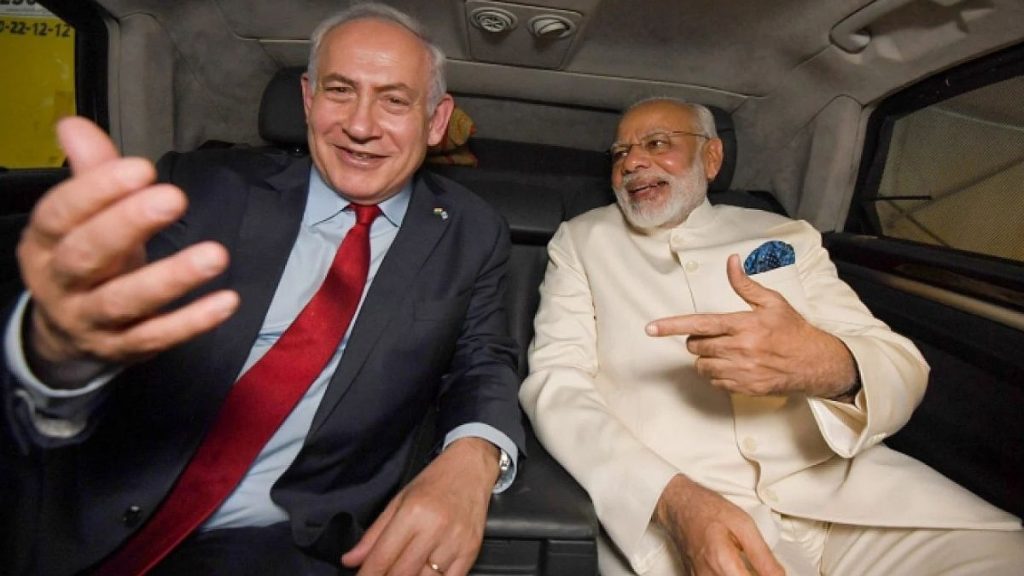
With Prime Minister Narendra Modi pledging in the Israeli parliament strong and lasting support for Israel in combating terrorism — which Israeli Prime Minister Benjamin Netanyahu described as “Islamic terrorism” — New Delhi hesitated to offer condolences after Ayatollah Khamenei’s death at Israel’s hands.
It was four days after his killing that India formally expressed condolences. Even then, it was not done by Foreign Minister Jaishankar but by Foreign Secretary Vikram Misri, who visited the Iranian Embassy to sign the condolence book.
In a brief statement, the Ministry of External Affairs said that the Foreign Secretary “visited the Embassy of the Islamic Republic of Iran and signed the condolence book, on behalf of the people and the Government of India, on the demise of Supreme Leader Ayatollah Syed Ali Khamenei.”
The text of Misri’s condolence message was not made public, but sources told The Wire that he wrote only two sentences: “Sincerest condolences on behalf of the government and people of India. We pray for peace for the departed soul.”
Constrained by its weaker position vis-à-vis the US and lacking reliable partners to seek support from, India now appears compelled to lie low and avoid loudly proclaiming its policy of strategic autonomy.
END
