
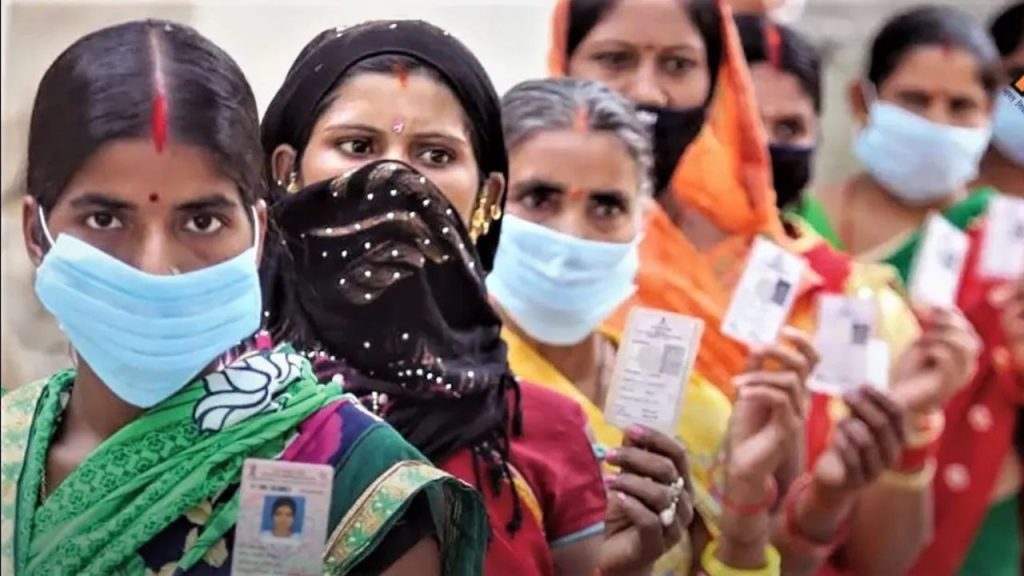

By P.K. Balachandran/The Daily Times of Bangladesh
Colombo, March 31 – The National Democratic Alliance (NDA), led by the Bharatiya Janata Party (BJP), is aiming for a hat-trick in the Assam State Assembly elections to be held on 9 April.
The 126-seat assembly currently has 76 seats held by the NDA, including 62 by the BJP, while the United Progressive Alliance (UPA) holds 44, with the Congress accounting for 27.
Winning formula
The BJP-NDA’s strategy includes vilification and marginalisation of Bengali-speaking Muslims, labelled as illegal migrants from Bangladesh, consolidation of Hindu votes by raising fears of a Muslim takeover, and attracting women voters through cash transfers.
The alliance’s prospects are further strengthened by a weak opposition UPA, led by a divided Congress whose leadership is based in New Delhi rather than Assam.
The Congress organisation remains fragile, with a shortage of volunteers to oversee polling.
Assam Congress leader Gaurav Gogoi has a strong political lineage but lacks a robust second line of leadership.
As a Member of Parliament based in New Delhi, he took considerable time to stitch together the UPA.
In contrast, Chief Minister Himanta Biswa Sarma is seen as a hands-on leader with strong local grounding.
Several senior Congress leaders in Assam have defected to the BJP, securing nominations for the upcoming elections.
Anti-Bengali Muslim ‘Miya’ movement
Sarma has built his politics on a mix of populism and strong anti-Muslim rhetoric, tapping into fears among Assamese people of being overwhelmed by Bengali-speaking Muslims, referred to as “Miyas”.
Illegal immigration from Bangladesh has been a defining issue in Assam since the 1970s, leading to the Assam movement and the 1985 Assam Accord, which set a cut-off date to distinguish native Assamese from migrants.
Despite the accord, concerns over continued migration have persisted, often amplified by political campaigns.
Sarma has openly encouraged actions against Miya Muslims.
“Trouble the Miya Muslims by any means. If they face trouble, they will go away from Assam,” he said publicly.
He also appeared in a BJP video holding a gun, accompanied by slogans such as “Foreigner-free Assam” and “No mercy”.
The video drew legal challenges and was later removed, though Sarma did not retract his stance.
Opposition leaders described the messaging as dangerous, while Muslim organisations approached the Supreme Court.
However, the Assam Congress largely remained silent, fearing backlash from majority voters.
Analysts warn that the anti-Bengali Muslim campaign could strain India-Bangladesh relations if left unchecked.
Disenfranchisement concerns
Sarma has also suggested that 400,000 to 500,000 Miya votes could be removed during voter list revisions, urging party workers to file objections.
Disenfranchisement is not new.
In 2019, the National Register of Citizens excluded 1.9 million people, including an estimated 400,000 to 500,000 Muslims.
Many cases remain pending in Foreigners Tribunals.
Muslims currently make up around 35 per cent of Assam’s population.
Pakistan angle
Sarma has also targeted Gaurav Gogoi, accusing him of links to Pakistan over past visits connected to his wife’s work with an international organisation.
At the same time, the NDA has sought to balance its approach.
Its ally, Asom Gana Parishad, has fielded 13 Muslim candidates (excluding Miya Muslims) out of 25 constituencies.
Wooing women voters
Sarma’s government has focused heavily on welfare schemes targeting women.
The Orunodoi scheme provides Rs 1,250 monthly to more than 3.8 million women, with additional benefits linked to LPG connections.
Other initiatives include financial support for women entrepreneurs and educational assistance for girls.
Downside risks
Despite these schemes, concerns remain.
Tea plantation workers complain of low wages, while several tribal communities demand Scheduled Tribe status.
Economic development remains concentrated in Guwahati, with unemployment a major issue elsewhere.
Sarma also faces criticism over corruption allegations, though he has remained politically resilient.
Impact on India-Bangladesh relations
The continued anti-Miya campaign, combined with rhetoric such as referring to migrants as “termites”, risks damaging India-Bangladesh ties.
Relations have only recently begun stabilising following political changes in Bangladesh in August 2025.
Analysts say domestic political considerations often outweigh foreign policy concerns, making a shift in approach unlikely in the near term.
END
