
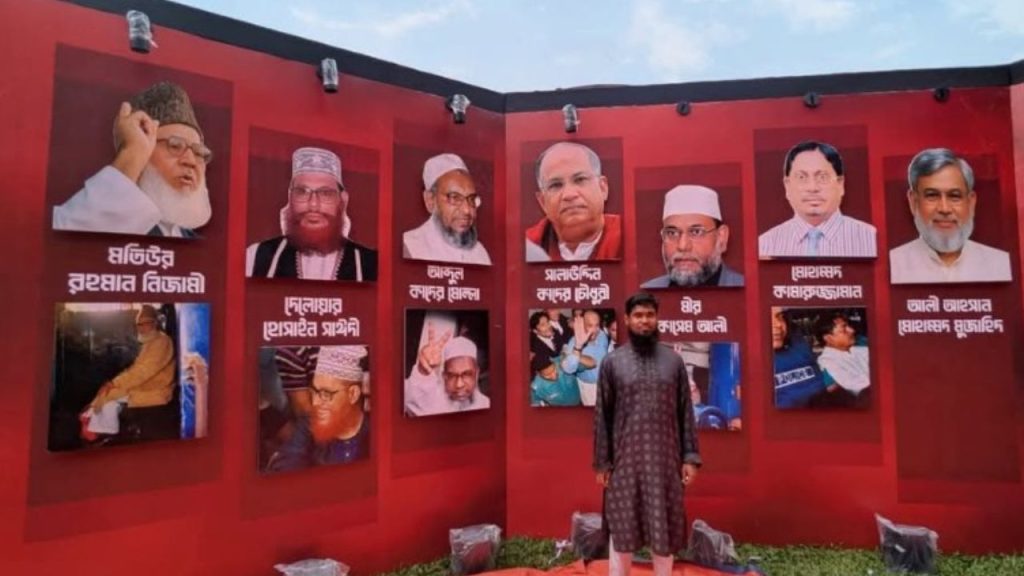

By Abdul Kalam Azad
Dhaka, October 25 (TOB) – Dhaka, October 25 (TOB) – The brutal killings, mass rapes, lootings and arson attacks committed during Bangladesh’s 1971 Liberation War are not up for debate. They are well-documented facts, etched in history and in the nation’s collective memory.
Among those responsible, Jamaat-e-Islami stands out as an auxiliary force to the then Pakistani military, and thus equally complicit in the genocide that ravaged this land.
Yet, instead of owning up to its crimes, Jamaat continues to play linguistic games–deploying sly, conditional phrases like “if we made any mistakes” or “if anyone was hurt.”
These carefully crafted words are not remorse; they are calculated attempts to obscure the truth.
For decades, Jamaat’s leaders have maintained this same tone of evasive apology, never daring to utter a full, unqualified confession. Each time they speak in such half-hearted language, they insult the freedom fighters who sacrificed everything for independence and reopen the wounds of the millions who suffered at the party’s hands. Their statements trivialise the atrocities of 1971, suggesting the horrors could somehow be reduced to “mistakes.”
Such wording is an affront to history and a cynical insult to the nation’s conscience.
The latest remark by Jamaat’s current chief, echoing the same formula used by his predecessors, is yet another exercise in deception. Behind his ostensibly conciliatory words lies the same denial and revisionism that the party has peddled for more than four decades. This is not repentance—it is a ploy. A political manoeuvre designed to soften their image without accepting moral responsibility. But history is not so easily rewritten, nor can words of convenience erase the bloodstains of 1971.
Jamaat’s approach remains a profound political blunder. By continuing to downplay its crimes with disingenuous “ifs,” the party alienates the very people it hopes to win over.
The idea that Bangladeshis might “forgive or forget” through vague gestures of pseudo-apology reflects arrogance and moral blindness. In reality, the audacious mindset only provokes anger and reinforces the perception that Jamaat remains unapologetic at its core.
Even if Jamaat were to issue a full and unconditional apology today, it would not automatically guarantee forgiveness. The wounds of 1971 run too deep for simple absolution. Yet, a sincere admission of guilt would at least be a starting point, a recognition of truth that could begin the long and painful process of moral reconciliation.
But instead of doing so, Jamaat clings to a strategy of denial and ambiguity, undermining whatever political mileage it hopes to gain.
This refusal to confront its past continues to paralyse the party’s political ambitions. A political force that once opposed the very birth of Bangladesh now speaks of patriotism and governance, expecting people to overlook its history.
But the majority of Bangladeshis, particularly women–who bore the worst brutality of the war–remain deeply distrustful of Jamaat’s intentions. Its gestures of national loyalty ring hollow, and its efforts to present itself as a mainstream democratic force are consistently undermined by its unwillingness to face the truth.
As historians, politicians and citizens widely agree, Jamaat must make an unequivocal declaration about its role in 1971 and offer a straightforward, unconditional apology. Anything less will be seen as another act of deceit.
Until that happens, the party will remain politically marginalised–haunted by the very past it refuses to confront. No amount of strategic wording or selective memory can cleanse its record.
They argue that the current leadership of Jamaat and its student wings should not carry the burden of mistakes and misdeeds of their predecessors who had been involved in wrongdoings. Instead, they should resolve the long-standing stigma that is holding back the party.
Jamaat-e-Islami’s sly apology is not repentance but manipulation. And as long as the party continues to hide behind calculated phrases instead of speaking the truth, it will never earn forgiveness—nor the trust of the nation it once betrayed.
END
