
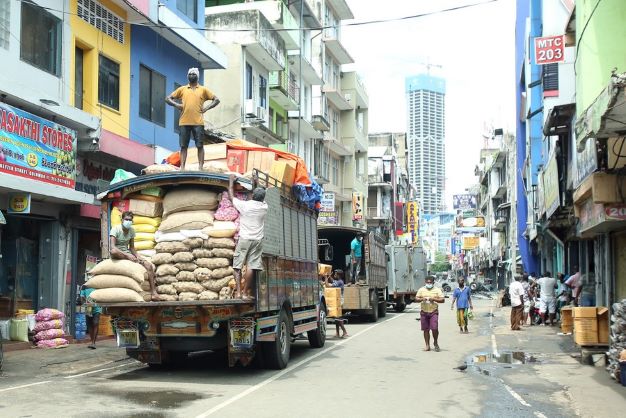

Colombo, March 8 – Sri Lanka’s economic recovery is gaining momentum, driven by IMF-backed reforms, fiscal discipline, and targeted social benefits. However, challenges such as debt restructuring, social spending gaps, and public dissatisfaction with the rising cost of essential goods remain significant. Striking a balance between economic revival and social equity will be crucial for sustainable growth and long-term stability.
IMF Support and Economic Reforms
The IMF recently approved a $334 million tranche, bringing total disbursements under Sri Lanka’s $2.9 billion bailout program to $1.34 billion. IMF Senior Mission Chief for Sri Lanka, Peter Breuer, underscored the stark contrast between the country’s 2022 economic collapse and its progress since implementing essential but difficult reforms.
“There is no doubt about the hardship caused by the crisis. We have traveled across the country and met with people, including plantation workers, who shared their income statements and bills. The severity of the situation was evident. However, the best path forward is to remain committed to reforms to ensure Sri Lanka’s long-term economic sustainability,” Breuer stated.
Sri Lanka’s Gross International Reserves (GIR) have climbed to $6.4 billion, bolstered by a conditional $1.4 billion equivalent Chinese PBOC swap and the latest IMF disbursement. This financial cushion strengthens the country’s ability to navigate fiscal challenges while implementing necessary reforms.
Public Sector Salary Increases and Social Benefits
Fulfilling a key manifesto promise, the government has introduced a phased salary increase for public sector employees. The new salary structure raises the minimum monthly basic salary from Rs. 24,250 to Rs. 40,000, reflecting an increase of Rs. 15,750. The increments will be implemented as follows:
April 2025: Rs. 5,000 increase, plus 30% of the remaining balance.
January 2026 & January 2027: The remaining 70% will be disbursed in equal portions.
The Treasury has allocated Rs. 185 billion in the 2025 budget for these salary adjustments. The proposal was reviewed by the IMF, which did not object, given Sri Lanka’s improved revenue collection and adherence to program targets.
Alongside salary increases, the government has slightly increased welfare payments, reinforcing its commitment to social safety nets under the ‘Aswesuma’ program. Additional support will be provided to low-income groups, the elderly, and differently-abled individuals to ensure coverage remains above the observed poverty rate.
Challenges in Balancing Fiscal Reforms and Social Welfare
While salary hikes address public sector concerns, austerity measures under the IMF program have led to reductions in longstanding government employee perks. This has triggered protests from trade unions representing doctors, hospital staff, and teachers, some of whom have already staged token strikes. However, the largest unions have yet to fully join the demonstrations.
The IMF has emphasized the importance of targeted social assistance for vulnerable populations despite fiscal constraints. IMF Deputy Mission Chief for Sri Lanka, Katsiaryna Svirydzenka, highlighted the need for financial sector resilience, addressing non-performing loans, and improving governance in state-owned banks. She also stressed the urgency of restructuring state-owned enterprises (SOEs) to prevent further debt accumulation.
Economic Transformation and Policy Reforms
The government plans to introduce an Economic Transformation Bill to streamline reforms and align them with IMF objectives. These measures will ensure transparency in granting tax incentives, focusing on sustainable fiscal policies.
“We are aware of the government’s intention to propose amendments. We look forward to reviewing them and ensuring they align with the program’s objectives, including refraining from granting tax incentives until a framework with clear, transparent criteria is established,” Svirydzenka stated.
Sri Lanka’s Road to Recovery
Sri Lanka entered a $2.9 billion Extended Fund Facility (EFF) agreement with the IMF in March 2023 following its unprecedented financial crisis in 2022, which led to a default on $46 billion in foreign debt. Since then, the country has received four tranches totaling SDR 1.02 billion ($1.34 billion), with the most recent $334 million approved in March 2025.
Key economic indicators show positive trends:
Real GDP growth is projected at 5% in 2025, recovering approximately 40% of the losses suffered between 2018 and 2023.
Inflation control measures have been successful in curbing runaway price increases, although IMF target levels have not been fully met.
Tax revenue collection has improved, reaching IMF targets, with plans to increase tax revenue to 15% of GDP by 2025.
Despite these achievements, the IMF has warned that Sri Lanka’s economy remains vulnerable and requires sustained reforms to ensure long-term debt sustainability and inclusive growth.
Strengthening Investor Confidence
The IMF’s continued endorsement of Sri Lanka’s economic progress is expected to boost investor confidence and strengthen international partnerships. “Sri Lanka has passed an important milestone today. It has been an honor to accompany the country on its recovery journey over the past three years. While challenges remain, I am moving on to another assignment and wish the people of Sri Lanka further success,” Breuer concluded.
The government’s ability to maintain reform momentum while addressing public concerns over cost-of-living pressures will be critical in ensuring sustainable economic growth and long-term financial stability.
END
