
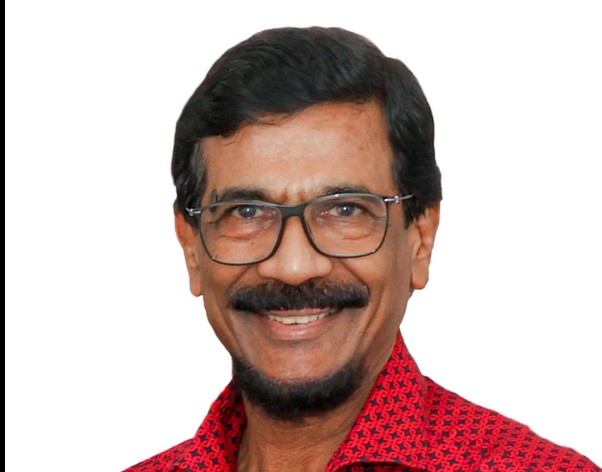

By Veeragathy Thanabalasingham
Colombo, November 17 – Historically, no domestic attempt to find a political solution to Sri Lanka’s ethnic problem has been successful. The southern Sri Lankan polity does not want to share power with minority communities.
It was due to the intervention of India that the system of Provincial Councils (PC) was introduced. Successive Sri Lankan governments have failed to make the PCs function properly in the last 38 years. The PCs have been under Governors making the concept of power sharing meaningless.
Even though India has not been able to bring the Sri Lankan governments on board, the system of PCs and the 13th amendment to the constitution it introduced continue to exist.
The PC system has survived only because it was brought into being in the wake of Indian intervention. But it seems that the only existing power-sharing framework in the Sri Lankan constitution is now in danger.
Even as demands for early elections to the long-delayed PCs are growing louder in the north and south, we are unable to count on the possibility of elections being held next year, given the reasons being put forward by the government.
Against this backdrop, the comments made by Tilwin Silva, General Secretary of the Janatha Vimukthi Peramuna (JVP), the flagship party of the ruling National Peoples’ Power (NPP) in an interview to a private television network last week, warrant serious attention.
Stating that the PCs will be abolished when the new constitution is brought in, Silva categorically stated that the elections can be held only after the completion of the new delimitation process. He also said that the PC system would remain in place until a new constitution is brought in, and thereafter a system that would create true national unity will be introduced.
His position is that the PC system has not been successful in establishing national unity in Sri Lanka.
JVP leaders, including President Anura Kumara Dissanayake, have consistently said that the PCs will remain in place until a new system that can bring about harmony among the Sinhala, Tamil and Muslim communities is identified. But they have not said what the new system would look like. Even the election manifesto of the NPP did not give a definite answer in this regard.
But, we all know that the JVP has a bitter history of fiercely opposing every attempt to find a political solution to the national ethnic problem and that they are against the PCs on the basis of their anti-power-sharing policy. But at the same time, they have been contesting elections to the PCs..
On wonders how many of the NPP leaders remember their promise that PC elections would be held within a year of taking office. But looking at the reasons that the government is now putting forward for delaying those elections as much as possible, it seems that they are following the same approach that Ranil Wickremesinghe’s government used to postpone the local government elections.
The government has yet to recommence the delimitation process, which has been in limbo for seven years. The Election Commission has already said it will take at least a year to complete the process, even if it starts now.
The postponement of PC elections is really a political issue, and therefore, the most effective way to sort it out it is to crank up pressure on the government. But it is futile to expect the opposition political parties, which are demanding the government to hold the PC elections at the earliest, will jointly wage any effective protest movement.
Last week, the former chairman of the Election Commission, Mahinda Deshapriya, shed light on a legal dimension of the problem. He has said that Governors are keeping the PCs under their control in violation of Supreme court ruling that PCs be governed by elected councillors.
Based on the views expressed by Deshapriya, who is a person with a thorough knowledge of election laws and the judicial rulings pertaining to them, those who are genuinely desirous of having the PC polls held without delay can now explore the possibility of seeking a judicial intervention.
During his regime, former President Ranil Wickremesinghe was heavily criticized by the NPP when he postponed the local government elections in defiance of the Supreme Court order. The NPP joined other opposition parties in demanding that the government respect the court’s order to allocate funds for local elections. According to the argument of Deshapriya, the present government and its leaders are acting in the way of Wickremesinghe when it comes to PC elections.
To avoid further delay due to the delimitation impasse, the Government can easily facilitate the conduct of elections under the system of proportional representation. A simple majority in Parliament is enough, Deshapriya said. The NPP has more than a two-thirds majority in parliament to amend a previously passed law or bring in a new law to pave the way for elections. In fact, removing the deadlock is an easy task for the government.
President Dissanayake, who presented the 2026 budget to parliament on November 7, said the government is prepared to hold PC elections and had allocated Rs.10 billion for the purpose and adding that it was not up to him to decide the date of the elections.
“The elections to the PCs have been delayed due to the delimitation of electorates. Former provincial council and local government minister Faizer Mustapha submitted the bill for delimitation to parliament during the ‘Yahapalanaya’ government. But the stalemate continues. We are not responsible for that,” the President told the House.
Meanwhile, Local Government and Provincial Councils Minister Santhana Abeyratne said last week that the government would hold a All-party conference and invite civil society organizations also to explore ways to hold the elections.
Last week, in an interview with Meera Srinivasan, Colombo correspondent for India’s The Hindu, Prime Minister Harini Amarasuriya said that elections to the provincial council had to be held and it had to be examined whether a new law was needed or whether Parliament would agree to hold elections under the old system.
In Parliament last Saturday, the Leader of the House Bimal Ratnayake, while participating in the budget debate, announced that a special parliamentary select committee would be appointed to review the legal framework for holding PC elections and that the government would take necessary steps to expedite the election process.
Let us hope that the PC elections will not meet the same fate as the local government elections did during the tenure of Ranil Wickremesinghe.
Be that as it may, Tilvin Silva’s claim that the new constitution will not include PCs raises questions about the future of power sharing in the country.
If the system of having provinces as units of devolution is done away with, what will be the territorial boundaries of the new system? Will there be an arrangement for any devolution of power in the new Constitution? Will it have at least the existing powers of PCs? Or will the new constitutional drafting process end up with satisfying the southern nationalist forces opposed to devolution of power and the legitimate political aspirations of minority communities, leaving the minority communities in the lurch again?
END
