

By Camelia Nathaniel/Daily News
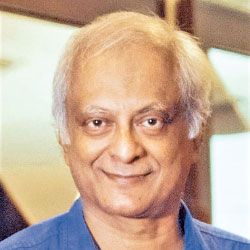
Colombo, November 11 – Professor Harendra de Silva is one of the few scholars who have influenced child protection in Sri Lanka. A paediatrician and researcher dedicated to children’s wellbeing, Professor de Silva modeled the country’s response to child abuse. As the founding Chairman of the National Child Protection Authority (NCPA), he helped spark legislative reform, raise public awareness, and bring child protection into the national conversation in a way it had never been before. In this interview with the Daily News, Professor de Silva reflects on the journey that led to the establishment of the NCPA, the challenges that persist in protecting Sri Lanka’s most vulnerable and the urgent need for systemic change. Speaking with characteristic candour, he details the realities behind the statistics, the intergenerational trauma that perpetuates violence and the reforms still necessary to make child protection more than a slogan.
Q: As the Founder Chairman of the NCPA, what inspired you to establish this institution and how did you envision its role in safeguarding children in Sri Lanka?
A: I began this work from an evidence-based standpoint rather than a theoretical one. I was a clinician working in Galle, not a sociologist or a lawyer and what I encountered in my daily practice was deeply disturbing. I saw children with broken bones, burns and emotional scars. When I began researching the issue, I discovered that around 20% of boys and 10% of girls in the Galle District had been sexually abused. No one seemed to know this at the time.
I also found that around 8% of households, roughly one in every twelve, had a child servant. Many of these children were exploited and there was no structured mechanism to help them. When I approached the Probation Department, the response was simply that there were no provisions to intervene; the best they could do was place the child in an institution and tragically, some of the abuse also occurred within those institutions.
It was clear to me that Sri Lanka needed a comprehensive national mechanism, a place where cases of abuse could be addressed, researched and prevented. My research on child soldiers further expanded my understanding of how children were exploited in different contexts, from war to domestic servitude. I introduced two concepts that were later published in the British Medical Journal: conscription as a form of child abuse and suicide by proxy, where children are manipulated into killing themselves.
All these findings eventually converged into one mission, to create an institution that could respond to every aspect of child protection: prevention, intervention and rehabilitation. That vision became the NCPA.
Q: How did that early research and advocacy translate into the establishment of the NCPA?
A: It started somewhat accidentally. I was invited to speak at a Lions Club meeting about my research on child abuse. Unlike medical conferences, these gatherings had reporters. They wrote about what I said and the issue caught national attention.
Among those who read about it was Dr. Tara de Mel, who was then an advisor to President Chandrika Bandaranaike Kumaratunga. She arranged a meeting with the President, who soon established a Presidential Task Force on Child Abuse and appointing me as its Chairman. Within a year and a half, we drafted the legislation that would become the National Child Protection Authority Act (1998).
The process involved senior officials from the Attorney General’s Department, ministry secretaries and leading NGOs. Together, we defined what child protection should mean in a Sri Lankan context. When the NCPA was finally established in 1999, I served as its first Chairman for two consecutive terms, the maximum allowed.
Economically, I sacrificed my private practice, but morally and professionally, it was one of the most fulfilling periods of my life.
Q: You’ve often spoken about your “conceptual framework” for child protection. Could you explain what that entails?
A: Yes, I designed a framework with four main pillars: knowledge, skills, protection and law.
First is knowledge — ensuring that everyone, from parents and teachers to doctors and even children themselves, understands what constitutes abuse and how to identify it. During my tenure, we launched nationwide awareness campaigns, posters, newspaper articles, street dramas and school programmes.
Second is skills — not just for professionals, but for parents and children. Parents must learn how to discipline without abuse; children must learn how to protect themselves and seek help. These are skills that can literally save lives.
The third pillar is protection, particularly for vulnerable children — those in institutions, on the streets, or affected by war. Many of them cannot protect themselves, so the State has a moral and legal obligation to do so.
And the fourth is law — having robust legislation that defines, enforces and monitors child protection. For instance, our Penal Code was amended in 1995 to include Section 308A, which addresses cruelty to children. But even today, “cruelty” remains undefined. Is it a slap or a burn with a hot iron? Without clarity, enforcement becomes arbitrary.
Q: Despite legal reforms, corporal punishment remains widespread. How serious is the problem today?
A: Extremely serious. A2018 study I co-authored found that 80–85% of Sri Lankan children experience either corporal or emotional punishment in schools. That’s nearly every child in the country. Rates are particularly high in the Northern and Eastern Provinces, while somewhat lower in Galle and Colombo.
We banned corporal punishment during my time at the NCPA and the Ministry of Education issued a circular. But banning something on paper means little if you don’t implement it. Teachers who were themselves beaten as children often justify it. It’s an intergenerational cycle of trauma.
When children are repeatedly exposed to violence, at home, in school, or in society, they internalise it as normal. A child who watches his father assault his mother will likely grow up to do the same. Violence breeds violence. Unless we stop it early, it becomes embedded in our culture.
Q: How does this intergenerational trauma affect society at large?
A: Profoundly. The more trauma a child experiences, the more likely they are to become violent adults. Domestic violence, alcoholism and social unrest are all connected. You can’t have societal peace without peace inside homes.
If a father drinks every night and abuses the mother, that child absorbs the pattern, both as trauma and as behaviour. When he grows up, he often becomes an alcoholic and abuser himself. Society then normalises it. Even officials justify corporal punishment, saying it builds discipline. That’s dangerous thinking.
We have to remember: children’s rights are human rights. And Article 28 of the UN Convention on the Rights of the Child, which Sri Lanka has ratified, explicitly prohibits corporal punishment. Yet we continue to justify it under the guise of “tradition.”
Q: You mentioned children in institutional care. What is the current situation?
A: It’s one of the most neglected aspects of child protection. We currently have around 300 childcare institutions housing approximately 10,000 children. Only 10% of these institutions are government-run; the rest are managed by NGOs or private groups.
While many are well-intentioned, not all are professionally operated. Some employ untrained or unvetted staff, people with no understanding of child psychology or trauma. Abuse can and does occur in such environments. We need a paradigm shift from administrative to professional management of these institutions. Look at the Ministry of Health: it has a structured system with curative, preventive and administrative branches. Childcare institutions need a similar model, professionalcarers, counsellors and educational psychologists, not just wardens and attendants.
Because when these traumatised children turn 18, they’re released into society without rehabilitation. Many end up in conflict with the law. Rehabilitation isn’t just vocational training, it’s psychological healing.
Q: You’ve said the Government doesn’t adequately recognise psychology as a profession. Why is that so significant?
A: Because psychological trauma is at the root of much of our national dysfunction. We live in a society where violence, murder and shootings have become daily news. People are angry, reactive and emotionally wounded.
Yet, psychology and counselling remain under-recognised professions. Our universities produce psychology graduates, but they have few employment prospects within the public sector. Without integrating mental health and counselling into mainstream social services, we are simply managing symptoms, not curing causes.
A society that ignores psychological wellbeing cannot raise emotionally healthy children.
Q: The government is now proposing amendments to the child protection legislation. Are you involved in these reforms?
A: I’m currently part of a committee appointed by the Minister to review the structure and provisions of the NCPA Act. But I’m not involved in the broader legislative reforms that have been proposed.
My concern is that such amendments must be driven by people with expertise, experience and vision, not by administrative convenience. Child protection isn’t a box-ticking exercise; it requires deep understanding of the ground realities.
Q: In today’s digital age, how serious is the problem of cyber-enabled child abuse in Sri Lanka?
A: It’s a growing and under-addressed threat. When I headed the NCPA, we established a Cyber Unit, this was in the early 2000s, when online exploitation was only emerging. Even then, most of the foreign paedophiles we arrested, had an online connection.
Today, the NCPA still has a cyber-unit, but it mostly reports cases to Google or YouTube to have sites blocked. That’s not enough. Blocking websites is a passive response. What we need is active surveillance and prosecution.
If someone is soliciting children online, we must identify and prosecute them. Soliciting itself is now a punishable offence, a clause I helped introduce before I left the NCPA. But law without enforcement is meaningless.
Waiting for victims to come forward is unrealistic; children rarely report abuse. We need proactive monitoring, just as in narcotics or counter-terrorism. Prevention is always more effective than reaction.
Q: Sexual exploitation of children is one of the most common offences in Sri Lanka, yet convictions remain rare. Why?
A: Because our system is reactive, not proactive. Enforcement agencies often wait for complaints instead of pursuing offenders.
Think of it like this: if you wait for a bomb to explode before acting, you’ve already failed. It’s the same with child abuse. We need to identify, monitor and intercept offenders before they strike.
When law enforcement actively prosecutes, it also creates deterrence. Just as strict traffic law enforcement reduces accidents, consistent prosecution of child offenders will reduce abuse. But when perpetrators know they can get away with it, impunity becomes the norm.
Q: Teachers’ unions often argue that banning corporal punishment has made it harder to discipline children. How do you respond?
A: That argument is unscientific and unacceptable. Discipline doesn’t require violence. Teachers who make that claim are often repeating the trauma they themselves suffered as students.
Children who are beaten learn that power equals violence. Some become teachers themselves and repeat the pattern. It’s the same cycle.
We must listen to teachers, yes, but we must also listen to children. They rarely have a voice in these debates. Prefects, for example, can be some of the worst bullies in schools because they’re given unchecked authority. That’s peer abuse, another form of violence.
We developed a comprehensive booklet titled “How to Discipline Without Corporal Punishment” and printed over 200,000 copies for teachers. Sadly, in some areas, the booklets were never distributed; some principals even sold or destroyed them. In Trincomalee, I was told people used them to wrap gram! That’s the level of disregard.
So again, it’s not about lack of resources or awareness, it’s about implementation.
Q: You were part of the national campaign that successfully ended the use of child servants. How did that work and what can we learn from it?
A: That’s one of the success stories I’m most proud of. In the 1990s, as I mentioned, around 8% of households employed child servants. We launched a public campaign, with sports icons like SanathJayasuriya, which aimed to make society reject the practice.
Alongside education, we ensured legal enforcement. People were arrested for employing child servants and the combination of awareness and enforcement worked. Today, the prevalence of child domestic labour is virtually zero, almost eradicated.
That experience proves that education, awareness and implementation of the law together can create change. Legislation alone cannot.
Q: You’ve stressed repeatedly that implementation is the weak link. Why has that been so difficult to fix?
A: Because we’ve confused legislation with execution. Passing a law makes us feel like we’ve achieved something, but if no one enforces it, it’s just paper.
Even the NCPA Act, a groundbreaking piece of legislation, is underused. Many officials within the system don’t even know the extent of their powers under it. Section 308A of the Penal Code, which deals with cruelty, has been around since 1995, but was practically dormant until a few years ago.
For laws to work, they need clear regulations, designated responsibilities and accountability mechanisms. Otherwise, we end up congratulating ourselves for passing laws that exist only in theory.
Q: Beyond enforcement, what deeper social issues are driving child abuse in Sri Lanka?
A: Child abuse doesn’t occur in isolation. It’s often the symptom of poverty, alcoholism, dysfunctional families and migration.
Take the case of mothers going to the Middle East. Many leave because of domestic violence or because their husbands are alcoholics. Some go simply to escape. But when mothers leave, children are left with relatives or neighbours and some of these children end up abused or in institutions.
Out of the 10,000 children in institutions, the vast majority, over 9,000 are not orphans. They come from broken or unstable homes. Some are there because their mothers migrated for work.
We once had a regulation preventing mothers of very young children from working overseas. That was later removed for economic reasons. But we can’t measure national progress only by remittances. The social cost of migration, in terms of traumatised, neglected, or abused children, is immense. If we want to protect children, we must tackle the root causes, not just pass laws.
Q: Finally, what changes do you believe are urgently needed to strengthen child protection in Sri Lanka today?
A: First, we need restructuring and accountability. Thousands of officials are employed in child protection, from NCPA officers to probation officers, but how many are truly effective? Every administrative division has designated officers for child protection. If they all functioned efficiently, many problems could be solved.
Second, inter-sectoral coordination is essential. Child abuse intersects with poverty, education, health and justice. These sectors must work together, not in isolation.
Third, professionalisation of care is vital. We need trained psychologists, counsellors and social workers, not just administrators.
And finally, public education. Just as we changed attitudes about child servants, we can change attitudes about corporal punishment, child marriage, or online abuse. But it requires persistence, leadership and moral courage.
If we continue to look away, to justify, delay, or politicise child protection, then we, as a nation, are failing our children.
I’ve seen enough suffering to know that laws alone don’t protect children, people do. Every child we fail to protect today will grow up to carry that pain into tomorrow’s society.
That’s why child protection is not just about children; it’s about the future of this country.
END
