


By P.K.Balachandran/Daily news
Colombo, November 11: As new nations carved out of the British Empire, India, Pakistan, Bangladesh and Sri Lanka have had controversies over their national emblems such as the flag and the anthem. Some of these controversies persisted, while others died out.
In India, there was competition between Rabindranath Tagore’s song ‘Jana Gana Mana Adhinayaka Jaya Hey’ and Bankim Chandra Chatterjee’s song ‘Vande Mataram’ when the country became independent in 1947.
As Vande Mataram was Hinduistic in its imagery, the secular post-independence government of India led by Jawaharlal Nehru chose Tagore’s song Jana Gana Mana becauseitdescribed the unity of India mentioning Hindus, Muslims, Christians, Buddhists, Jains and Parsis. Even so it was criticised for not mentioning Assam and the North East region.

Vande Mataram was declared the National Song. But Vande Mataram continues to be an area of conflict between Hindus and Muslims. Recently, the Hindu nationalist BJP government made it compulsory to sing Vande Mataram in schools as part of the celebration of the 150 th. birth anniversary of its writer, Bankim Chandra Chatterjee. Bankim was a Bengali literary giant and an ardent nationalist in the 19 th.Century.
The Islamists object to the content of Vande Mataram because it personifies India as a ‘Mother’ and goes on to deify ‘Mother India’. The Mutahida Majlis-e-Ulema (MMU), an alliance of leading Islamic scholars and religious organisations in Jammu and Kashmir led by Mirwaiz Umar Farooq, described the government’s move as an attempt to impose the “Hindutva ideology” on the Muslim-majority region under the guise of a cultural celebration.
“Forcing Muslim students or institutions to engage in acts that conflict with their faith is both unjust and unacceptable. Reciting or singing Vande Mataram involves devotional acts not permissible in Islam. Islam teaches love for one’s nation through service, compassion, and moral integrity not through rituals that compromise faith,. The order reflects a larger ideological campaign aimed at reshaping the cultural and religious identity of Kashmir,” the MMU charged.
Anandamath
Vande Mataram is a Sanskrit song in the Bengali historical novel, Anandamath written by Bankim Chandra Chatterjee. Set in Birbhum district during the 1770 Bengal famine, the story ignores the Muslims, barring one Muslim, Mir Jaffar, the infamous ruler of Bengal. Jaffar is the villain in the story.
The story is about a group of militant Hindu mendicants (Sanyasis) rising in revolt against the British who were collecting taxes under the aegis of Mir Jaffar. According to historian Sakriti Deswal, the novel is not anti-British as such. The British are portrayed as middlemen of the principal exploiter Mir Jaffar. In fact, the novel portrays the British as potential liberators of India from Muslim rule.
Deswal observed that Anandamath’s anti-Muslim theme fits in perfectly with Hindu nationalism’s characterization of the 800-year long Muslim rule in India as “foreign and devastating”. The BJP government has deleted from school textbooks the Muslim period in Indian history so that the focus is on the earlier Hindu period.
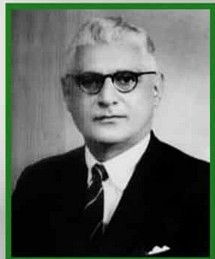
Pakistan took seven years to decide on its national anthem. The dispute was over the language of the anthem. Members of the Pakistan Constituent Assembly from Bengal-speaking East Pakistan made a pitch for at a stanza in Bengali, the language of the majority of Pakistanis. But the demand was rejected. Finally, the language chosen was Persianized Urdu. ‘Pak Sar Zamin’, the anthem,was written by the Urdu poet Hafiz Jalandhari.
There was confusion about who set to tune for Pak Sar Zamin. Officially, Ahmad Gulamali Chagla is recognized as the composer as he had won the national competition for it. But the Catholic priest Fr. D’Arcy A. D’Souza claimed that the real composer was Tollentine Fonseca, a Karachi-based Western musician of Goan origin, poplularly known as “Tolli”.
According to Fr. D’Souza, Chagla came to Tollentine and asked if he could compose a “really stirring march”. Tollentine produced six tunes, all of which were rejected by Chagla. In desperation, Tollentine composed the seventh and avowedly, the last. Chagla accepted the seventh. Tollentine then wrote the notations for a 21-piece naval band. But there is yet no confirmation of Fr.D’Souza’s claim that Chagla did not tune Pak Sar Zamin.
Bangladesh
After Pakistan split and East Pakistan became an independent Bangladesh in 1971, the choice of an anthem was Rabindranath Tagore’s ‘Amar Sonar Bangla’. But this was disputed because it was written in 1905 during the controversial partition of Bengal by the British into a Muslim majority East Bengal and a Hindu majority West Bengal. Muslim majority East Bengal approved of the partition while the Hindus opposed it. Tagore had sided with the Hindus in this case.
Amar Sonar Bangla was chosen despite the fact that during the Bengali Muslims’ struggle for Pakistan from 1906 to 1947, they had branded Tagore as a “Hindu poet” who had little or no interest in the life of Bengali Muslims.
However, the liberation movement in Bengali-speaking East Pakistan in the 1950s and 60s rehabilitated Tagore. The Pakistan government banned the broadcasting of Tagore songs. But despite the ban Tagore became an icon of East Bengali Muslim renaissance. Independent Bangladesh adopted the song as it was mostly about the bounties and beauty of the Bengal countryside.
The situation is different now after the overthrow of the Awami League government led by Sheikh Hasina in August 2024. An anti-Bangladesh and pro-Pakistan section of Bengali Muslims led by the Jamaat-e-Islami, is opposing “Amar Shonar Bangla” both on political and religious grounds.
The Islamists say that the song identifies Bengal with the Mother, thus indirectly alluding to the Mother Goddess and transgressing Islamic injunctions. Brigadier General (Retd) Abdullahil Amaan Azmi, son of the founder of Bangladesh’s Jamaat-e-Islami, is quoted as saying that the Bangladeshi flag has no symbol depicting Islam, like the crescent, nor does the national anthem depict the freedom struggle of 1971. So, a lot of Bangladeshis are now open to the idea of changing both, he claimed.
With little or no trace of the Awami League and the memory of Sheikh Mujibur Rahman the father of the nation in Bangladesh now, changing the flag and the anthem will not be much of an issue. The Interim Government led by Dr. Muhammad Yunus is building a new narrative in Bangladesh that is more in sync with that of religious hardliners who are on the ascendent.
Sri Lanka
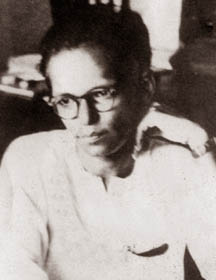
In Sri Lanka, the national anthem Sri Lanka Matha had a bumpy start with its writer Ananda Samarakoon objecting to the changes made in it by the government. He died a disappointed man.
The Sri Lankan national flag and the anthem were subjects of acrimony. The minority Tamils fighting for regional autonomy have been unhappy with the preeminent place given in the flag to the sword wielding lion, which is an emblem of the Sinhalas, the majority community.
The Ilankai Tamil Arasu Katchi (ITAK) leader the Late R.Sampanthan was mauled by fellow Tamils for waving the “Lion Flag” on stage on independence day, when he was the Leader of the Opposition. On another occasion, the Northern Province Education Minister K.Sarveswaran refused to hoist the national flag in protest against “Sinhala hegemony” drawing flak from the rest of Sri Lanka.
In another incident in 2015, followers of former President Gotabaya Rajapaksa waved the Sri Lankan flag without the mandatory orange and green stripes that represented Tamils and Muslims.
The Sri Lankan national anthem “Sri Lanka Matha” was sung both in Sinhalese and Tamil from the time of independence until the hardliner President, Mahinda Rajapaksa, unofficially banned it. But when the regime changed in 2015, the ban was lifted. The controversy over the Sri Lankan anthem and the flag has ceased.
END
