
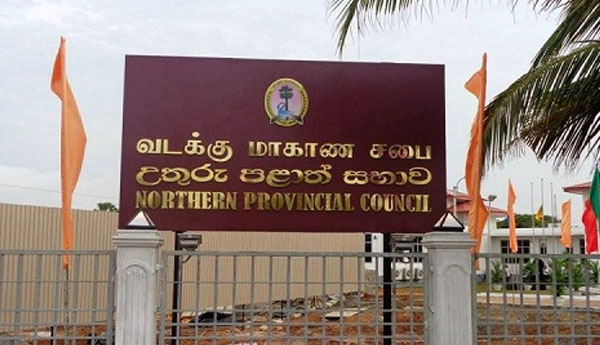

By Veeragathy Thanabalasingham
Colombo, October 26 -Calls for early Provincial Council (PC) elections have intensified in Sri Lanka all over the island, the Tamil north and the Sinhalese South.
Believing that the National Peoples’ Power (NPP) government has begun to lose public support after a significant drop in votes seen in the May local government elections compared to last year’s parliamentary elections, opposition parties in south Sri Lanka expect the ruling party to suffer a severe setback in any future elections.
That is one reason why they are asking the government to hold PC elections within this year without delay. The other reason is it is a political necessity for these parties to either take over the administration in the PCs as they are unlikely to come to power at the Centre in the near future. Otherwise, it will be a challenge to safeguard the already severely weakened party structures. Politicians cannot be expected to remain loyal to their parties unless they are in positions of power at some level.
For the opposition, the demand for PCs elections has nothing to do with devolution of power. Sajith Premadasa, leader of the main opposition Samagi Jana Balawegaya (SJB) and former President Ranil Wickremesinghe, leader of the United National Party (UNP) promised in their election manifestos to implement the 13th Amendment to the Constitution. But they are now only asking for PC elections, without talking about the implementation of that Amendment.
But the demand for PC elections of the northern and eastern Tamil political parties has a different basis. Except few, most of the Tamil parties now have a serious interest in preserving the provincial Councils system.
A year after President Anura Kumara Dissanayake took office, the Ilankai Thamizharasu Katchi (ITAK) sent a letter asking for time to have discussions with him, pointing out that the government was not interested in implementing the promises he had made in his election manifesto to find solutions to the pressing problems of the Tamils. Ministers like Ramalingam Chandrasekhar told the media that the President would talk to the ITAK representatives, but there was no response from the President himself.
At the same time, the Eelam People’s Revolutionary Liberation Front (EPRLF), led by former parliamentarian Suresh Premachandran, has been holding seminars in the north and east on the need to protect the 13th Amendment and the PC system, the only power-sharing arrangement in the Sri Lankan constitution.
Annamalai Varadharaja Perumal, the first and last Chief Minister of the merged North-Eastern Province, has been holding meetings with the Tamil and Muslim political parties and various sections of civil society, including the university community, to create awareness among the Tamil people about the imperative to preserve the PC system.
Thus, after a long period of indifference, the emergence of some kind of concern among the Tamil polity about the PC elections is evident and is certainly welcome.
Despite the fact that 38 years have passed since the introduction of the PC system following the 1987 Indo-Sri Lanka Peace Accord, it has not been properly implemented. Successive governments showed no interest in the effective functioning of the PCs, but only in holding PC elections. All governments ensured that the 13th Amendment was not properly and fully implemented.
Apart from this, in the last more than three decades, central governments have usurped most of the powers of the PCs through legislations. Apart from appealing to Sri Lankan governments to fully implement the 13th Amendment, even India has not been able to do anything. Given the current geopolitical situation, New Delhi cannot be expected to continue to make such a request and take any concrete action on the ethnic issue that could cause discomfort to Colombo.
Elections to the PCs have not been held since the dispute over delimitation which was the result of a law passed in parliament eight years ago to hold PC elections in a mixed system similar to local government elections. The NPP government is not ready to bring a bill in Parliament to bypass the delimitation process and hold elections under the present system of proportional representation. The government is not even ready to cooperate to pass a brought by the Tamil parliamentarians in the form of a private member’s motion.
Prime Minister Harini Amarasuriya and some ministers say elections will be held early next year once the delimitation process is complete, while other ministers say that government will hold elections, under a proportional representation system. As a result, there is confusion.
It is against this background that the Tamil parties in the North and East are keen on the preservation of the provincial councils system. At the same time, those who hold the position that the Tamils will not be able to derive any benefit from the PC system and that it will never be possible to devolve power effectively under a unitary state, are not suggesting any immediate alternative.
The Janata Vimukthi Peramuna (JVP) -led NPP government has a past that strongly opposed not only the PC system when it was introduced, but all past attempts to find a solution to the ethnic problem.
The government has already announced that the process of drafting a new constitution will begin soon. Given the opposition to the 13th Amendment in southern Sri Lanka, particularly among Sinhala nationalist forces, the question arises as to what form devolution of power will be included in the constitution that the government proposes to bring in. Government leaders claim that the PC system will remain in place until the new constitution is passed, but they make no comments to reassure minority communities that an affective devolutionary arrangement will be in will be in place.
The NPP will not take any action that could antagonise the Sinhala nationalist forces on the ethnic issue. The opposition parties, especially the Rajapaksas’ Sri Lanka Podujana Peramuna (SLPP) and their allied nationalist forces, are waiting for an opportunity to carry out campaigns against the government on communal lines.
At the same time, the Tamil political parties do not have the capacity to wage a democratic political movement that could force the government to come up with at least a mild power-sharing arrangement if the 13 Amendment is removed.
Therefore, there is no alternative for the people of the North and East at present, except the preset PC system. If this reality is not grasped, it will be impossible to avoid a dangerous situation in which the Tamil people will be left with no power-sharing arrangement.
We can talk about long-term solutions forever. The Tamil parties have been talking about a political solution based on the federal system for three quarters of a century. But they do not have a roadmap to achieve it.
Therefore, there is an urgent need to protect the provincial governance system despite its shortcomings.
It is true that the central government has usurped most of the powers of the provinces. But Tamil parties have a great responsibility to use the provincial council system in the North and East with the powers they have.
Therefore, it is the need of the hour to extend full support to the ongoing efforts of the Tamil parties to create awareness among the Tamil people on the imperative of protecting the PC system.
END
