

By Utpal Aditya Oikya
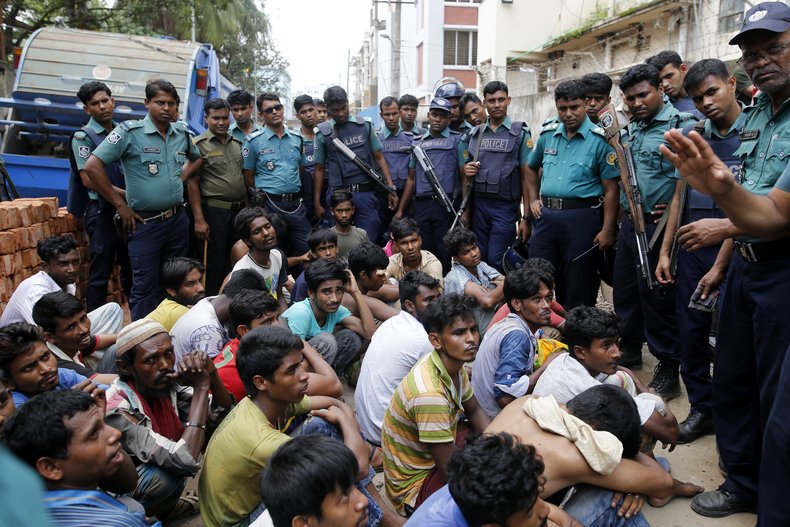
Dhaka, October 9 – On 29 August 2025, Bangladesh witnessed an incident where a former Minister, Abdul Latif Siddique, Dhaka University Professor Sheikh Hafizur Rahman, journalist Manzurul Alam, and at least 13 others were handed over to the police by a mob while performing a peaceful discussion session. These individuals were harassed and then taken into custody. More than 12 hours after their initial detention, a case was filed under the Anti-Terrorism Act 2009 against 16 persons, including Siddique, Professor Rahman, and Alam. This incident starkly illustrates how partisan mob violence by the “July Fighters” against their political opponents to suppress dissent coupled with an outwardly biased law enforcement response, significantly undermines foundational principles of justice, equality, and freedom. This incident draws our attention to Bangladesh’s commitments to international human rights law, especially under the International Covenant on Civil and Political Rights (ICCPR), as well as its own Constitution and domestic legislation.
Bangladesh has ratified the ICCPR, the preamble to which recognises that the inherent dignity and inalienable rights of all individuals are the foundation of global freedom, justice, and peace. Bangladesh, being a dualist country, has not domesticated ICCPR, as most of the civil and political rights under the ICCPR have been guaranteed in the Constitution of Bangladesh as fundamental rights. However, this incident appears to contravene numerous international and domestic principles:
Assault on Freedom of Assembly and Expression: The violent disruption of a peaceful discussion by the “July Fighters” directly interfered with the rights to freedom of expression (Article 19) and peaceful assembly (Article 21). In this case, the victims became the accused. The State’s failure to protect the participants and its subsequent actions against the victims suggest a breach of its duty to uphold these rights.
Partisan Bias and Selective Enforcement: This incident also shows the selective application of the law by the law enforcement agencies, where the aggressors operated freely soon after the incident, and the victims were arrested without due process of law. This action, described as taking “victims, not the mobsters, into custody”, suggests discrimination based on political opinion, which violates Article 2 and undermines equal protection under the law without discrimination (Article 26).
Arbitrary Detention and Weaponisation of Law: After 12 hours of unlawful detention, the victims were charged under the Anti-Terrorism Act, which raises serious concerns about arbitrary arrest and due process (Article 9). The Working Group on Arbitrary Detention specifically investigates such inconsistencies with international standards. The government seems to use the Anti-Terrorism Act as a weapon against the victims of an attack, rather than the perpetrators, which signifies the weaponisation of legal processes for political ends. The pervasiveness of the Torture and Custodial Death (Prohibition) Act, 2013, designed to protect individuals in custody, appears to have been overlooked in the handling of this detention. If this Act had been applied, the procedures for documenting the illegal custody would have immediately been triggered, which could have mandated the Court to record the detainees’ statements, order an urgent medical examination, and initiate an investigation against the responsible officers, overriding any other law in force (under Sections 2, 4, and 5, respectively).
Violating Constitutional Rights: The Constitution of Bangladesh, Article 35(5), fundamentally prohibits torture and cruel, inhuman, and degrading treatment. Regrettably, Professor Rahman was denied necessary medical care and consequently experienced inhumane treatment, which is a clear violation of his rights.
This incident is an upsetting indicator of democratic backsliding, demonstrating a detachment between Bangladesh’s commitment to the human rights principles and its practical enforcement, which threatens the rule of law and fundamental civil liberties. Therefore, the interim government, led by Nobel Laureate Dr. Muhammad Yunus, is urged to ensure judicial independence and impartiality by fulfilling Bangladesh’s obligation to the international human rights law, particularly the ICCPR.
END
