

By P.M.Amza
Colombo, July 30 – On Monday the 28th, President Trump announced that he was shortening the initial 50-day deadline he had set a month earlier for action from Moscow, introducing a new timeline of 10 to 12 days. The following day, Tuesday the 29th, President Trump stated that the United States would begin imposing tariffs and other measures on Russia “10 days from today” if Moscow showed no progress toward ending its more than three-year-long war in Ukraine.
The spokesman for Russian President Vladimir Putin, Dmitry Peskov, told reporters on Tuesday that the Kremlin “took note of President Trump’s statements,” though he added that he “would like to avoid any assessments” of the president’s remarks. Dmitry Medvedev — the former Russian president and prime minister, now serving as the deputy chairman of the Security Council — described Trump’s challenge as a dangerous escalation. “Trump is playing the ultimatum game with Russia: 50 days or 10,” said Medvedev. Throughout Moscow’s full-scale war on Ukraine, Medvedev has maintained a hardline stance and is often seen as a reflection of President Putin’s thinking.
Ukrainian leaders welcomed Trump’s latest announcement. “Clear stance and expressed determination by POTUS — right on time, when a lot can change through strength for real peace,” President Volodymyr Zelenskyy wrote on X. “I thank President Trump for his focus on saving lives and stopping this horrible war,” he added.
I had the distinct privilege of serving as a diplomat accredited to both Ukraine and the Russian Federation.
I was Sri Lanka’s non-resident Ambassador to Ukraine from 2017 to 2019. This appointment came at the request of the Ukrainian government, which had asked Sri Lanka to shift its concurrent accreditation from Moscow to a European capital. Then-Foreign Minister Mangala Samaraweera decided to change the accreditation to Ankara, where I was serving as Ambassador. Thus, I became the first non-resident Sri Lankan Ambassador to Ukraine based in a capital other than Moscow since diplomatic relations were established in 1992.My accreditation to Ukraine occurred three years after Russia’s annexation of Crimea. In all my interactions with a cross-section of Ukrainian society — including diplomats, bureaucrats, members of the Verkhovna Rada (Supreme Council of Ukraine), and entrepreneurs — I witnessed deep resentment and anger toward Russia’s actions. President Putin’s annexation of Crimea, I observed, was gradually alienating even the Russian-speaking population there.
Later, I also had the privilege of serving as Head of Mission at the Sri Lankan Embassy in Moscow for a brief period of seven months during the latter part of last year. Although it was a short stint following my retirement from the foreign service, it afforded me the opportunity to travel extensively across Russia and meet different sections of the Russian society . I visited regions such as Buryatia, Kurgan, Nizhny Novgorod, St. Petersburg, Kazan, and Yekaterinburg. Through my engagements—including delivering two lectures to postgraduate students and future diplomats—I encountered a markedly different narrative from the one I had seen in Ukraine.
This issue undeniably contains elements of unpredictability. While President Trump is often characterized by his shifting positions on global affairs—including the Russia–Ukraine conflict—his actions tend to be driven by a desire to strike deals and command media attention. In contrast, President Putin is generally seen as calculating and consistent in the pursuit of long-term strategic objectives. It is also important to take into account the “European interest” attached to this issue . . For these reasons, I do not intend to speculate on how this situation might evolve. Instead, in this article, I aim to explore the Russia–Ukraine conflict through the lens of its root causes, as I firmly believe that addressing underlying issues is a vital component of any lasting conflict resolution
Russia Ukraine conflict is rooted in a complex mix of historical grievances, geopolitical competition, and cultural-linguistic tensions. While the immediate cause appears to be Russia’s opposition to Ukraine’s westward pivot, the deeper causes revolve around two critical issues: NATO’s eastward expansion and Ukraine’s internal policies on language, culture, and religion that alienated its Russian-speaking population. These factors, compounded with historical mistrust and competing national identities, have contributed to one of the most dangerous crises in Europe since World War II.
NATO’s Expansion and Russia’s Red Line
The roots of the NATO issue can be traced to the end of the Cold War. In 1990, during discussions about German reunification, Western leaders, notably U.S. Secretary of State James Baker, were reported to have assured Soviet leader Mikhail Gorbachev that NATO would not expand “one inch eastward” beyond Germany. Although no formal treaty was signed, Russia has long claimed that this understanding was violated when NATO began admitting Eastern European states in the years that followed . When I served in Moscow last year, this argument was a recurring theme in my conversations with Russian intellectuals.
In 1999, NATO welcomed Poland, Hungary, and the Czech Republic—countries formerly aligned with the Soviet bloc. The expansion continued in 2004 with the inclusion of Bulgaria, Romania, Slovakia, Slovenia, and, most alarmingly for Russia, the Baltic states of Estonia, Latvia, and Lithuania, all former Soviet republics. For Moscow, this eastward shift represented a progressive erosion of its buffer zone, which it historically relied upon for security. The presence of NATO infrastructure and the possibility of missile defense systems on its borders intensified Moscow’s sense of encirclement.
Ukraine’s Strategic Importance
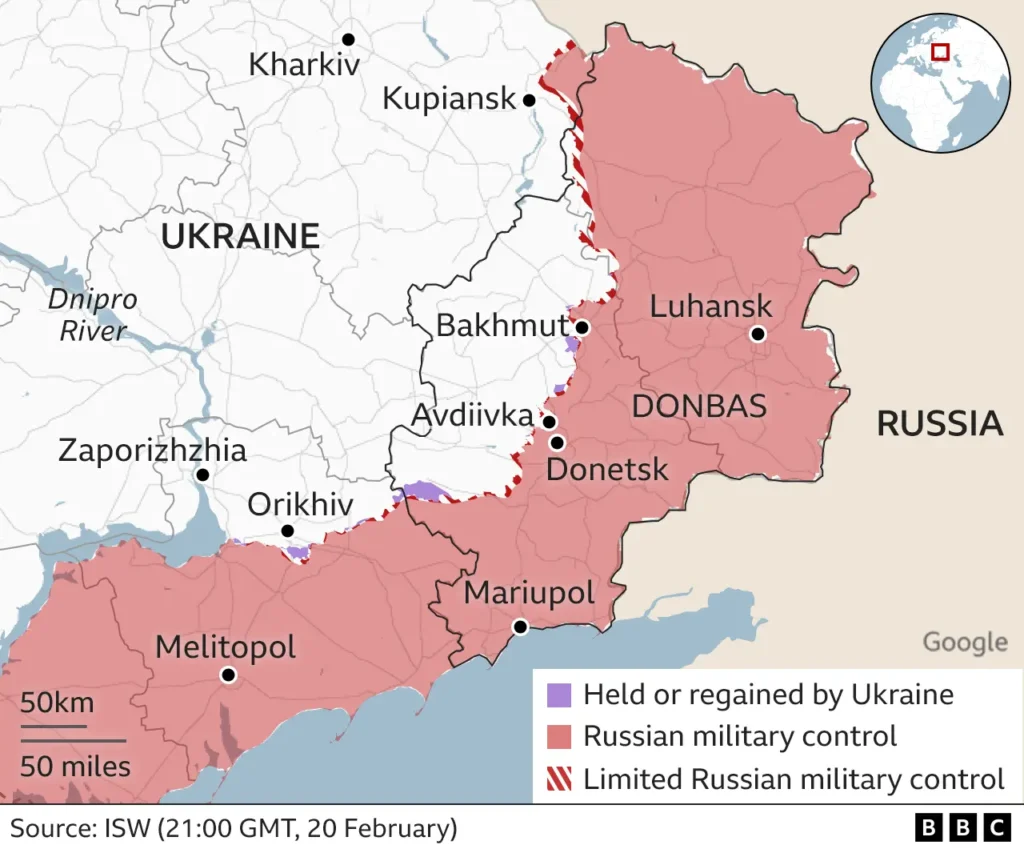
Ukraine occupies a unique place in Russia’s geopolitical calculus.Beyond its 2,300-kilometer border with Russia,which includes both land and sea borders, Ukraine has deep historical, cultural, and economic ties with Moscow. Losing Ukraine to NATO would push the Western alliance directly to Russia’s doorstep, just a few hundred kilometers from Moscow. Furthermore, Ukraine is crucial for Russia’s access to the Black Sea via Crimea, which hosts the Russian Black Sea Fleet.
The 2008 NATO Bucharest Summit escalated tensions when NATO declared that both Ukraine and Georgia “will become members” in the future. Although no timeline was set, Moscow perceived this as a direct threat to its security interests. The 2008 Russo-Georgian war, which followed Georgia’s bid to join NATO, was an early indication of how far Russia was prepared to go to stop NATO’s expansion.
Ukraine’s Westward Tilt
The tipping point came in 2014, when Ukrainian President Viktor Yanukovych, who was aligned with Russia, rejected an association agreement with the European Union in favor of closer ties with Moscow. This decision sparked massive protests (the Euromaidan movement) that culminated in Yanukovych’s ousting. Moscow viewed this revolution as a Western-orchestrated coup aimed at pulling Ukraine into the Western orbit.
In response, Russia annexed Crimea in March 2014, citing both strategic and cultural reasons. Crimea was home to a majority Russian-speaking population and the Black Sea Fleet. Simultaneously, pro-Russian separatist movements in Donbas (Luhansk and Donetsk regions) ignited a war against the Ukrainian government, which continued for years, fueled by Moscow’s military and financial support.
Cultural, Linguistic, and Religious Tensions
Ukraine’s population is diverse, with a significant number of ethnic Russians and Russian-speaking Ukrainians, particularly in the east and south. Historically, Russian was widely spoken and culturally dominant in these areas, while Ukrainian identity was more pronounced in the west. Post-independence governments attempted to strengthen Ukrainian national identity, sometimes at the expense of Russian cultural traditions.
Language became one of the flashpoints in post-Soviet Ukraine. While Ukrainian was declared the sole state language in 1991, Russian continued to be widely used in education, media, and administration. After 2014, however, Kyiv adopted policies to promote the Ukrainian language more aggressively. The 2019 language law mandated Ukrainian as the exclusive language of government, education, and public services, while limiting the use of Russian in schools and media.
For Russian-speaking communities, these policies were perceived as marginalization and cultural suppression. Moscow skillfully exploited these grievances, portraying Russia as the “protector” of Russian language and culture abroad.
Religion added another dimension to the cultural divide. The majority of Orthodox Christians in Ukraine traditionally belonged to the Ukrainian Orthodox Church under the Moscow Patriarchate (UOC-MP), symbolizing centuries of spiritual unity with Russia. In 2018, the creation of an independent Orthodox Church of Ukraine (OCU), recognized by the Ecumenical Patriarch of Constantinople, was celebrated in Kyiv but seen by Moscow as a direct assault on Russian influence. The Russian Orthodox Church broke ties with Constantinople in protest, further deepening the rift.
Russia’s Security Doctrine
Russia has consistently argued that NATO’s presence in Ukraine would not only threaten its borders but also undermine its sovereignty and influence in the post-Soviet space. The Kremlin has long promoted the idea of “Russkiy Mir” (the Russian World), a concept emphasizing cultural and linguistic unity among Russian-speaking populations. Ukraine, in this narrative, is not merely a neighboring state but a core part of Russia’s historical and civilizational identity, dating back to the medieval state of Kievan Rus’.
Russian President Vladimir Putin, in his speeches, has often claimed that modern Ukraine was “artificially created” by Soviet leaders and lacks a separate historical identity. He has also accused the Ukrainian government of pursuing “anti-Russian” policies, particularly after 2014, and of discriminating against Russian speakers.
Collapse of Agreements
While Ukraine did not achieve NATO membership, it steadily increased military cooperation with the alliance after 2014. Western countries supplied weapons, conducted joint military exercises, and trained Ukrainian forces. For Moscow, this “de facto NATO presence” was unacceptable.
The Minsk I (2014) and Minsk II (2015) agreements, brokered by Germany and France, aimed to end the Donbas conflict through ceasefires and granting special status to the separatist regions. However, both sides accused each other of failing to implement the agreements fully. The stalemate provided Moscow with a pretext to claim that Ukraine had no interest in resolving the conflict peacefully.
The Istanbul Agreement, aimed at ending the Russia-Ukraine war in early 2022, reportedly collapsed due to Western influence, particularly from then-UK Prime Minister Boris Johnson. During his April 2022 visit to Kyiv, Johnson is said to have urged President Zelensky not to sign any deal with Russia, emphasizing that the West was not ready for a settlement and would continue supporting Ukraine militarily. His stance, combined with U.S. and NATO interests in weakening Russia, discouraged diplomatic compromise, leading to prolonged conflict and the eventual breakdown of the Istanbul peace talks.
Security and Identity
In late 2021, Russia presented sweeping security demands, including a guarantee that Ukraine would never join NATO and the withdrawal of NATO forces from Eastern Europe. The West rejected these demands, leading Moscow to escalate its military build-up along Ukraine’s borders.
The Ukraine-Russia conflict is the result of both geopolitical rivalries and deep-seated identity struggles. For Russia, NATO’s expansion to its borders is seen as an existential threat, while Ukraine’s pro-Western shift represents the erosion of Russia’s historical sphere of influence. Simultaneously, Ukraine’s policies promoting Ukrainian language and identity—though aimed at national cohesion—have alienated its Russian-speaking population, providing Moscow with an opportunity to intervene under the guise of “protection.”
The war in Ukraine is therefore not merely about territorial control—it reflects competing visions for Europe’s future. For the West, Ukraine’s sovereignty and its right to choose its own alliances are fundamental principles. For Russia, Ukraine’s independence is acceptable only if it functions as a neutral buffer state, culturally and strategically aligned with Moscow. As such, a lasting and comprehensive solution to the conflict is, regrettably, not likely in the near future. At best, if all possible constructive steps are taken, the situation may settle into a prolonged stalemate—ultimately joining the ranks of other unresolved, so-called frozen conflicts.
END
Author P.M.Amza is a former Ambassador to EU, Ukraine and former Head of the Sri Lankan Mission in Moscow
