

By P.K.Balachandran/Daily Mirror
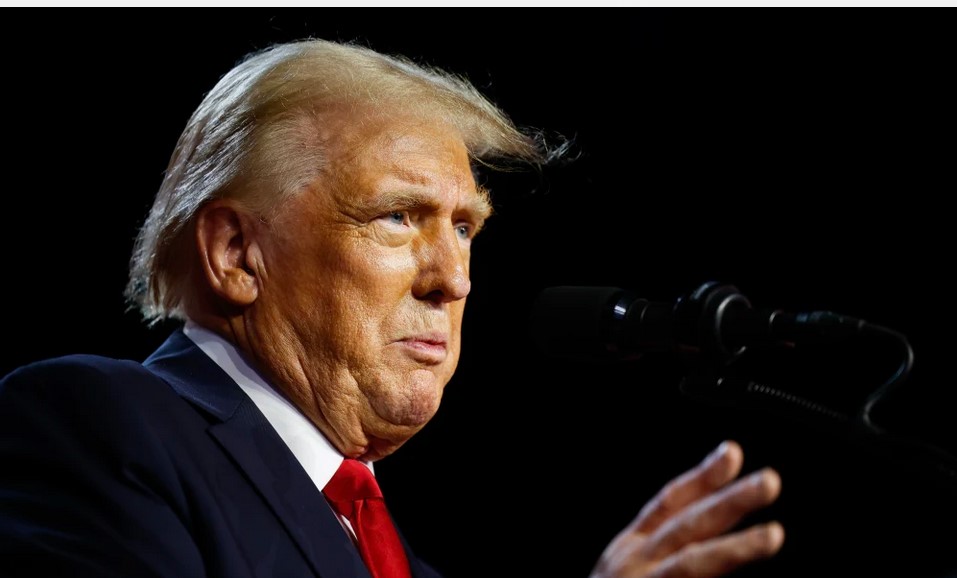
Colombo, July 15 – The United States stands at a political crossroads. The entrenched rivalry between the Democrats and Republicans, often indistinguishable in their elitism, may soon give way to a sharper ideological divide: the Far Right and the Far Left, currently embodied by President Donald Trump and New York City Mayoral candidate, Zohran Mamdani.
If Mamdani wins the Mayoral race and expands his influence, Americans could sooner or later, face a stark choice between two divergent visions for the nation’s future, a Far Right perspective and a Far Left perspective.
On July 4, Trump’s “One Big Beautiful Bill” became law, passing narrowly in Congress (218–214 in the House of Representatives, and with a tie-breaker in the Senate). Described as quintessentially right-wing, the bill prioritizes tax cuts for the wealthy while slashing social safety nets and deepening inequality.
The widespread opposition to the bill among Congressmen and Senators as indicated by the voting pattern, shows that there is a sharp divergence on ideas in the higher echelons of US politics about what is desirable and what is not. The sharp cleavage in America’s highest political forums, could, in course of time, open the field to fresh ideas and also new political formations.
The seemingly entrenched politics involving two elitist parties barely distinguishable from each other, could yield place to a more meaningful and sharper contest.
Divisive Bill
According to analyses of Trump’s bill by the Congressional Budget Office (CBO), Penn Wharton Budget Model, and Tax Policy Center, the top 1% (earning over $1 million annually) gain an average after-tax windfall of $44,190, while the top 0.1% (earning over $5 million) receive $390,000.
Conversely, the poorest 10% lose $940 annually, a 3.9% income drop. Over a decade, Medicaid faces $698 billion in cuts, and the Supplemental Nutrition Assistance Program (SNAP) loses $267 billion. These reductions threaten healthcare for 71 million low-income Americans and food assistance for millions, 81% of whom live below the poverty line. The Kaiser Family Foundation projects that 12 million will lose health insurance by 2034.
Medicaid eligibility now requires 80 hours of monthly work, potentially excluding 8.6 million people, including the elderly and disabled. Hospitals face funding cuts, risking care for 1.8 million rural Americans.
The White House defends these measures as targeting illegal aliens and the lazy, but critics, including the World Socialist Website, call it a “historic transfer of wealth to the ruling oligarchy.”
The CBO estimates a $2.3–$3.3 trillion deficit increase over a decade. And deficits typically lead to inflation, which in turn, exacerbates poverty.
March of the Far Right
Sybil Davis and Ximena Goldman in their article “The rise of the New Right and how we fight It,” in Left Voice say that, theoretically, the Trumpist Right was supposed to have been defeated in the 2020 election, which the “liberal” Biden won. But in reality the Right grew despite the defeat.
The reason? Inflation rose, making it harder for working and middle class people to afford basic necessities. The US poured money into the proxy war in Ukraine as public services remained underfunded. Biden and the Democrats armed Israel for its genocide in Gaza. While the Democrats were defending the status quo, the Far Right was speaking out against inflation and the war in Ukraine. Far Right Trump became the apostle of peace!
The Republican Party remade itself as the party of “anti-Woke” and the Democrats instead of opposing it, retreated. “Woke issues” are a euphemism for basic democratic rights for all, and for Black and LGBTQ rights in particular. The “anti-woke” movement was, in part, a response to the Black Lives Matter movement that took the fight against police brutality against Blacks, with people chanting slogans like “abolish the police” and “defund the police”. Instead of supporting it, the Democrats felt insecure.
The fallout of 2020 was more political polarization, and the Republicans cashed in. They rallied against Black Lives Matter, the advance of trans visibility, and the modernization of school curricula. They said that these things were coming from elites and liberal universities to disrupt the “normal” ways of American life.
The Republican “Freedom Caucus” used these perceptions to advance the “war on woke” at the national level. In 2024, Kamala Harris did not come out in favour of trans rights. She tried her best to block immigrants coming from Mexico. Due to the crisis in neoliberalism the American public lost faith in the institutions of government, making room for an iconoclastic Trump.
Revival of Far Left
But come 2025, the ground is shifting again. The Far Right is facing a challenge from a quarter which it thought it had vanquished – the Far Left. President Trump is facing an ideological challenge from the newest face of the Far Left, Zohran Mamdani, New York City’s Democratic mayoral candidate.
Zoharan’s platform, rooted in democratic socialism, directly addresses the city’s economic challenges, as outlined in the 2023 Robin Hood Annual Poverty Tracker Report, conducted with Columbia University’s Centre on Poverty and Social Policy. Mamdani’s economics is inclusive in contrast to Trump’s, which is exclusive. And poverty-stricken New York City is Mamdani’s laboratory to test his ideas.
Galloping Poverty
New York may be the financial capital of the US and home to the richest, but it is also abjectly poor as stated by the latest Robin Hood Annual Poverty Tracker Report. The report shows that 25% is the overall poverty rate in New York City, climbing beyond the record highs observed in 2022.
The study found that slightly over 2 million New Yorkers were poor, which was reflected in outsized increases in the cost of basic needs, including food, housing, and utilities.
The 26% “child poverty rate” was the highest observed since the study began reporting child poverty rates in 2017.
The report showed that the increased cost of living plunged an additional 100,000 New Yorkers into poverty. As a result, New York City’s poverty rate hit 25% – up from 23% last year, which is nearly double the national poverty rate of 13%.
In New York, a family of four needs to make at least $50,000 just to survive. In 2023, the cost of five basic necessities that make up the poverty line—food, shelter, utilities, clothing, and telephone/ internet—outpaced income growth and the overall rate of inflation.
This pushed the poverty threshold up to $47,190 for a renting family of four—7.5% higher than the 2022 poverty threshold of $43,890—causing more New Yorkers to fall below this line.
A large majority (73%) of parents in these families had to reduce their savings to cope with rising prices. Nearly 31% said they took on an additional job or more work to cope with inflation. 54% of the poor were “rent-burdened”, spending more than 30% of their cash income on rent.
The reductions envisaged by Trump in vital support programmes would lead to “mass impoverishment” warned Richard R. Buery, Jr. CEO of Robin Hood.
Leftist Antidote
To counter the slide into deeper poverty, Mamdani proposes city-owned grocery stores, a rent freeze on 1 million rent-stabilized units, stricter landlord accountability, and a Social Housing Development Agency to build 200,000 subsidized homes over three years.
He also advocates universal childcare (ages 6 weeks to 5 years), free public college tuition, fare-free buses, and a Department of Community Safety for housing, outreach, and mental health services.
These initiatives would be financed through a 2% income tax on those earning over $1 million and higher corporate taxes and leveraging the city’s $115 billion budget.
The implementation of Mamdani’s policies hinges on federal support—unlikely under Trump, who has branded Mamdani a “100% Communist Lunatic” and threatened to withhold funding even deploy federal intervention if he wins.
New Wave
Thus an ideological clash looms on the horizon, in New York first, and possibly in other parts of the US also, as want is widespread. The clash between these two vocal and high profile personalities could reshape how Americans view their future. At the minimum it could challenge the two-party system.
END
